

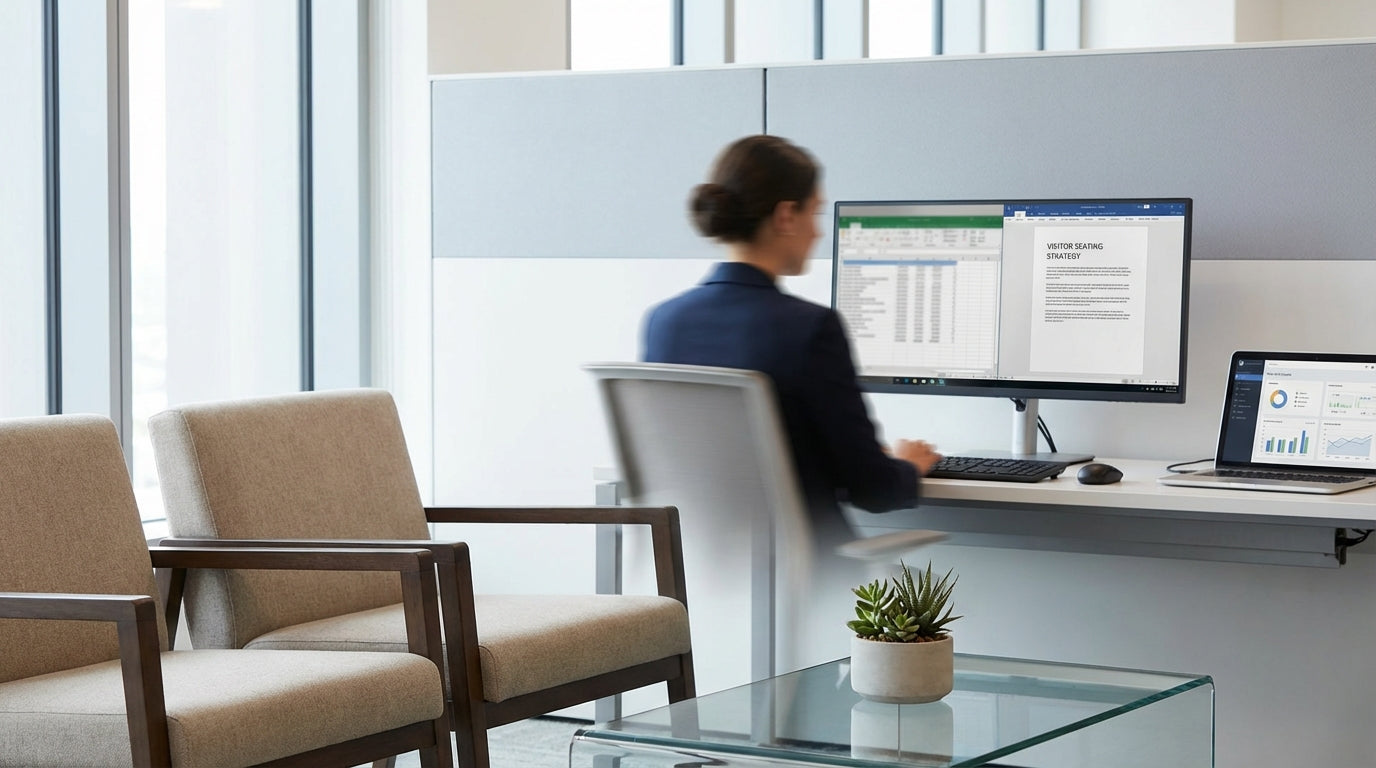
Understanding Your Reception Space and Visitor Needs
Your reception area needs to work for both your visitors and your team. Before you buy anything, get clear on how the space is used day to day.
Start by looking at how many people typically wait at once and how long they usually stay. A busy medical clinic with constant foot traffic needs different visitor chairs to a quiet professional office where guests sit briefly before a meeting. Measure the room carefully, note power points, doors and walkways, and sketch out how people naturally move through the space.
Think about accessibility and inclusivity as well. Chairs should suit a wide range of body types, ages and mobility levels, with some options that are higher and firmer for easier sitting and standing. In larger areas, combining individual seats with beam seating can help you accommodate more people without cluttering the room.
Finally, match the chair style to your brand and the type of experience you want visitors to have. Casual environments like salons may suit soft tub chairs, while corporate spaces might lean towards structured leather chairs and streamlined reception seating that projects professionalism.
Comfort, Ergonomics and Durability
Comfort is essential if you want visitors to feel welcome, not restless. That means thinking beyond looks to support, dimensions and materials.
Ergonomics simply means how well the chair supports the body. Look for a gently contoured backrest, comfortable seat depth and adequate cushioning so people aren’t perched on the edge or slumping. Arms can make sitting and standing easier for older guests, while armless designs can be better in tight spaces or where people may carry bags.
Durability matters just as much as comfort, especially in high-traffic receptions such as government offices, universities and medical centres. Choose commercial-grade fabrics, solid frames and finishes that resist stains and scuffs. Where chairs are moved often for cleaning or events, lightweight yet sturdy options, including stacking chairs and folding chairs, can reduce wear and tear on both furniture and floors.
For very busy venues or multi-purpose spaces, it can be worth mixing fixed reception seating with flexible event & conference chairs. This lets you keep a comfortable core waiting area while still being able to respond to peak times, seminars or public events without compromising on visitor experience.
Choosing the Right Chair Types for Your Layout
The shape and style of your chairs should support smooth movement and clear sightlines. Different chair types work better in different layouts.
For compact receptions, single visitor chairs are easier to arrange around entry paths, reception counters and coffee tables. In larger square or rectangular rooms, combining a few tub chairs with straight-lined reception seating creates natural zones for different visitor groups without blocking views.
If you regularly host groups or manage queues, consider fixed beam seating that keeps rows tidy and makes cleaning easier. These are ideal for healthcare, transport hubs and education facilities where chairs need to stay aligned and be easy to sanitise. In multi-purpose lobbies that double as event areas, you can park compact stacking chairs nearby so staff can quickly increase capacity when required.
Workplaces that blur the line between reception and collaboration may benefit from chairs that can move between waiting and meeting spaces. Selecting styles that match or coordinate with your meeting chairs ensures a cohesive look as furniture moves around the office, and prevents reception feeling like an afterthought compared to the rest of your fit-out.
Style, Materials and Easy Maintenance
Your reception furniture sets the tone for your brand the moment someone walks in. Style and practicality should work together, not compete.
Think about how chair materials support your overall design. Soft fabrics can warm up a minimal office, while sleek leather chairs or leather-look finishes convey a premium, executive feel and tend to wipe clean easily. Paired with well-chosen coffee tables, you can subtly signal whether your business is relaxed and creative or formal and corporate.
Maintenance is critical in busy or hygiene-sensitive environments. In medical and aged-care receptions, for example, opt for non-porous finishes or high-performance upholstery that can handle regular cleaning and disinfecting. Chairs used across training rooms, lobbies and events, such as event & conference chairs, should stack or fold easily so staff can reset spaces quickly and keep aisles clear.
Colour and texture also play a role in how tidy your reception looks over time. Mid-tones and patterned fabrics hide minor marks better than solid light colours. Coordinating your visitor chairs, reception seating and even meeting chairs around a consistent palette will make the whole office feel deliberate and professionally designed.
Planning for Flexibility, Growth and Budget
Reception needs change as businesses grow, so your seating should be able to evolve with you. Plan for both current and future requirements.
Consider whether your foyer will ever double as an event, training or breakout space. If so, incorporating some portable options like folding chairs or lightweight stacking chairs alongside permanent reception seating can save you hiring costs later. This is especially useful in coworking spaces, councils and community organisations where visitor numbers can fluctuate significantly.
When budgeting, weigh up lifetime value rather than just upfront price. A well-built set of visitor chairs or durable beam seating that lasts longer and requires less maintenance will usually be better value than cheaper options that need frequent replacement. If your reception also serves as an overflow area for internal meetings, choosing chairs compatible with your existing meeting chairs gives you more flexibility for the same investment.
Lastly, think about how easily you can add to your setup as your business grows. Sticking with ranges that include matching tub chairs, leather chairs and coffee tables makes it simple to expand while keeping a cohesive, professional look across every touchpoint your visitors see.


