

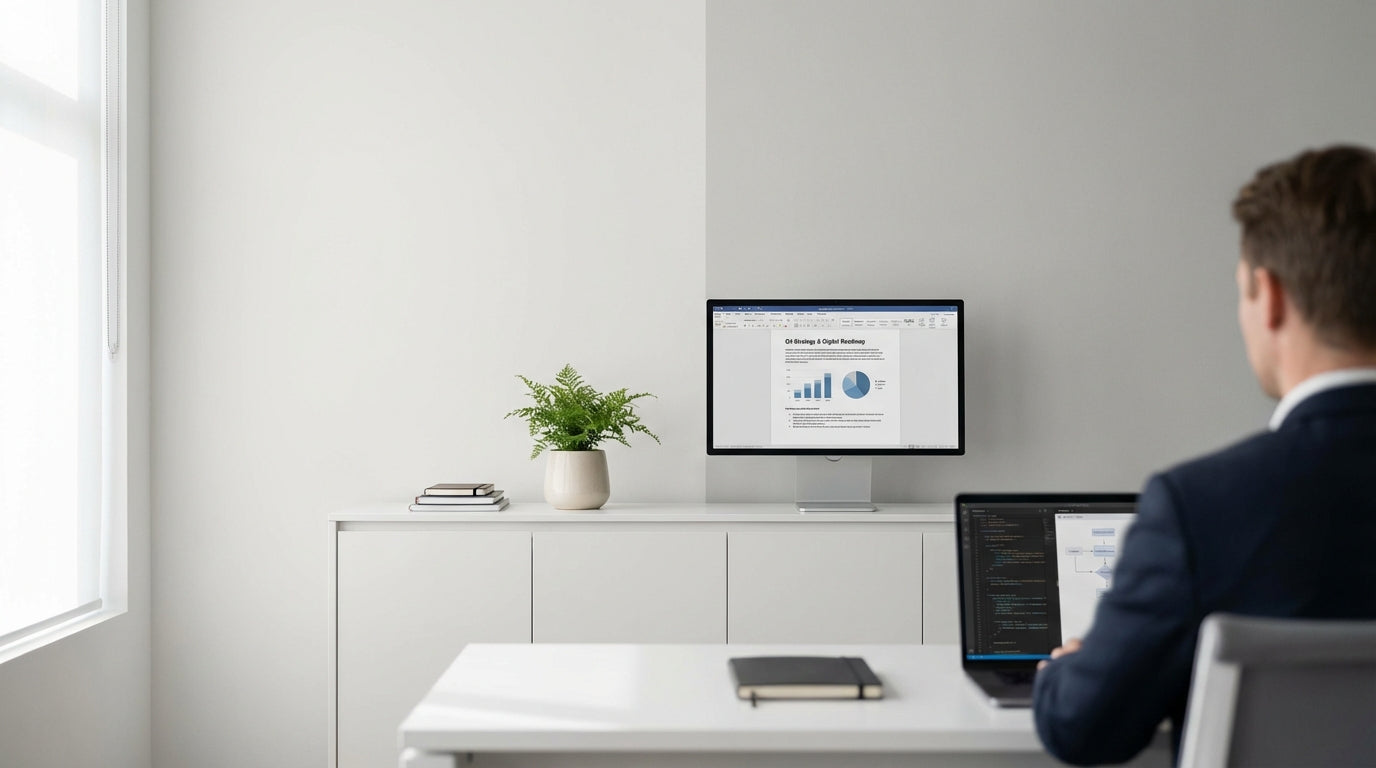
Understanding What a Credenza Does in a Modern Office
A credenza is more than a sideboard that sits behind a desk. It’s a low storage unit that helps keep everyday items close at hand while keeping your workspace looking tidy.
In a busy Australian office, a credenza can act as the bridge between open shelving and fully enclosed cupboards. It can store folders, devices, printer paper, and personal items while still presenting a streamlined, professional look. Many teams pair credenzas with other storage such as office cupboards or office shelving to create a complete storage wall without crowding the room.
Credenzas are especially useful in smaller offices or home workspaces where you need storage that also looks like furniture rather than pure utility. Unlike tall cupboards or lockers, their low height maintains sightlines, which helps keep open-plan spaces feeling lighter and more spacious. This makes them ideal behind executive desks, along meeting room walls, or in reception areas where style matters just as much as storage capacity.
Because they sit at a comfortable height, credenzas often double as display and equipment surfaces. You can park a printer, scanner, and office phone on top, or style the surface with plants, awards, or reference books. If you need more vertical capacity, you can also combine a credenza with hutch storage units or bookcases above to turn one wall into a highly efficient storage zone.
Key Storage Features to Look For
The right internal layout makes all the difference to how useful a credenza will be day to day. Think carefully about what you actually need to store before you buy.
If you handle a lot of paperwork, built‑in file drawers or a combination of shelves and drawers can save you constantly walking back and forth to separate filing cabinets. Adjustable shelving is valuable when you need to accommodate different folder sizes, archive boxes, or tech equipment. For frequently accessed supplies, pair your credenza with nearby stationery cupboards so that pens, pads, and printer consumables are all close by.
Security is another consideration. Lockable doors or drawers help protect sensitive documents and devices, especially in shared offices or hot‑desking environments. If you regularly store laptops, portable hard drives, or petty cash in your credenza, invest in models with quality locks. Where you need more secure, high‑capacity storage across the office, supplement the credenza with lockable tambour cupboards or metal sliding door cabinets that can handle heavier loads.
Also pay attention to cable management. Many modern credenzas are designed with cut-outs or channels so you can run power and data cables to printers, chargers, and docking stations without a tangle of cords spilling over the back. If your space doubles as a meeting zone, this makes it easier to hide AV equipment while keeping cables accessible when needed.
Doors, Drawers, and Access Options
How you open and close a credenza has a real impact on how well it works in your space. Door style affects both footprint and ease of access.
Hinged doors are common and cost‑effective, but they need clear swing space in front, which can be a problem in narrow corridors or tightly planned meeting rooms. In compact spaces, sliding doors are often more practical. They keep everything flush to the unit and avoid clashing with nearby chairs or walls, working much like specialised sliding door cabinets. If you have multiple people accessing the same unit, sliding doors can also make it easier to share the space without blocking each other’s path.
Tambour doors are another option, using a flexible slatted door that rolls into the side or top of the cabinet. They’re ideal when floor space is limited, and they provide quick access across the full width of the credenza. If this style appeals, you can create a consistent look by combining the unit with full‑height tambour cupboards elsewhere in the office. Drawers, on the other hand, are better for smaller items like stationery, cables, and personal belongings that can get lost on open shelves.
Open shelving sections can be useful where you want fast, visual access to documents, catalogues, or reference materials. If you prefer a more streamlined look, choose solid doors and keep open display to matching bookcases or a nearby unit from a Luxe Storage range. By mixing doors and drawers within the same credenza, you can balance easy access, visual order, and security according to how your team works.
Matching Style and Materials to Your Workspace
A credenza is a visible piece of furniture, so it should complement the rest of your fit‑out. Think about finishes, colours, and overall style before you commit.
In contemporary Australian offices, melamine or laminate finishes in white, oak, walnut, and charcoal are especially popular. They’re durable, easy to clean, and fit well with most desks and credenzas or buffets from the same range. If you already have matching office cupboards or office shelving, sticking to the same finish creates a cohesive, built‑in look. For executive suites or client‑facing meeting rooms, a more premium Luxe Storage credenza can add a higher‑end feel without overwhelming the room.
Handle style and leg design also influence the overall aesthetic. Clean, push‑to‑open fronts suit minimal, modern spaces, while more defined handles suit traditional offices and public‑sector environments where usability is key. Metal legs or frames can lighten the visual bulk of the unit, which is useful in smaller offices where solid plinth bases might look heavy. If your workspace already uses open bookcases or hutch storage units, echoing similar design details will help the credenza blend in.
Finally, consider how the top surface will be used. If it’s going to support heavy printers or multi‑function devices, choose robust construction and finishes that can handle heat, spills, and constant use. If the top is more of a display or hospitality area for coffee and catering in boardrooms, you might prioritise stain‑resistant finishes and a more refined look, pairing the unit with companion pieces such as nearby stationery cupboards to keep clutter hidden out of sight.
Planning Your Storage Layout Across the Office
A credenza works best when it’s part of a broader storage plan. Map out what needs to live where before you purchase.
Start by grouping storage by function: active files near workstations, long‑term archives further away, and shared resources close to meeting spaces. Use credenzas for daily‑use items that need easy access and a tidy appearance, such as current project files, devices, and reference materials. Bulk supplies, archived files, and less frequently used items may be better suited to taller office cupboards, dedicated filing cabinets, or adjustable office shelving.
For shared spaces like meeting rooms and breakout areas, credenzas can hold presentation equipment, cables, and catering supplies. Pairing them with wall‑mounted hutch storage units or coordinating credenzas and buffets can create a unified storage wall that looks intentional rather than pieced together. In reception zones, a stylish unit from a Luxe Storage collection can house brochures and visitor materials while keeping the front of house clean and uncluttered.
Home offices and small studios benefit from mixing one good‑quality credenza with compact bookcases or slim sliding door cabinets. This combination gives you a balance of display, hidden storage, and file organisation without dominating the room. By planning your layout with circulation and workflow in mind, you can make sure your credenza supports the way you actually work, rather than becoming another surface that gathers clutter.


