

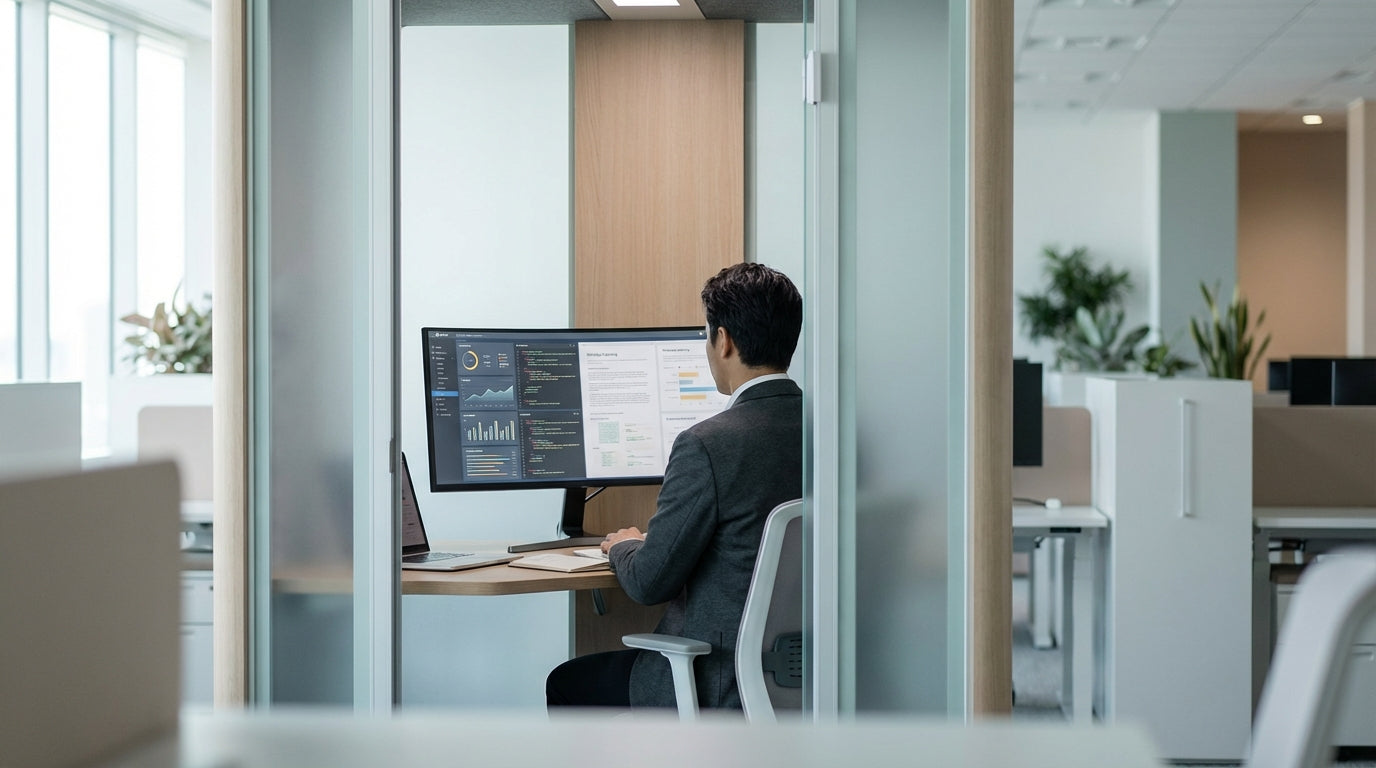
Why Quiet Spaces Matter in Open Offices
Open plan offices are great for collaboration, but they can be noisy and distracting. A well-designed quiet space gives people somewhere to focus, reset, and work without constant interruptions.
Research consistently shows that background chatter, phone calls, and keyboard noise reduce concentration and increase stress. In a modern workspace, a dedicated quiet area is no longer a luxury; it is essential for deep work, complex tasks, and employee wellbeing. By carving out a calm zone within an open layout, you support different workstyles and make it easier for staff to choose the environment that suits their task.
Creating this kind of space does not always require a full office redesign. Thoughtful use of zoning, acoustic materials, and specialised furniture such as Office Pods lets you transform even small, unused corners into effective focus areas. When done well, these quiet spaces blend into the overall office design while offering a noticeable drop in noise and distraction.
Planning the Location and Layout
Before buying furniture or acoustic panels, decide exactly where your quiet zone will sit. The right location will make it easier for staff to respect and use the space properly.
Start by mapping existing noise patterns: printers, kitchens, meeting rooms, and main walkways all add to sound levels. Wherever possible, place quiet areas away from these hotspots so you are not fighting constant background noise. Look for dead corners, under-used meeting areas, or spaces near windows that can be re‑purposed as low-traffic, calm zones.
Layout also matters. Using Floor Partitions and Mobile Partitions to define boundaries makes the zone visually clear, which encourages people to lower their voices as they enter. Combine individual focus points, such as Single Person Workstations, with a small number of shared desks so the area supports both solo and quiet group work.
Circulation paths should route general traffic around, not through, the quiet space. Avoid placing main photocopiers or frequently used storage cupboards inside this zone. A simple rule of thumb: if someone needs to access an item several times a day, it probably does not belong in your dedicated focus area.
Using Furniture and Partitions to Define the Zone
Physical barriers are one of the fastest ways to reduce noise and signal that an area is for focused work. The right furniture choices also help people settle quickly and stay comfortable for longer periods.
Enclosed solutions like Acoustic Pods and more general Office Pods offer excellent sound control and privacy for calls, video meetings, or deep-focus tasks. For more open setups, Partition Workstations create semi-enclosed desks that visually and acoustically separate people from the surrounding office. These higher walls help block both eye contact and sound, which are two major sources of distraction.
At desk level, Desk Mounted Partitions provide subtle separation without closing off the space completely. They are especially effective when you cannot build full-height walls but still want to cut down on visual clutter and passing conversations. For extra flexibility, mix fixed screens with Mobile Partitions, which can be moved to adapt the quiet zone as teams and projects change.
Individual focus spaces are also important. Compact Single Person Workstations give each person a clearly defined personal area with enough surface for laptops, documents, and monitors. Combining these with enclosed pod options lets staff choose between quick, drop‑in focus time and fully private, sound-controlled work sessions.
Improving Acoustics with Smart Materials
Good acoustic design does more than just block noise; it manages how sound travels and fades in a space. Simple material changes can dramatically improve the feel of an open office.
Hard surfaces like glass, concrete, and plaster reflect sound, causing echoes and a general “buzz” in busy areas. Adding soft or textured finishes helps absorb this energy so conversations do not carry as far. Ceiling treatments, including Acoustic Ceiling Traps, target the overhead surfaces where sound often bounces around the most, especially in high-ceilinged offices.
On walls, decorative solutions such as Acoustic Wall Art and modular Acoustic Wall Tiles offer acoustic performance without making the space feel like a recording studio. They break up flat surfaces, absorb mid‑ to high‑frequency noise, and can be arranged to match your branding or colour scheme. Used together with workstation screening and Desk Mounted Partitions, they create a layered approach to sound control.
Acoustic pods and enclosed booths add a final layer by containing noise at the source. When phone calls and video meetings happen inside Acoustic Pods rather than at open desks, the overall noise floor of the office drops noticeably. This combination of absorption, blocking, and containment is what turns a standard open plan into a workspace that supports genuine concentration.
Setting Behaviour Guidelines and Encouraging Use
Even the best-designed quiet zone only works if people know how to use it. Clear, simple guidelines help set expectations without feeling heavy-handed.
Start by defining what “quiet” means in your context. This might include no phone calls, short whisper-level conversations only, or a rule that meetings must happen in enclosed spaces such as Office Pods or Acoustic Pods. Share these standards during team meetings and onboarding so they become part of your normal ways of working rather than a separate policy that people forget.
Visual cues make a big difference. Signage at the entrance, different colour schemes, or a distinct style of Partition Workstations and Floor Partitions clearly signal that behaviour inside this area is different to the rest of the office. You can also support the culture by making sure managers regularly use the space themselves, reinforcing that it is acceptable—and encouraged—to step away from the main floor to focus.
Finally, invite feedback after the quiet zone has been in use for a few weeks. Staff may suggest minor layout tweaks, additional Mobile Partitions, or more Acoustic Ceiling Traps in specific spots. Treat the space as a living part of the office: adjust, refine, and continue improving so it stays aligned with how your team actually works.


