

Planning the Reception Layout
A well-planned reception instantly makes visitors feel welcome and keeps staff working efficiently. Before ordering any furniture, map out how people and information will flow through the space.
Start by measuring the room, including doors, windows and power points, then sketch a simple floorplan. Decide where guests will enter, where they will queue, and how they will exit. This will help you position your L-shaped unit so the long side faces the main entry while the return either wraps around to guide visitors or provides extra workspace behind the scenes. When planning, also consider whether a corner or central feature position best suits your business and the shape of the room.
Think about the relationship between the counter and surrounding furniture such as reception seating, visitor chairs, and coffee tables. Ensure there’s a clear, accessible pathway to and from the desk, as well as enough room for prams, wheelchairs and delivery trolleys. Good circulation space not only meets accessibility standards, it also reduces congestion at busy times of day.
As you plan, compare your design to other options such as reception counters in different shapes or dedicated straight reception counters. This will confirm that the angled layout truly suits your footprint, reception traffic and staffing levels, rather than simply being a stylistic choice.
Positioning for Accessibility and Visibility
Where you place the counter affects how easily visitors can find help and how comfortable they feel. The aim is to maximise visibility while keeping staff safe and supported.
The primary side of the counter should be clearly visible from the main entrance, ideally within a few steps of the doorway. Avoid hiding the desk behind walls, plants or tall storage units. If you expect high visitor numbers, consider aligning the longer section with the entry to create a natural queuing line, while the shorter return provides a semi-private zone for phone calls or paperwork.
Accessibility is essential in Australian workplaces, so allow enough space in front of the desk for wheelchairs to approach and turn. A section of the counter should ideally be at a lower height or have a clear, unobstructed surface where seated visitors can comfortably sign documents or interact with staff. Pairing the desk with appropriate visitor chairs and low-profile side tables helps keep pathways free, avoiding trip hazards and clutter.
Behind the counter, maintain safe movement for your team. Leave enough depth for chairs to roll back and for staff to walk behind each other without squeezing. Integrating storage through nearby office cupboards or credenzas / buffets keeps commonly used files and supplies close at hand without crowding the desktop. This thoughtful positioning lets employees focus on service instead of constantly getting up to retrieve items.
Choosing the Right Counter Style and Finish
The look and feel of your reception speaks volumes about your brand. Select a counter design that matches both your space and your organisation’s personality.
Begin by browsing dedicated L-Shaped Reception Counters to understand the range of dimensions, finishes and styles available. Consider whether you want a contemporary, minimal look with clean lines and neutral colours, or a more traditional appearance with timber tones and feature panels. The counter should complement your flooring, wall colours and existing reception counters if you’re working across multiple sites, so your brand feels consistent from location to location.
Think about practicalities such as cable access, monitor placement and storage. Many modern designs work well with dedicated cable management accessories that keep power leads and data cables hidden, so visitors see a tidy, professional surface. If you handle a lot of paperwork, choose models that integrate modesty panels and shelving, or position nearby office cupboards or a low credenza to store bulk files.
Also consider how this style compares with straight reception counters. Straight desks can work well in narrow areas, but a corner arrangement often provides more usable surface and a natural division between face-to-face service and back-office work. Matching or coordinating materials across the main desk, coffee tables and side tables helps create a cohesive, well-planned front-of-house environment.
Furnishing the Waiting Area Around the Desk
A well-furnished waiting area supports the counter and keeps visitors relaxed. Design this zone to feel calm, orderly and easy to navigate.
Start by placing reception seating so guests can easily see the desk without blocking queues or walkways. Use a mix of fixed lounges and individual visitor chairs to cater for different needs, from short stays to longer appointments. Arrange seating in small clusters around coffee tables or compact side tables, leaving clear sightlines to the main counter so people know where to check in.
Consider zoning the space to separate noisy areas, like children’s corners, from quieter work-friendly spots, especially in medical or professional environments. The angle of the desk can subtly guide traffic, with one side serving walk-in enquiries and the other supporting booked appointments or deliveries. Matching textiles and finishes between the waiting area and the counter helps the entire reception feel like one considered design instead of a collection of separate pieces.
Storage and organisation also matter. Locating discreet office cupboards or a slim credenza behind or beside the counter keeps brochures, forms and spare seating elements out of sight but close at hand. This reduces visual clutter in the waiting area and makes it quicker for staff to respond when the space is busy.
Setting Up for Everyday Workflow and Technology
Once your counter is in place, fine-tuning the setup around workflow and technology is crucial. This is where staff comfort and efficiency really come together.
Lay out the desktop so that everyday tasks follow a logical sequence from one side of the counter to the other. For instance, you might keep check-in forms and pens on the public-facing edge, with computers and phones positioned along the inner corner where staff can work without exposing screens to the waiting room. Lockable drawers, nearby office cupboards or compact buffets are ideal for storing sensitive files and valuables securely but accessibly.
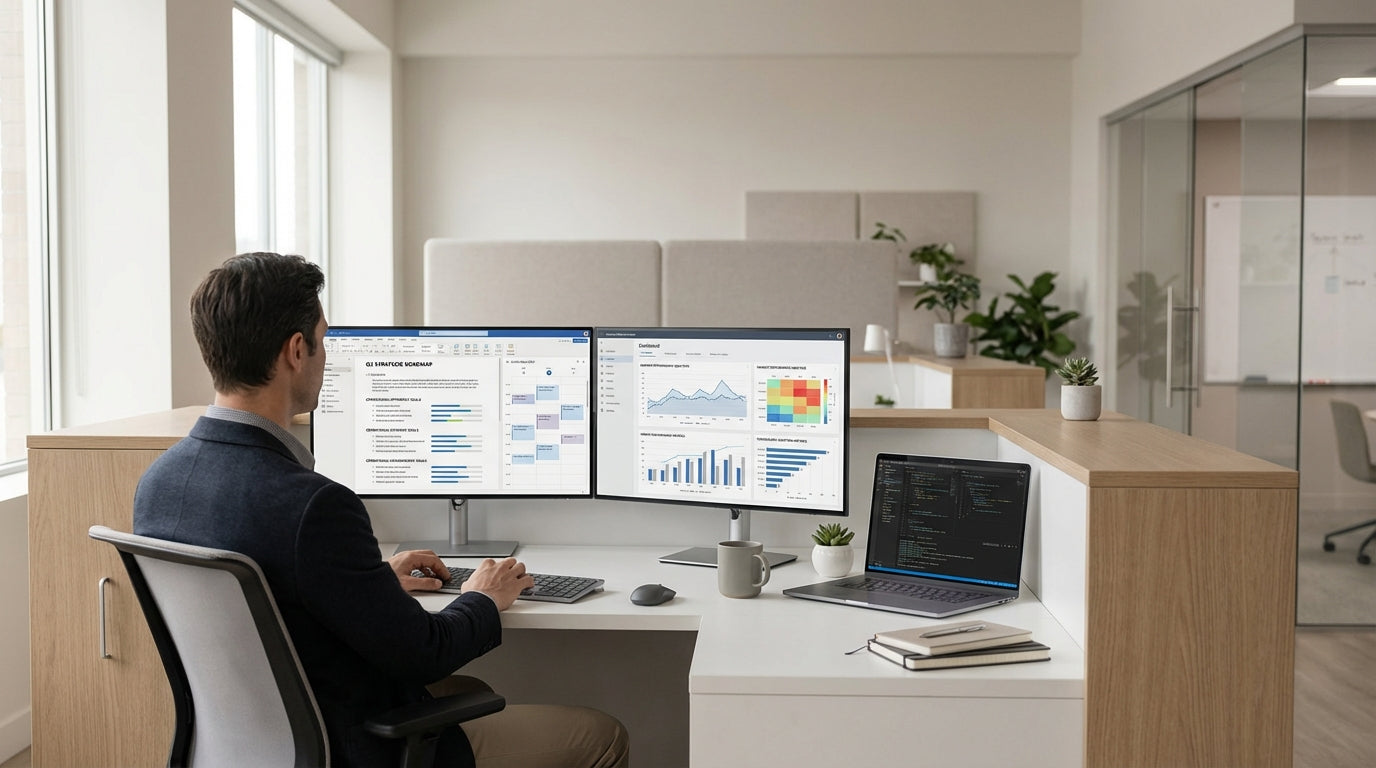
Technology placement makes a big difference to day-to-day use. Plan locations for PCs, EFTPOS terminals, scanners and phones before you finalise the counter position so you can align these with power points and data outlets. Integrating purpose-designed cable management from the start keeps wires safely out of foot traffic, reduces dust build-up and gives the front desk a streamlined appearance. Where multiple monitors are required, the angled return is a useful spot for secondary screens used for bookings or internal systems.
Finally, test the arrangement during a typical busy period. Watch how staff move from the desk to reception seating areas, how easily visitors can sign documents at the counter, and whether queues interfere with access to coffee tables or visitor chairs. Small adjustments to furniture spacing or technology placement can dramatically improve flow, resulting in a reception that looks professional and works smoothly every day.


