

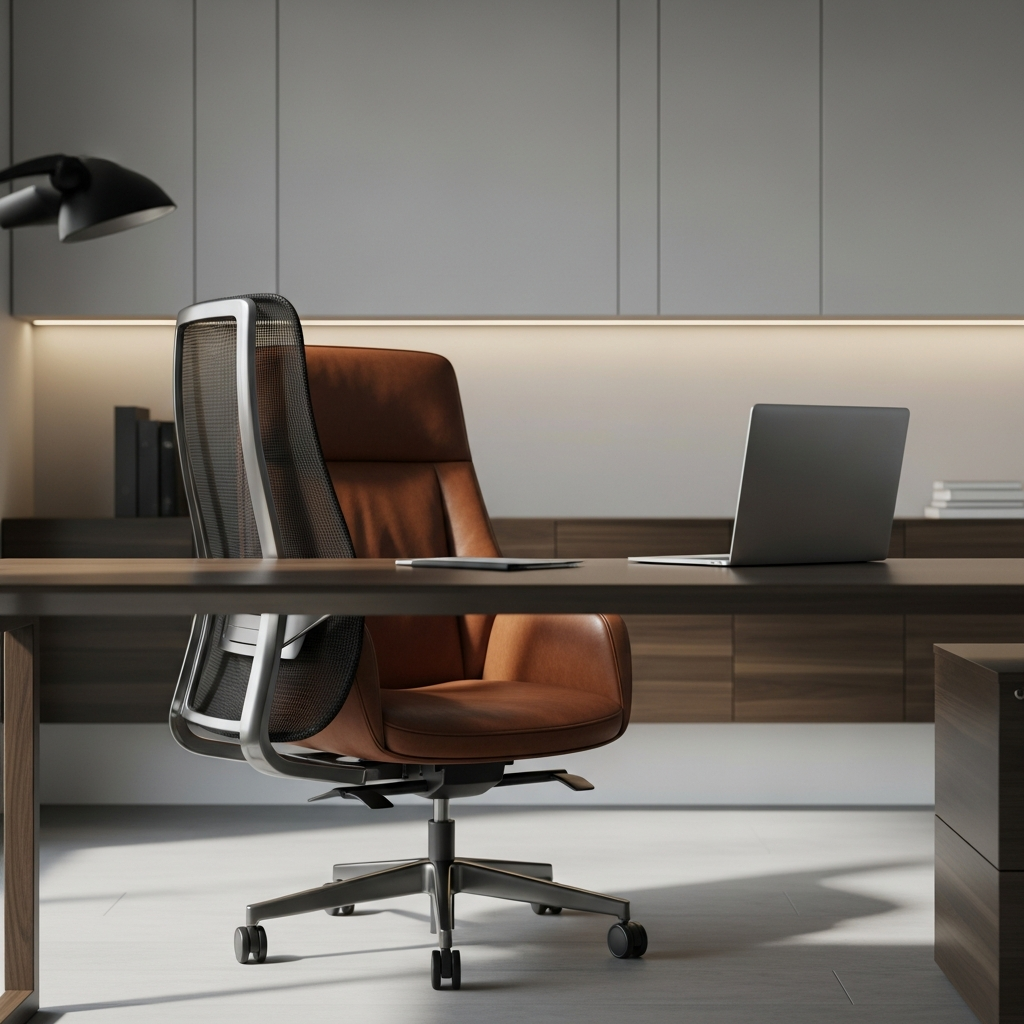
Understanding chair materials for everyday Australian offices
Choosing the right office chair material affects comfort, durability, and how hot you feel in summer. Mesh, leather, and fabric all behave differently over long workdays.
Mesh chairs are known for their breathable woven backs, which help reduce sweat and stickiness in warmer climates. Leather chairs use either genuine hide or synthetic PU to create a smooth, sleek finish that’s easy to wipe down. Fabric chairs are upholstered in textile materials that can range from basic polyester through to premium wool or commercial-grade blends designed for heavy use.
When you’re comparing materials, it helps to think about how many hours you sit, your office temperature, and how formal the workspace needs to look. Pairing the right material with the right frame and mechanism is just as important as the look of the chair. That’s where ergonomic features, warranty, and build quality come into play, especially for long-term home office setups and open-plan corporate spaces.
Breathable support with mesh seating
Mesh office chairs are popular across Australia for their cool, ventilated support. They’re ideal for people who run warm or work in non-air-conditioned spaces.
The hallmark of mesh is airflow. The perforated backrest lets heat and moisture escape, helping you stay comfortable through long stretches at the computer. Quality designs balance flexibility with tension, so the mesh supports your spine rather than sagging over time. If you want to explore options, browse the range of Mesh Office Chairs built for regular office use.
Mesh is usually paired with a cushioned seat base, so you get the breathability of mesh plus the softness of foam. Look for adjustable lumbar support, seat depth adjustment, and multi-tilt mechanisms to fine-tune your posture. These features are common in modern Task Chairs, which are designed for focused computer work across an eight-hour day.
One thing to watch with mesh is quality. Cheaper mesh can feel scratchy or lose tension, leading to poor support and back fatigue. Higher-grade models use stronger weaves and better frames, which hold their shape under daily use. If you’re a heavier user or share the chair between multiple people, consider pairing mesh with options from the Heavy Duty Chairs category for added robustness.
Premium look and easy cleaning with leather
Leather and leather-look chairs add a more executive, polished feel to your workspace. They’re especially popular in boardrooms and client-facing offices.
Genuine leather offers a supple, premium finish that develops character over time, while PU or bonded leather delivers a similar aesthetic at a lower price. Both are generally easy to wipe clean, making them practical in settings where food, coffee, or visitors are common. For a broad selection of executive-style options, explore the dedicated range of Leather Chairs designed for contemporary offices.
Leather surfaces don’t breathe as well as mesh, so they may feel warmer in summer and cooler in winter. This can be managed with air conditioning, breathable clothing, or using them in spaces with shorter sitting durations. Many leather models are based on ergonomic Task Chairs, so you can still get height, tilt, and lumbar adjustments while keeping a refined look.
These chairs are a strong fit for conference rooms and visitor areas where first impressions matter. Pairing leather seating with dedicated Meeting Chairs or Visitor Chairs can create a cohesive look for any reception or boardroom. Just keep in mind that if multiple people with different body types are using the same leather chair, you’ll want plenty of adjustment options for all-day comfort.
Versatile comfort with fabric upholstery
Fabric chairs offer the widest variety of colours, textures, and prices. They suit everything from home study nooks to high-traffic commercial offices.
Good fabric upholstery is soft to the touch and tends to feel less sticky than leather in warm weather, though it doesn’t breathe quite as freely as mesh. Commercial-grade fabrics are tested for abrasion and fading, so they hold up well under daily use and strong indoor lighting. This makes them ideal for shared workstations, training rooms, and educational spaces where chairs are moved and used constantly.
If you need reliable, everyday seating, look for ergonomic models within the Task Chairs range that feature fabric seats and backs. For more specialised environments, such as labs or healthcare, purpose-built Lab Chairs & Stools often use wipeable, antimicrobial fabrics or vinyls for hygiene and ease of cleaning.
Australian workplaces increasingly value locally made products, and many fabric options fall under the Australian Made Chairs category. These chairs are manufactured to meet local standards, often with access to replacement parts and custom upholstery. That can be a real advantage for organisations wanting consistent colours across multiple floors or offices over several years.
Matching materials to tasks, users, and spaces
The right chair material also depends on how and where the chair will be used. Think about daily tasks, user needs, and the style of each workspace.
For focused desk work, breathable mesh or supportive fabric on ergonomic Task Chairs is usually the most practical choice. In reception or waiting areas, consider using fabric or leather on purpose-designed Visitor Chairs to keep guests comfortable while reinforcing your brand style. Meeting rooms benefit from cohesive, easy-to-move seating, so look at mesh or upholstered options within the Meeting Chairs range that stack or nest when not in use.
For heavier users or 24/7 environments such as control rooms, call centres, or shared desks, durability becomes critical. In these cases, pair your preferred surface (mesh, leather, or fabric) with frames and mechanisms from the Heavy Duty Chairs category, which are engineered to higher weight ratings and longer duty cycles. In aged care or mobility-focused settings, upholstered Power Lift Chairs can provide additional support for standing and sitting, using easy-clean fabrics or leather-look materials.
Material is also about maintenance. Mesh and fabric may need occasional vacuuming or spot cleaning, while leather benefits from periodic conditioning to prevent cracking. Matching the surface to the cleaning routines in your office helps keep chairs presentable and extends their life, whether they are locally produced Australian Made Chairs or imported models spread across multiple sites.


