

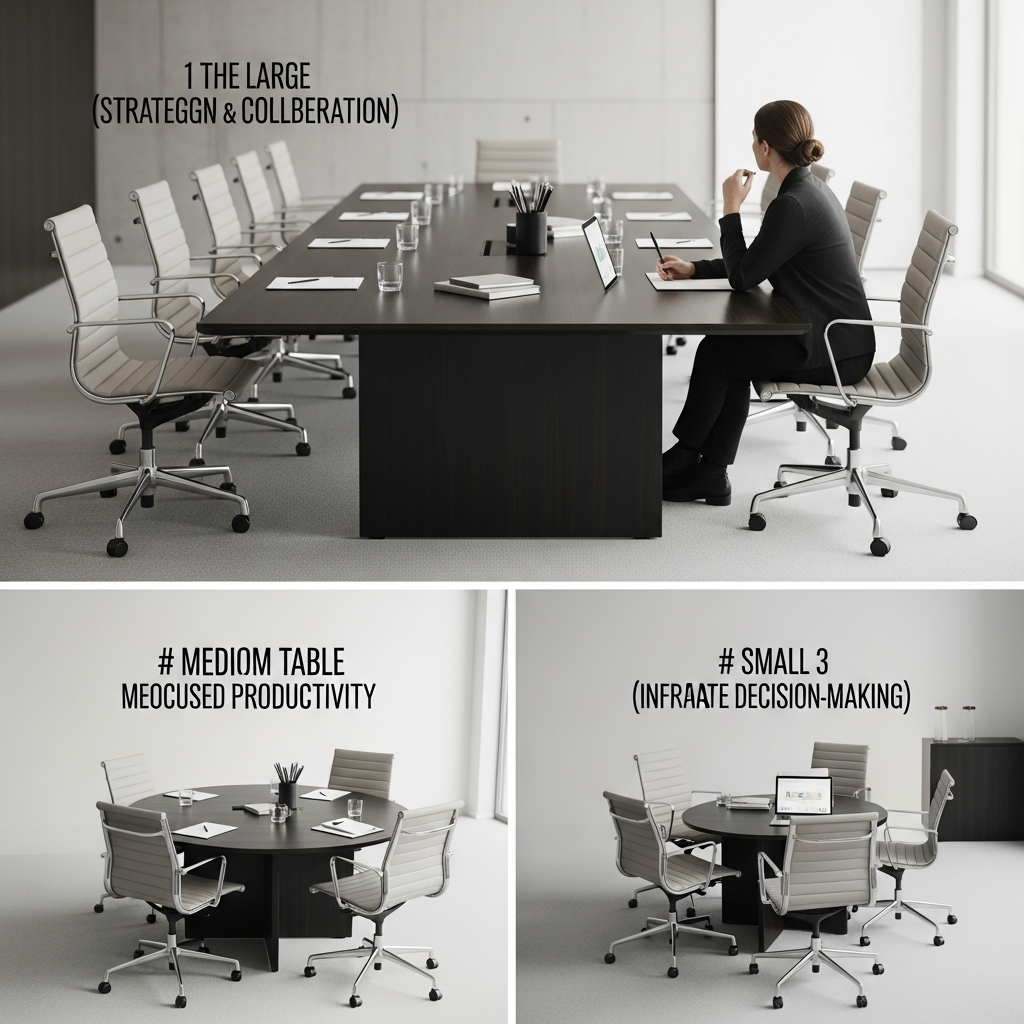
Understanding Boardroom Table Capacity
Choosing the right boardroom table size starts with knowing how many people you need to seat comfortably. From there, it’s about matching the dimensions of the table to the space and style of your meeting room.
In most modern offices, boardrooms double as spaces for client presentations, internal workshops and video calls. That means your table has to work hard: it must look professional, allow enough elbow room, and still leave space to move around the room. When you browse purpose-designed Boardroom Tables, you’ll see capacity guidelines, but understanding what they mean helps you avoid cramped meetings and awkward layouts.
As a rule of thumb, allow around 600–700 mm of table length per person for standard business meetings. This gives each person sufficient space for a laptop, notepad and a drink without feeling squeezed in. If your leadership team often spreads out documents, or you host strategy workshops, plan on the higher end of that range or even more.
Remember that the overall seating capacity is also influenced by the chair style you pick. Bulkier executive chairs take up more space than slimline Meeting Chairs or stackable Conference Chairs, so you may need a longer table to seat the same number of people without compromising comfort.
How Room Size Shapes Your Table Choice
The size of your boardroom or meeting room is the main constraint on how big your table can be. You need enough clearance to walk around the table and open doors and storage units.
Measure the length and width of your room, and then subtract at least 900 mm (and ideally 1000–1200 mm) on all sides of the table for circulation space. This buffer allows people to push their chairs back and stand up without hitting walls, credenzas or other furniture. If you use sideboards or storage like Credenzas / Buffets for catering and documents, factor their depth into your calculations too.
The shape of your room matters as well. Long, narrow rooms typically suit rectangular or boat-shaped Office & Meeting Tables, while more square rooms can comfortably host oval or round designs. In compact spaces or project rooms, smaller Meeting Tables may provide better flexibility, allowing you to reconfigure layouts depending on the style of meeting.
Don’t forget vertical and technology considerations. If you’re using wall-mounted screens, projection equipment or Projection Boards & Presentation Accessories, ensure there’s clear sightlines from every seat. Leaving adequate space at the front of the room for a presenter or a Mobile Whiteboard can slightly reduce the maximum table length you can practically fit.
Matching Shape and Style to Meeting Needs
Table shape affects both seating capacity and how people interact in the room. Different shapes are better suited to different types of meetings.
Rectangular and boat-shaped Boardroom Tables are the most common for executive spaces because they maximise seating while clearly defining a “head” of the table for the chairperson or presenter. These styles work particularly well when you regularly host formal presentations, client pitches or structured board meetings. Boat-shaped designs curve slightly outward along the sides, improving sightlines so everyone can see each other and any screens more easily.
For more collaborative or informal sessions, circular and oval tables promote a greater sense of equality and interaction. Smaller Round Tables are ideal for breakout areas, one-on-one conversations and quick stand-up meetings, while larger round or oval options can serve as the main meeting surface in creative studios or consultancies. Just note that round tables generally seat fewer people than rectangular tables of the same room footprint because they need more width to maintain comfort.
Also consider the style of seating you are pairing with the table. Slimline Visitor Chairs and ergonomic Meeting Chairs can help you accommodate more people around the same table size, whereas plush executive seating uses more space per person. Ensuring the style and height of your chairs complements the table design will enhance both aesthetics and usability.
Practical Seating Spacing Guidelines
Once you know your room size and preferred table shape, use spacing guidelines to calculate how many seats will actually work. This helps turn general capacity estimates into a layout you can trust.
For everyday meetings, a comfortable allowance is about 650 mm of table edge per person. For example, a 3.0 m long table can typically seat four people per side plus one at each end, giving you a total of 10 seats without overcrowding. If your meetings are shorter or more informal, you can push this slightly, but for workshops or laptop-heavy sessions, avoid going below 600 mm per person.
Ends of the table are often overlooked. Many rectangular and boat-shaped Meeting Tables allow one or two additional seats at each end, depending on the leg frame and base design. Check where the legs or pedestal sit; if they are set back from the corners, you’ll have more flexibility for end seating. When browsing Office & Meeting Tables online, look closely at base diagrams or photos to understand how much of the table edge is truly usable.
Chairs themselves take up floor width as well as table edge width. Slim conference-style seating like many Conference Chairs can be spaced closer together, whereas broader, padded chairs will require more room to avoid people bumping elbows. Test a layout on the floor with tape or existing furniture before committing, especially if you are fitting out a new boardroom and want to maximise capacity without sacrificing comfort.
Planning a Flexible, Future-Proof Meeting Space
Your table choice should work for today’s needs and adapt to how your team will meet in the future. Flexibility is just as important as initial seating capacity.
If your business runs a mix of large board meetings and smaller team catch-ups, consider combining a main board table with auxiliary surfaces. Smaller Round Tables or modular Meeting Tables can act as breakout areas or be rearranged to create training-room layouts. Pairing these with mobile tools such as Mobile Whiteboards lets you quickly reconfigure your space for workshops, brainstorming or hybrid meetings.
Think beyond the table itself to the overall meeting experience. Adequate storage, catering surfaces and presentation equipment all influence how functional your space feels. Using dedicated Credenzas / Buffets allows you to keep the tabletop clear of clutter, while integrated AV and clearly positioned Projection Boards & Presentation Accessories ensure everyone can see and hear without having to move their chairs mid-meeting.
Finally, align your seating choices with your table and usage patterns. Durable, comfortable Meeting Chairs or versatile Visitor Chairs will support longer sessions, while stackable Conference Chairs make it easy to scale capacity up or down as needed. By considering the relationship between room size, table dimensions and seating now, you create a boardroom that supports productive, professional meetings for years to come.


