

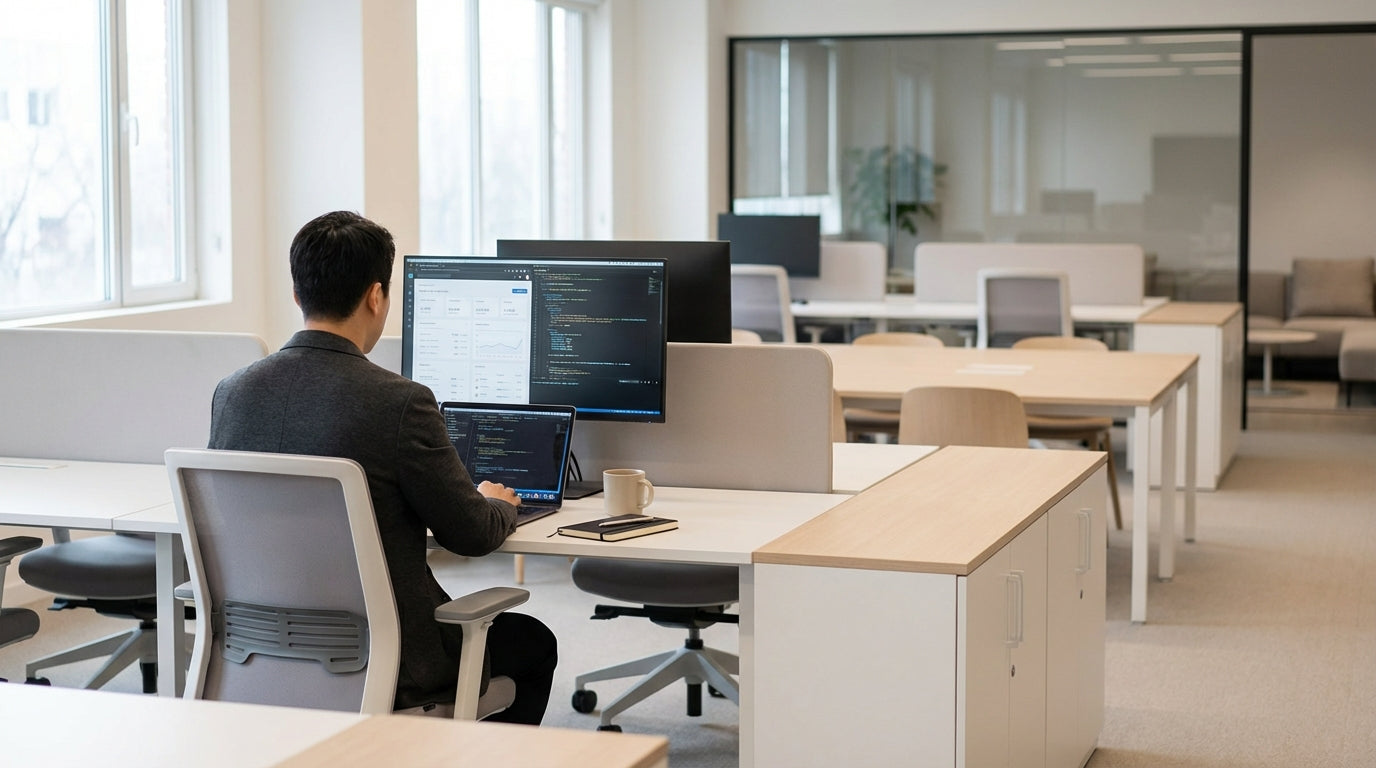
Designing Co-working Layouts for Flexibility and Flow
Co-working spaces need to support very different work styles in the same footprint. A smart furniture strategy lets you shift quickly between focused work, collaboration, and quiet time.
The starting point is understanding how your members actually use the space. Solo freelancers will value dedicated zones with options like compact Single Person Workstations, while small teams might need grouped desks and a few casual meeting spots. Mapping common “journeys” through the day – from focused work, to a quick chat, to a video call – helps you plan furniture clusters that feel natural rather than forced.
Traffic flow is equally important. Arranging banks of 2 Person Workstations or 4 Person Workstations in clear rows, with generous walkways in between, reduces noise and prevents bottlenecks at peak times. Keep high-traffic zones, like kitchens and printers, slightly separate from focus areas, and use furniture to subtly guide people around the space without the need for lots of signage.
Finally, plan for change from day one. Modular pieces, mobile storage, and lightweight tables mean you can reconfigure the layout without a full refit. Combining fixed desks with movable Meeting Tables and flexible seating creates a co-working environment that can evolve as your membership grows or shifts to more hybrid working patterns.
Choosing the Right Workstations for Shared Spaces
Shared offices rely on the right mix of desks and configurations. The aim is to balance density with comfort, while keeping the space attractive to a wide range of users.
Start with the smallest building block: the individual desk. A bank of ergonomic Single Person Workstations suits hot-desking and dedicated membership plans, giving each person a clear personal zone. For pairs that regularly collaborate, such as start-up co-founders or project partners, consider grouped 2 Person Workstations to keep them side-by-side without taking over a whole area.
As teams grow, pod-style layouts become more efficient. Configuring 4 Person Workstations and 6 Person Workstations into islands allows small groups to share power, storage, and collaboration surfaces. This clustered approach supports agile work practices, where staff move between desks and nearby meeting points during the day. It also helps you maintain a coherent look across the floorplate, instead of a patchwork of mismatched desks.
For larger project teams, dedicated hubs using 8 Person Workstations can anchor a “team neighbourhood” within the broader co-working space. These larger benches are ideal for organisations running sprints or long-term programs, and they help justify premium membership tiers with more predictable seating. When planning these zones, pair them with nearby Meeting Tables so teams can quickly move from desk work to more formal discussions without booking an external room.
Ergonomics and Wellbeing in a Shared Environment
Healthy, comfortable members stay longer and work more productively. Ergonomic furniture is a practical way to support wellbeing in a shared office.
Sit-stand desks are now a standard expectation in many modern workplaces, and co-working is no different. Integrating a proportion of Height Adjustable Workstations lets members alternate between sitting and standing through the day, reducing stiffness and fatigue. You don’t need every desk to be height adjustable; instead, create sit-stand zones that members can move to when they need a posture change.
Task seating has an equally big impact. Quality Mesh Office Chairs provide breathable support in warmer Australian climates and adapt easily to different body types, which is essential when multiple people use the same chair. Look for adjustable lumbar support, seat height, and armrests, and set up simple signage or onboarding guides that show new users how to tweak their chair correctly.
Wellbeing is also about acoustic comfort and mental focus. Positioning quiet zones away from social areas, and complementing desks with partially enclosed Office Pods, gives members somewhere to handle confidential calls or deep-focus tasks. Combine these with nearby Breakout Seating for quick breathers, creating a rhythm between high-focus and low-focus spaces that supports healthier working habits.
Spaces for Collaboration, Privacy and Social Connection
Successful co-working is more than rows of desks. People join for networking, collaboration, and the option to find privacy when they need it.
For collaboration, vary your meeting options. Formal rooms anchored by sturdy Meeting Tables work well for client presentations, workshops, and board-style sessions. In open-plan areas, smaller tables and informal seating clusters encourage quick stand-ups or “huddle” meetings that don’t require a booking system. Mixing these formats helps you cater for everything from mentoring catch-ups to structured training sessions.
Privacy is just as important in a shared environment. Acoustic Office Pods give members a place for Zoom calls, interviews, or concentrated solo work without leaving the building. Pods can be treated as premium amenities in your membership packages, adding value for professionals who need confidentiality but don’t want the overhead of a traditional private office.
Social connection mostly happens in the in-between spaces. Comfortable Breakout Seating near kitchens, coffee points, or reception encourages casual conversations and networking. These softer zones help members recharge between tasks and make the workspace feel more like a community than a rented desk farm. By thoughtfully balancing desks, collaboration areas, pods, and breakout spots, you create a co-working environment that supports both productivity and genuine human connection.
Planning for Growth, Turnover and Changing Teams
Co-working operators must plan for constant change. Teams expand, contract, and move on, often at short notice.
Furniture that scales smoothly saves both time and money. If you start with a mix of 2 Person Workstations and 4 Person Workstations, you can reconfigure pods quickly as teams grow from two to four to six people. Adding compatible 6 Person Workstations or 8 Person Workstations helps you accommodate larger groups without redesigning the floor each time a new client signs up.
Hybrid work trends mean that some members will only be in the office a few days a week. This creates opportunities to layer flexible hot-desking areas, using shared Height Adjustable Workstations and movable Meeting Tables that can shift between open co-working and event use. Paired with durable Mesh Office Chairs, these zones can handle high turnover without constant maintenance.
Finally, review your layout regularly as your member mix changes. If demand for focus work increases, consider expanding your bank of Single Person Workstations and adding more Office Pods for quiet calls. If more start-ups are joining, invest in additional team benches and enhance communal zones with extra Breakout Seating. An adaptive furniture plan keeps your co-working space relevant, attractive, and profitable as the way Australians work continues to evolve.


