

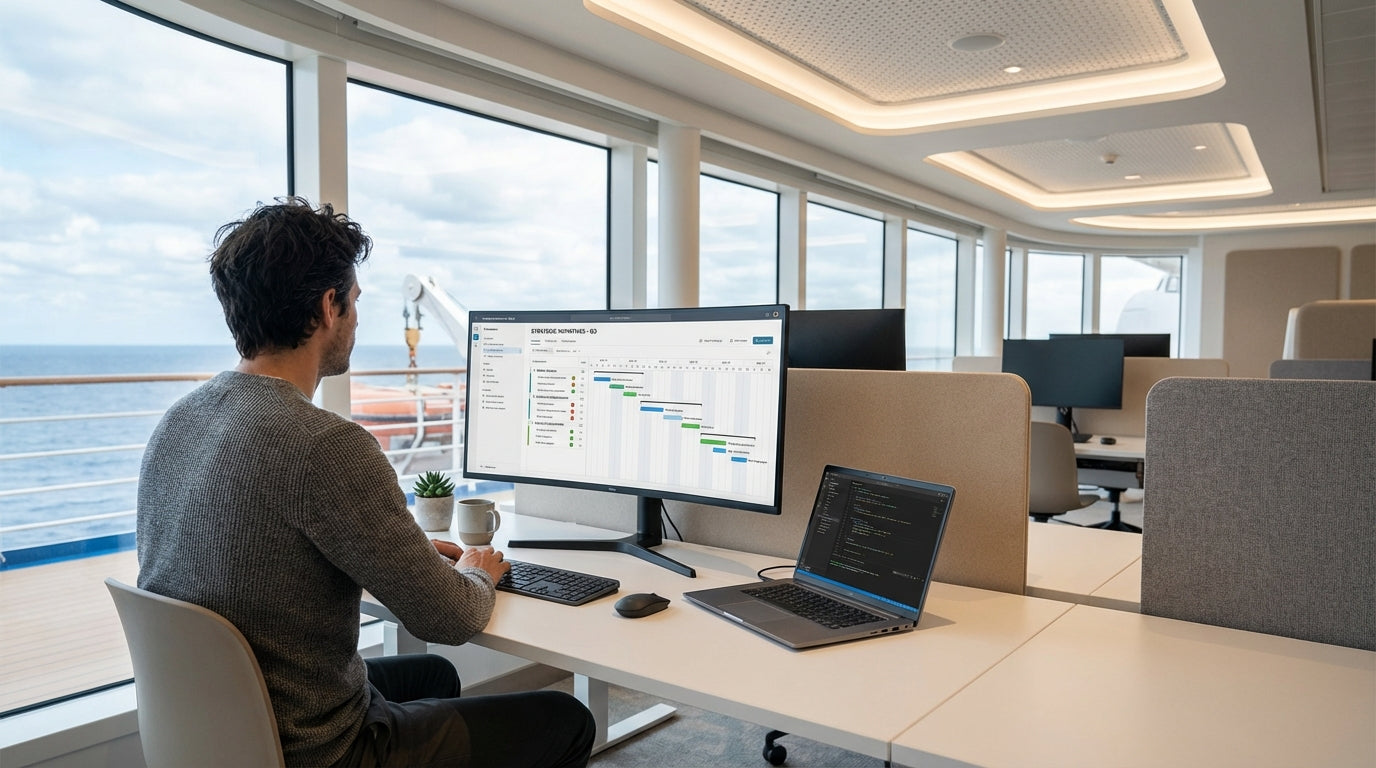
Designing Efficient Workspaces at Sea
On modern cruise ships, office spaces need to be compact, efficient, and safe. Every square metre counts, and furniture must withstand constant movement, salt air, and heavy use.
Unlike shore-based offices, onboard work areas share space with guest amenities, technical rooms, and crew facilities. This makes smart planning and flexible layouts critical. Modular solutions such as Single Person Workstations help create focused zones for administration, guest services, and onboard management without wasting precious floor space. Selecting pieces that can adapt to different tasks allows operators to reconfigure areas between sailings with minimal downtime.
Durability is just as important as layout. Cruise environments are subject to vibration, humidity, and frequent cleaning, so robust frames, high-quality edging, and hard-wearing finishes are essential. Lockable storage, integrated power, and easy-clean surfaces support both security and hygiene standards, especially in shared workstations and 24/7 operations such as reception, shore excursion desks, and security offices.
Finally, safety approvals and marine-grade fittings should be considered from the outset. Furniture needs to be stable, able to be anchored where needed, and designed so drawers, doors, and monitors don’t swing dangerously in rough seas. Practical design decisions at the planning stage reduce maintenance issues and improve crew efficiency over the long term.
Choosing the Right Desk Layout for Cruise Ship Offices
The choice of desk shape has a major impact on workflow and floor space on board. Matching the desk style to the role helps keep operations smooth in a compact environment.
For corner nooks in back-of-house areas, Corner Office Desks make use of otherwise wasted space along bulkheads and structural columns. These are ideal for crew administration, accounting stations, or IT workbenches where employees need a fixed position but not a large footprint. Where a more executive-style footprint is required for senior crew or hotel management, dedicated Manager Desks offer more surface area, storage options, and a professional feel suitable for guest-facing consultations.
Open-plan service hubs, such as shore excursion booking zones or guest relations offices, benefit from streamlined layouts using Straight Desks. Their simple geometry makes them easy to line up against walls or in rows, helping maintain clear traffic paths for passengers and crew. Where more wraparound space is needed for paperwork, multiple screens, or ticketing equipment, L-Shaped Desks provide additional surface area without a significant increase in footprint.
For confidential discussions or managerial work that requires privacy, enclosed solutions such as Office Pods can create dedicated meeting or focus spaces within open-plan zones. These pods are particularly useful on cruise ships where building full permanent rooms may be constrained by existing layouts or weight considerations. Combining pods with an appropriate mix of desk shapes supports both collaborative work and quiet, private tasks.
Ergonomics and Comfort for Long Voyages
Crew often work long hours at sea, so ergonomic furniture is vital. Comfortable, supportive setups reduce fatigue and help prevent workplace injuries.
Quality seating is the foundation of an ergonomic workstation. Adjustable Task Chairs with lumbar support, seat-depth adjustment, and smooth-rolling casters allow crew members of different sizes to share the same station comfortably. On a vessel that never stands still, stable bases and high-quality mechanisms also ensure chairs remain safe and functional despite constant movement and frequent use.
Sightlines and neck posture matter when staff spend extended periods at a screen. Monitor Arms allow screens to be positioned at the correct height and distance, reducing eye strain and encouraging neutral neck alignment. They also free up valuable desk space, making it easier to keep keyboards, documents, and devices within easy reach. For small shipboard work areas, this added flexibility can make a noticeable difference to comfort and productivity.
Well-planned cable routing supports both comfort and safety. Integrating Cable Management solutions prevents loose leads becoming trip hazards, especially in narrow corridors or multi-use spaces that transition from office to passenger area. Simple additions like under-desk trays, grommets, and cable spines help keep surfaces tidy, reduce snagging during rough weather, and make it easier to clean around desks and workstations.
Storage, Security, and Organisation at Sea
Space on a ship is at a premium, so storage must be compact, secure, and easy to access. Thoughtful organisation keeps paperwork and equipment under control even on busy days at sea.
Lockable Office Cupboards are essential for handling passenger records, HR files, and sensitive operational documents. Tall, slim cupboards can be tucked against bulkheads, while internal shelving and file rails help operators maximise vertical space. In guest-facing offices, clean-lined cupboard designs contribute to a tidy, professional appearance without intruding into passenger walkways.
Individual crew and officers benefit from compact storage integrated into their desks or workstations. Under-desk mobile drawers, shelves, and small cabinets make it easy to keep logbooks, handheld radios, and personal gear close at hand but out of sight. When paired with Single Person Workstations, these storage options help keep each station self-contained, reducing clutter in shared areas and simplifying shift handovers.
Organisation is also about process. Clearly defined zones for incoming and outgoing paperwork, dedicated shelves for safety manuals, and labelled storage for technical items keep daily operations running smoothly. Combining well-planned storage with simple, consistent filing practices reduces time spent searching for items in a complex, fast-moving shipboard environment.
Flexible Work Zones for Modern Cruise Operations
Cruise operations are dynamic, with changing routes, passenger numbers, and service models. Flexible office setups help ships adapt quickly without major refits.
Modular furniture solutions allow operators to keep pace with new demands, such as expanded shore excursion teams or enhanced onboard medical administration. Reconfigurable layouts using Straight Desks, Corner Office Desks, and L-Shaped Desks can be adjusted between seasons or itineraries. Adding or removing Office Pods gives operators the option to create quiet zones for planning, team briefings, or confidential passenger meetings as needed.
Technology-heavy departments, such as navigation support, IT, and entertainment control, benefit from carefully planned benching that integrates Monitor Arms and Cable Management. Keeping cables secure and screens adjustable supports both safety and collaboration when teams need to gather around shared displays. When tasks change, monitors can be repositioned, and extra devices added without reworking the entire space.
As cruise lines continue to expand remote services and digital guest platforms, onboard offices must support both traditional paperwork and modern IT requirements. Pairing ergonomic Task Chairs with role-appropriate desks, storage, and workstations ensures crew can work efficiently and comfortably across long voyages. With the right planning and furniture choices, every square metre of an onboard office can contribute to smoother operations, happier crew, and better service for guests.


