

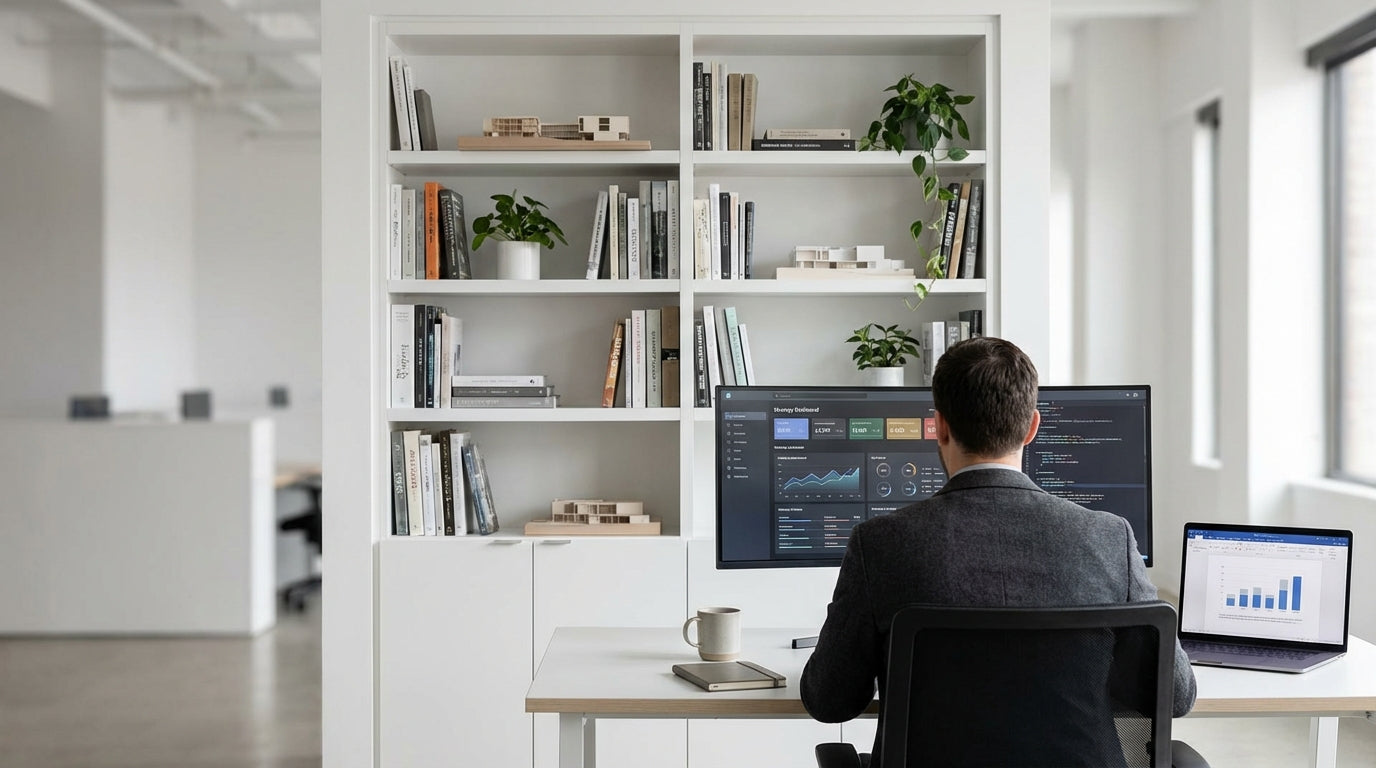
Why Bookcase Height Matters in the Modern Office
Choosing the right bookcase height is about more than just fitting books on shelves. It affects how your office looks, functions, and stays safe for everyday use.
In Australian workplaces, bookcases often double as storage for folders, display units, and space dividers. That means their height has to balance accessibility with capacity. Go too low and you waste vertical space; go too high and you risk awkward reaching or an unstable unit. Thinking about height early will help you match your storage to your ceiling height, floor space, and the way your team actually works.
Bookcase height also has a visual impact on your office design. Lower shelving keeps sight lines open for a more spacious feel, while taller units create a more enclosed, library-style atmosphere. When combined with other storage such as office cupboards or credenzas / buffets, the right height can create a cohesive, professional look.
Common Office Bookcase Heights Explained
Most commercial bookcases fall into a few standard height ranges. Knowing these makes it easier to compare options and plan your layout.
Short office bookcases typically sit around desk height or slightly higher. These are often used behind workstations or next to credenzas to extend usable surface area. Pairing low units with hutch storage units gives you extra vertical storage without increasing the footprint on the floor, which is handy in compact offices or home workspaces.
Medium-height bookcases usually provide three to four shelves and suit general filing and display in shared areas. They work well alongside office shelving or stationery cupboards in copy rooms and admin spaces, where staff need to access files regularly without using a step-stool. Taller units often rise close to door-frame height and maximise vertical storage, similar in scale to sliding door cabinets or full-height tambour cupboards.
Specialised ranges like Luxe Storage and Athens Storage often include multiple heights within the same style. This lets you mix low and tall bookcases in the one fit-out while keeping a consistent finish and handle design. When you’re planning a new office, check whether your preferred range offers matching bookcases, cupboards, credenzas and hutches so your storage can scale with your business.
Matching Bookcase Height to Your Storage Needs
The right height depends on what you’re storing and who needs to reach it. Start with what will live on the shelves day to day.
For heavy lever arch folders and reference files, mid-height units are often the most practical. They keep weight at a comfortable level and reduce the strain of lifting bulky items above shoulder height. If you’re storing lighter items like decor, awards, or marketing materials, taller bookcases become a sensible option, especially when backed up by lockable office cupboards for confidential documents.
Think about how often each shelf will be accessed. Frequently used items should sit between hip and eye level, with less-used material higher up or closer to the floor. Combining open bookcases with enclosed storage such as credenzas / buffets or sliding door cabinets allows you to keep clutter hidden while leaving important references clearly visible and within easy reach.
Don’t forget stationery, personal items and tech accessories. These are often better placed in stationery cupboards or under-desk drawers, with bookcase shelving reserved for items that benefit from being on display. Matching the height of your bookcases to nearby hutch storage units and Luxe Storage furniture will make the whole workstation feel intentional rather than pieced together.
Ergonomics, Safety and Compliance Considerations
Height affects how safe and comfortable your storage is to use. Ergonomics and stability need to be part of your selection process from the start.
An ergonomic layout avoids repeated bending, stretching or climbing to reach everyday items. For taller units, that often means keeping the top shelf for very light, rarely used items, similar to how you would treat the upper compartments of tambour cupboards. Where staff need access above shoulder height, providing a stable step-stool and clear instructions can reduce the risk of strain or falls.
From a safety perspective, taller bookcases should be anchored to the wall or otherwise secured, especially in high-traffic areas or where children might be present. This is just as important as securing tall office shelving or vertical office cupboards. Uneven loading, such as placing all the heavy files on the top shelves, can make a unit top-heavy, so distribute weight evenly and follow the manufacturer’s load ratings.
Compliance standards may also influence your choice. In corridors and shared spaces, ensure that bookcase height doesn’t obstruct exits, fire equipment or emergency signage. Low-slung credenzas / buffets and shorter bookcases are often better suited to these circulation zones, while taller storage can be placed against perimeter walls or in dedicated filing rooms alongside sliding door cabinets and stationery cupboards.
Coordinating Heights with Other Office Storage
Bookcases rarely sit alone; they’re part of a wider storage plan. Coordinating heights helps you create a tidy, professional look and use space more efficiently.
One common approach is to line up the tops of low bookcases with adjacent desks or credenzas / buffets. This creates a continuous surface that can hold printers, plants or personal items while keeping important documents stored just below eye level. Above these, wall-mounted shelves or hutch storage units can add vertical capacity without cluttering the floor, echoing the efficiency of full-height office shelving systems.
In executive offices and client-facing spaces, products from coordinated ranges such as Luxe Storage and Athens Storage can tie everything together. Matching finishes across bookcases, office cupboards, and tambour cupboards keeps the space cohesive while letting you mix low and tall units where they make the most sense functionally.
In shared zones like print rooms and storage areas, combining tall sliding door cabinets with open shelving and enclosed stationery cupboards allows you to separate personal or secure material from general supplies. Open office shelving and robust bookcases can then handle bulkier items and reference material, ensuring every vertical centimetre is used without overwhelming the room.


