

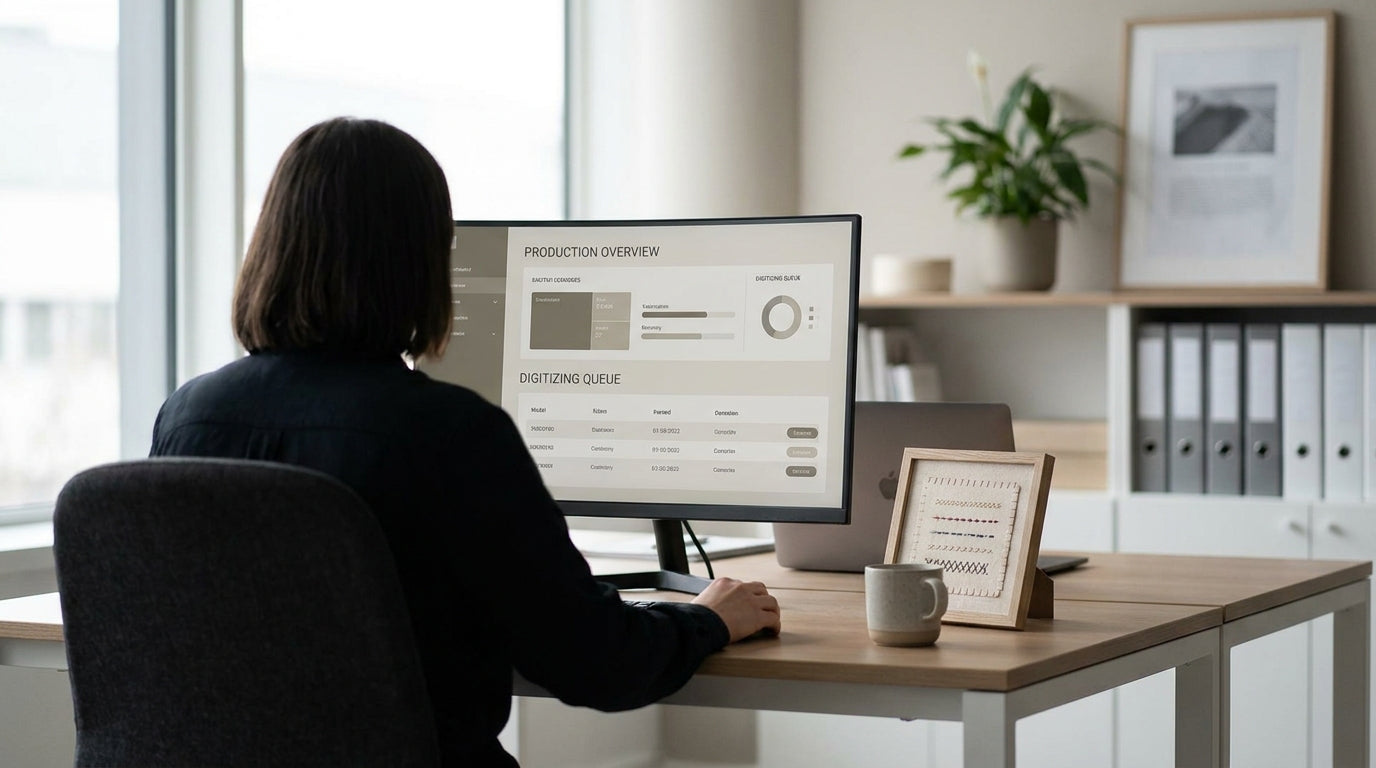
Why Your Front Area Matters for an Embroidery Business
Your front area is often the first physical touchpoint customers have with your embroidery brand. It should communicate professionalism, creativity, and reliability within seconds.
In a competitive custom embroidery market, clients are judging whether to trust you with uniforms, promotional gear, and personalised gifts the moment they walk in. A tidy, well-planned reception communicates attention to detail, which reassures customers you’ll take the same care with their garments and branding. Thoughtfully chosen reception furniture can also guide traffic flow, reduce bottlenecks, and make it easier for staff to manage walk-ins and pickups.
Because embroidery businesses deal with a mix of retail customers and trade clients, the front area needs to handle everything from quick drop-offs to design consultations. Investing in the right layout and furniture now can reduce daily friction, help staff move more efficiently between the front and production area, and ultimately improve how quickly you can turn around orders.
Designing a Reception Counter That Supports Your Workflow
Your reception counter is more than a desk; it’s the control point for orders, payments, and customer queries. It needs to look inviting and function smoothly under pressure.
Many embroidery shops find that L-Shaped Reception Counters work well when space is tight but tasks are varied. The return section gives you extra bench space for garment bags, order forms, and a POS system, while still keeping everything within easy reach. If your entry area is narrow or you mainly handle quick transactions, streamlined Straight Reception Counters can provide a clean, modern look that makes the front of house feel organised.
For businesses that are still evolving, choosing from a broader range of Reception Counters lets you match height, storage and cable management to your exact workflow. Look for counters with lockable drawers for deposits and petty cash, shelving for order bags waiting for collection, and discreet openings to route printer and EFTPOS cables. Even small features such as a raised transaction ledge can help keep customer-facing areas tidy, hiding paperwork and tools from view.
Consider positioning the counter so staff can see both the entry door and the production floor. This reduces missed walk-ins and allows team members to quickly check on a job without leaving customers unattended. A well-placed counter also makes it obvious where customers should go, preventing people wandering into your machine area or interrupting embroidery operators mid-run.
Creating Comfortable and Practical Seating for Clients
Even in a fast-paced embroidery shop, customers will sometimes need to wait. Comfortable seating sends a message that you value their time and business.
Start with sturdy, easy-to-clean Visitor Chairs that can handle frequent use and the occasional ink or thread dust. Stackable or lightweight designs make it simple to reconfigure the space for busy periods, while arms and proper back support are important for older clients or those bringing in bulk orders. For higher traffic front areas, mix individual chairs with modular Reception Seating so you can cater to both solo customers and small groups, like sports teams or corporate clients.
If you often host longer consultations about logo placement, thread colours and garment choices, adding a couple of Single Lounges can make the process feel more relaxed and premium. Lounges with firm cushions and durable upholstery work best in commercial settings, balancing comfort with easy maintenance. Arrange them to face your sample wall or display rack so clients can browse designs while they sit, helping them make decisions faster.
A small waiting zone also helps you manage the ebb and flow of pickups and drop-offs. Clear, visible seating near the counter encourages customers to sit instead of crowding the transaction area, which reduces noise and pressure on staff. Keep pathways wide enough for prams, boxes and large garment bags so the space feels welcoming and accessible to everyone.
Tables, Displays and Sample Areas That Sell Your Work
Your front area should quietly showcase your best embroidery, not just store it. Smart use of tables and displays can turn idle waiting time into sales and upsells.
Low Coffee Tables are ideal for catalogues, lookbooks and care instruction cards, giving customers something useful to browse while they wait. You can also use them to highlight seasonal specials, such as school leaver jerseys or corporate Christmas packs. Compact Side Tables beside seating zones are perfect for showcasing sample caps, towels or bags with detailed stitching, allowing people to see your thread density and finish up close.
To keep your branding, promotions and order information organised, wall-mounted Noticeboards & Display Cases work well. A lockable display case can house your most impressive pieces, like intricate logo work or metallic thread designs, without risk of damage or dust. For frequently changing information—such as turnaround times, minimum order quantities or current promotions—Pinboards & Corkboards offer a simple, flexible way to keep customers informed.
Consider dedicating a small “sample station” where customers can touch blank garments, compare thread colours and view different backing options. Combining a side table with a nearby pinboard displaying applique, monogram and logo samples helps customers understand what’s possible. This reduces back-and-forth questions and gives customers the confidence to commit to larger or more complex orders.
Keeping the Front Area Functional, Clean and On-Brand
A tidy, consistent front area helps separate the creative mess of production from the professional face of your business. It should be easy to maintain, even on your busiest days.
Embroidery generates lint and thread offcuts, so choose surfaces and fabrics that are easy to wipe down and vacuum. Hardwearing laminate counters, vinyl or commercial-grade fabric on chairs, and simple table shapes all make cleaning faster. Keep a small storage zone behind or beside the counter for essentials like order pads, tape measures, thread charts and spare hangers, so they’re handy without cluttering the customer view.
Your furniture also plays a major role in reinforcing your brand. If you specialise in school uniforms, for example, you might opt for durable, practical seating in neutral colours, while a boutique monogramming studio might choose softer tones and more luxurious finishes. Aligning the style of your counter, seating and tables creates a cohesive look that supports your pricing and positioning.
Finally, regularly review how customers move through the space. If people are queuing into the doorway, consider repositioning your main Reception Counters or adding more Reception Seating to draw them further inside. Small adjustments to layout and furniture choice can have a big impact on how smoothly your embroidery business runs from the moment customers step through the door.


