

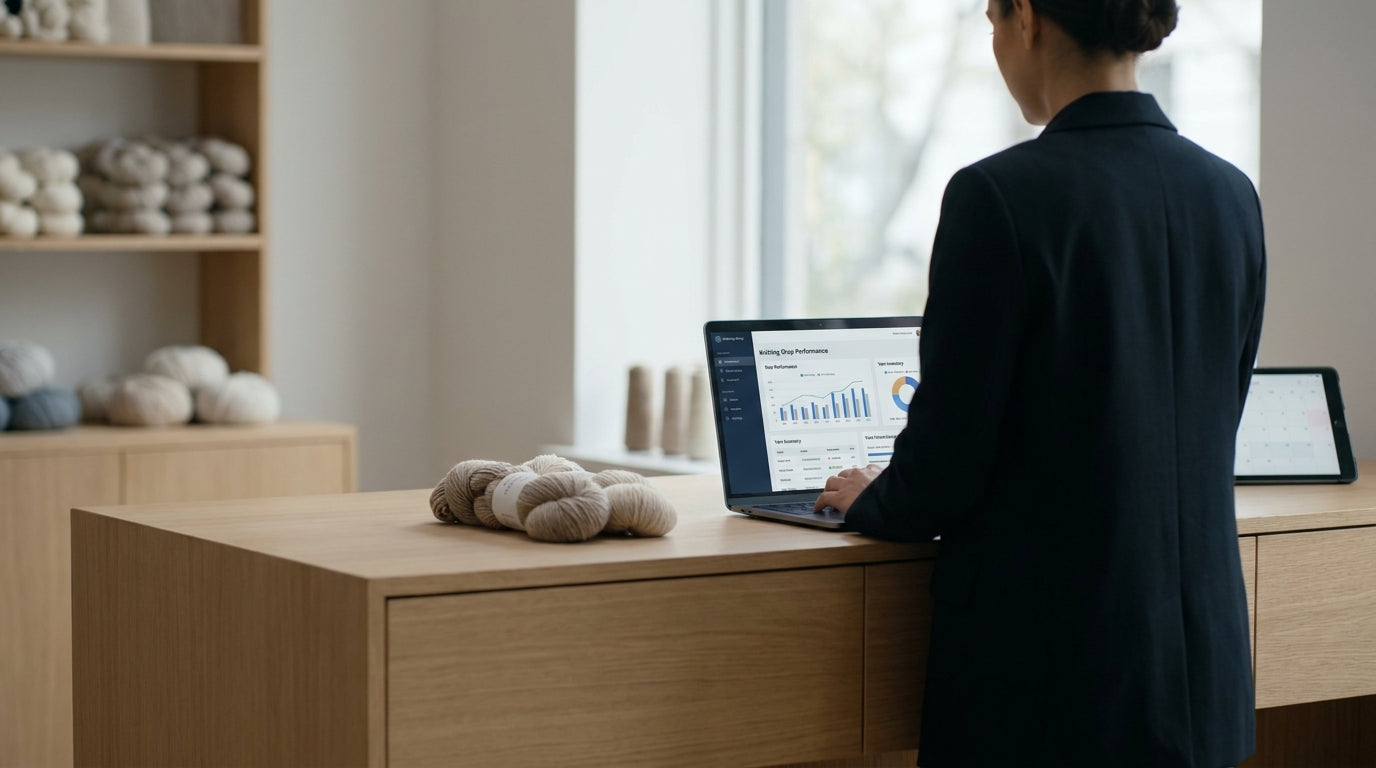
Designing a Welcoming Front Counter for Yarn Lovers
Your front counter is usually the first place customers stop, ask questions, and pay for their yarn. It needs to look inviting while still working hard behind the scenes.
In a knitting shop, the service area does more than process transactions. It’s where people bring half-finished projects, ask for help matching needles to patterns, and sign up for classes. A well-chosen counter should give you enough surface space for a computer, POS terminal, swatch books, and a few featured products, without feeling cluttered or blocking the view across the store. Consider soft, warm finishes that complement wool and natural fibres, rather than harsh gloss or very dark colours that show every speck of lint.
If your layout is open and you want to define a clear “start here” zone, a corner layout like the options in the L-Shaped Reception Counters range can help you create a natural flow for customers lining up or seeking help. For narrower shopfronts, a simpler silhouette such as those in the Straight Reception Counters collection may fit better along one wall without wasting floor space. Blending the right shape with the right finish will make your register area feel part of a curated retail experience, not an afterthought.
Think about legroom and accessibility too. Staff who spend hours standing or sitting at the desk need space for an ergonomic chair, footrest, or anti-fatigue mat. Ensure there’s enough clearance to move freely, reach shelves, and assist customers with mobility aids. Good planning at this point prevents daily frustrations once the counter is in use.
Optimising Storage for Yarn, Patterns, and Notions
A knitting shop quickly fills up with skeins, samples, notions, and paperwork. Smart storage near the service counter keeps everything close at hand.
Behind or beside the register, tall units from the Office Cupboards range let you hide bulky stock like extra yarn bags, blocked garments, and seasonal displays. If you need to separate staff-only supplies from customer-accessible items, lockable Stationery Cupboards are ideal for forms, labels, printer paper, and spare POS rolls. Closed doors keep dust and stray fibres off your materials and help the front area look tidy, even on busy sale days.
For items you reach constantly—such as order books, workshop folders, or pattern binders—open Office Shelving behind the counter gives fast access without rummaging. You can arrange shelves by task: one for lay-by or special orders, another for online click-and-collect parcels, and a third for class information packs. Add a couple of Small Storage & Organisers on the shelves to corral stitch markers, tape measures, and sample swatches so they don’t vanish under paperwork.
Vertical space is often underused in small retail. Slimline Bookcases can line the wall near your desk to display pattern books, technique guides, and magazines. This not only keeps reference material where staff can quickly check a tension square or sizing chart; it also encourages impulse browsing while customers wait at the counter. Labelling shelves clearly—such as “Beginner Knitting”, “Socks & Shawls”, or “Crochet Patterns”—helps knitters find inspiration without staff needing to constantly guide them.
Keeping Tools, Tech, and Paperwork Under Control
Admin in a craft shop covers everything from stock control to class bookings. Organising the small stuff around your desk saves time and stress.
Under-counter drawers are essential for busy stores. Compact Pedestal Drawer Units slide under most work surfaces and give you secure storage for tills, receipt rolls, needles for demonstration, and petty cash. Use one drawer just for daily essentials—pens, highlighters, scissors, and tags—and another for less frequent tasks like supplier invoices or workshop sign-in sheets. Drawer inserts or Small Storage & Organisers inside the unit stop tiny items like cable needles or tapestry needles from scattering everywhere.
Tech clutter can dominate a counter if left unmanaged. Position your monitor or laptop to one side, leaving a clear zone where customers can place their projects, sign forms, or tap their cards. Cable clips, simple cord sleeves, and using the enclosed space within purpose-built Reception Counters help hide power boards and device chargers. If you process online orders in-store, consider reserving one section of the desk purely for packing and labelling, so knitting needles and yarn don’t get mixed into shipping materials.
Paperwork is still a reality for many small retailers, even with cloud-based systems. Combine a small desktop in-tray for today’s tasks with a nearby Office Cupboards unit for archived documents. This simple separation—“now” vs “later”—keeps the counter visually calm for customers while still meeting record-keeping requirements. Clear plastic envelopes or labelled magazine holders on a nearby Bookcases shelf are useful for class handouts and pattern printouts, so you can grab the right pack as students arrive.
Planning Traffic Flow and Customer Experience
The way customers move around your service area affects sales, safety, and comfort. A good layout feels intuitive without lots of signage.
Shopfronts that are long and narrow often benefit from a counter placed parallel to the entrance, using something from the Straight Reception Counters collection to guide people into the store. In more open spaces, an angled or corner design like those in the L-Shaped Reception Counters range can naturally separate the browsing area from the teaching space, while still keeping everything in view. Aim for a clear path from the door to the register, with room for prams, mobility aids, and shoppers carrying large knitting bags.
Waiting areas play a role too, especially during busy weekends or when you run popular workshops. A small cluster of chairs from the Reception Seating range near the front desk gives customers somewhere to sit while friends make choices or staff wind skeins into cakes. This space can double as a mini “knit and natter” zone, encouraging community building without blocking main aisles. Add a side table or low Bookcases unit topped with lookbooks and sample garments to keep people engaged while they wait.
Think about visibility for staff as well. From behind the counter, you should be able to see the entrance, high-value yarn sections, and class tables. Using lower Office Shelving units rather than very tall dividers near the front keeps sightlines open, so you can greet customers quickly and offer help before they feel lost among the wool. Good lighting around the counter, with minimal glare on screens, will help staff read labels and receipts clearly, especially during evening knit nights.
Creating a Cohesive Look Across Your Shop
A consistent furniture style helps your knitting store feel professional, cosy, and easy to navigate. Matching finishes also make future expansions simpler.
Start by choosing a main finish—such as light oak, white, or a soft grey—that works with your yarn colours and brand palette. Then, select a front desk from the Reception Counters range in that finish as your visual anchor. Echo this choice in surrounding pieces: complementary Office Shelving for display, matching Office Cupboards for storage, and coordinated Bookcases for pattern books and magazines. When furniture shares the same colour and style, the vibrant yarn becomes the hero rather than competing with the fixtures.
Hidden storage keeps the cozy, curated feel intact. Place lockable Stationery Cupboards and Pedestal Drawer Units where customers don’t see every spare cable, label roll, or packing material. At the same time, use open shelves for beautiful things: neatly folded samples, baskets of hand-dyed skeins, or colour-coded notions organised in Small Storage & Organisers. This balance of open and closed storage helps the shop feel both warm and uncluttered.
Finally, remember comfort as part of the overall look. Well-chosen Reception Seating in neutral fabrics or subtle patterns will sit happily alongside colourful yarn displays and won’t date quickly. With a cohesive approach to desks, shelving, cupboards, and seating, your knitting shop can deliver a smooth, welcoming experience that keeps customers coming back for their next skein—and their next project.


