

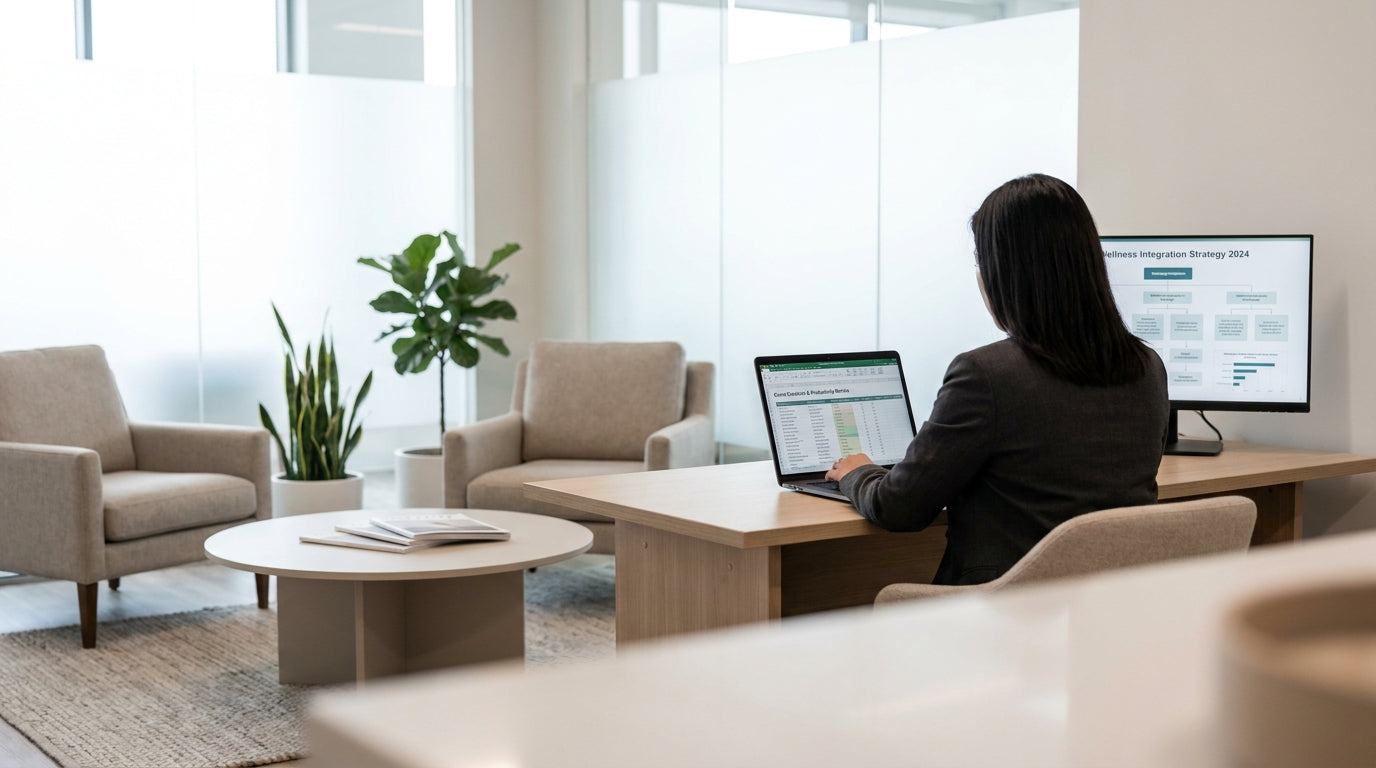
Designing a Calming First Impression
Your waiting room sets the tone for every massage session. Clients will relax more easily if their first impression is calm, clean, and welcoming.
Start with a clear layout that guides people smoothly from the entrance to the reception desk and then to their seat. Clutter and awkward furniture placement can increase stress, so keep pathways open and avoid overfilling the space. A simple, streamlined reception area with the right Reception Counters will help your team greet clients confidently and maintain privacy for bookings and payments.
Think carefully about visual noise: too many colours, patterns, or mismatched chairs can make the room feel busy instead of soothing. Choose neutral tones with a few warm accents, and repeat these colours in your seating, cushions, and artwork. This consistency tells the brain “everything here belongs,” which quietly supports relaxation before the treatment even begins.
Lighting also plays a major role. Avoid harsh, bright lights that feel clinical; instead, use soft overhead lighting and, where possible, lamps or wall lights to create a gentle, spa-like glow. Combined with appropriate furniture, considerate lighting can turn even a small reception area into a tranquil transition space between the outside world and the treatment room.
Choosing the Right Reception Counter Layout
The reception counter is your operational hub and a visual anchor for the room. Its shape and size should match both your space and workflow.
For compact clinics or single-therapist practices, streamlined Straight Reception Counters are often ideal. They take up minimal floor space while still offering room for a computer, booking system, and storage for client forms. This style suits narrow rooms or practices with a simple check-in process and minimal staff.
Busier wellness centres or multi-therapist clinics may benefit from more expansive L-Shaped Reception Counters. The extra surface area allows one side for client-facing tasks and the other for admin work, keeping paperwork and devices out of public view. That separation helps maintain a calm aesthetic, even during peak booking times.
Whichever design you choose, ensure the counter height supports comfortable communication. Clients should be able to sign forms and make payments without stretching or stooping. Integrating cable management and concealed storage within your chosen Reception Counters will keep cords, files, and eftpos terminals tidy, preserving the serene look your massage brand promises.
Comfortable Seating for Every Type of Client
Waiting room seating needs to be comfortable, supportive, and easy to get in and out of. The right mix of chairs shows you’ve considered different client needs.
A good starting point is quality Reception Seating that combines durability with a soft, welcoming feel. Many massage clients arrive with sore backs, necks, or limited mobility, so avoid seats that are too low or overly firm. Instead, opt for models with moderate cushioning and a seat height that allows people to stand up without strain.
Individual Visitor Chairs give clients personal space and are easy to rearrange as your practice grows. They’re practical if you often see new clients who may feel nervous and appreciate a clearly defined personal zone. For more of a lounge-style vibe, add a few Tub Chairs, which wrap slightly around the body and can help anxious clients feel more contained and secure.
Consider mixing in supportive Armchairs for older clients or those with mobility challenges, as armrests provide extra help when sitting and standing. Single seating options like Single Lounges can add a more luxurious feel without taking up much extra space. By varying the seating styles, you can accommodate couples, individuals, and families while keeping the room visually cohesive and comfortable.
Lounges and Layouts for a Spa-Like Experience
If your brand leans toward a spa or day-retreat feel, lounge seating can transform the waiting area. The key is to balance softness with practicality.
Strategically placed Single Lounges are ideal if you want clients to feel pampered without overcrowding the room. They work well near windows or quieter corners, creating small “retreat” zones where clients can decompress before treatment. Use them to anchor the ends of a seating cluster or to create a more private nook for those who prefer peace and quiet.
For groups or couples’ bookings, pairing a few 2 Seater Lounges with individual chairs can make the space more social. This combination allows people to sit together while maintaining enough personal space for those who arrive alone. The layout should encourage easy movement, with clear walkways to the reception counter and treatment rooms, so clients never feel like they’re stepping around furniture.
Think in “zones” rather than rows of chairs. A zone might combine a 2 Seater Lounge, a single lounge, and an armchair around a central table. Another area might offer a couple of tub chairs for more private seating. This approach feels more like a relaxing lounge than a traditional waiting room, which aligns well with the therapeutic nature of massage.
Practical Details: Coffee Tables, Surfaces and Cleanability
Small furniture choices affect both client comfort and how easy your space is to maintain. Surfaces need to support relaxation and hygiene in equal measure.
Thoughtfully chosen Coffee Tables give clients a place to set down water, herbal tea, or personal items while they wait. Low tables can also hold brochures about your treatments, business cards, and aftercare information, keeping them visible without dominating the space. Make sure there’s enough clearance around each table so people don’t bump into them when moving to and from their seats.
From a practical standpoint, opt for reception furniture with easy-to-clean surfaces and upholstery suited to regular sanitising. Massage therapists often work with oils and lotions, so materials that resist staining and wipe down quickly will save significant time between clients. This is particularly important for high-touch areas like Reception Seating, armrests, and tabletops.
Finally, keep accessories simple. A small arrangement of magazines, a discreet tissue box, and perhaps a diffuser are usually enough. When your core furniture pieces—counters, seating, and Coffee Tables—are chosen well, you won’t need much decor to achieve a professional, calming waiting area that supports your clients’ wellbeing from the moment they arrive.


