

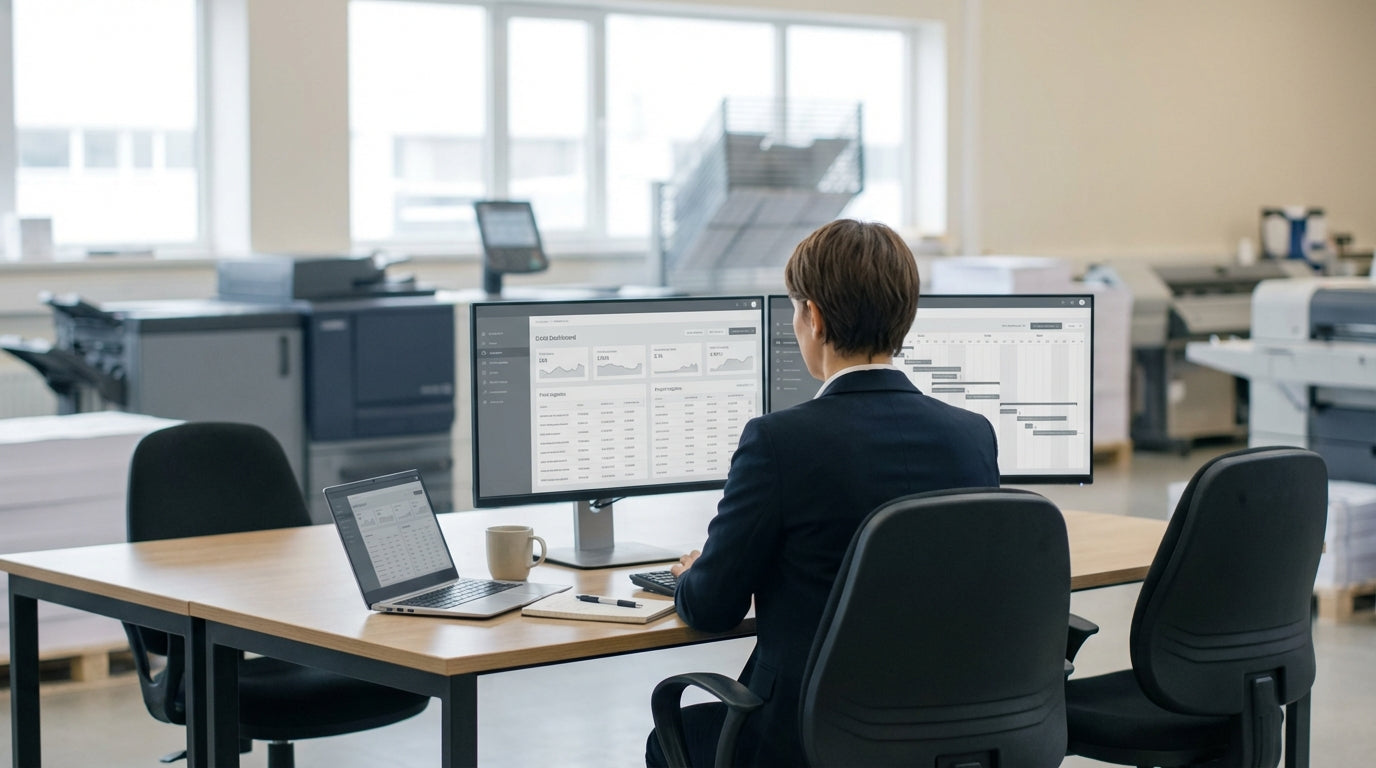
Why Production Floor Offices in Print Shops Matter
In a busy print facility, the office space on the production floor is more than a spot for a computer and a phone. It’s the hub where artwork, scheduling, sales and machinery all connect.
Unlike a typical corporate office, admin and pre-press staff in printing spend their day surrounded by noise, paper dust and constant movement. Furniture has to handle this harsher environment while still supporting computer-based tasks and quick, on-the-spot meetings with press operators. Getting the layout and fitout right can smooth communication, reduce mistakes and keep tight print deadlines under control.
Well-planned production floor offices help your team see the floor, speak to operators instantly and track jobs in real time. The right mix of compact Single Person Workstations and shared zones for supervisors can reduce bottlenecks around job tickets, proofs and urgent reprints. In an industry where minutes matter, this makes a direct difference to turnaround times and client satisfaction.
These spaces also need to support visitors such as sales reps, designers and clients checking colour proofs. Choosing durable desks, ergonomic seating and clever storage ensures the office looks professional while staying practical for the rough-and-ready reality of production work.
Choosing the Right Desks for a Production Environment
Desks on the production floor must be robust, space-efficient and set up for multiple screens and print-specific equipment. They also need to accommodate frequent stand-up discussions and quick paperwork checks.
Supervisors who need to see across the plant and face both the floor and their screen often benefit from Corner Office Desks or L-Shaped Desks. These shapes provide generous surface area for proofs, job bags and sample stock while keeping monitors and phones within easy reach. The wrap-around layout also makes it easier to separate digital workstations from physical paperwork, helping prevent mix-ups with versions and print runs.
For team leaders or production managers who handle both admin and confidential HR or pricing tasks, a dedicated executive-style station can be useful. Sturdier, more feature-rich options such as Manager Desks offer extra storage, cable management and a clear “anchor” point for approvals and sign-offs. When floor space is tighter or when you’re setting up a row of planners and estimators, simple Straight Desks line up neatly and are easy to expand as headcount grows.
If your workflow involves two staff members sharing responsibility for specific presses or finishing lines, consider linking desks or using 2 Person Workstations. These keep collaborators close, reduce walking between stations, and allow shared access to printers, labelers and finishing schedules without cluttering individual benches.
Workstations and Layouts That Reflect Print Workflows
The most efficient production floor offices mirror how jobs move through your print shop. Furniture layout should support that flow, not fight against it.
Dedicated pods for pre-press, scheduling and dispatch are easier to manage with modular units like Partition Workstations. Partitions add a bit of acoustic relief from presses and guillotines, helping staff concentrate on colour checks, imposition layouts and final approvals. At the same time, low or semi-transparent screens maintain line-of-sight to the floor so issues like paper jams or misfeeds can be spotted early.
For smaller teams or satellite production areas, individual Single Person Workstations are handy for planners and coordinators who need focused space for scheduling software and email. These can be arranged in U-shapes or rows that track your production sequence: quotes and orders at one end, through to pre-press, then production coordination and finally dispatch. This simple zoning makes it easier for staff and visitors to know where to go for each stage of the job.
Shared zones using 2 Person Workstations can work well for shift-based operations. Two coordinators working opposite each other can hand over quickly at shift change, keeping notes, job cards and digital dashboards in one place. This helps maintain continuity on long or complex print runs without relying solely on email trails.
Seating Built for Long Shifts and Tough Conditions
Production floor office seating must handle long shifts, heavy use and a dirtier environment than a typical office. Poor-quality chairs will fail quickly and can contribute to fatigue and injuries.
Ergonomic Task Chairs are a solid base for schedulers, designers and supervisors who spend most of their day seated but still need to swivel and move between benches. Adjustable height, lumbar support and breathable fabrics help staff stay comfortable through long runs, particularly on overnight shifts when fatigue risk is higher. Easy-clean materials are worth prioritising, as toner dust and spray powder can quickly mark lighter fabrics.
Where staff are heavier, or chairs are shared across multiple operators and shifts, investing in Heavy Duty Chairs is often more economical over time. These are designed for higher weight ratings and extended daily use, reducing the likelihood of broken gas lifts, snapped bases or worn mechanisms. In high-traffic areas near presses, sturdier frames also cope better with accidental bumps from trolleys and pallets.
If supervisors regularly move between standing at machines and sitting to update production data, consider pairing chairs with height-adjustable worktops or perch-style seating. This encourages regular posture changes, which is important for musculoskeletal health in an industry where both static computer work and physical activity are part of the job.
Smart Storage and Organisation for Job Control
Paperwork, proofs and consumables quickly pile up in a print shop. Thoughtful storage around the production floor office prevents chaos and costly mistakes.
Lockable Office Cupboards are ideal for storing inks, sample books, calibrated proof prints and sensitive client materials away from dust and humidity. Keeping these items off desks frees up space for daily work and reduces the risk of mixing live jobs with archive materials. Shelving inside cupboards can be clearly labelled by client, stock type or press line, helping staff find what they need without hunting through piles.
Combining cupboards with under-desk storage on Corner Office Desks or Straight Desks supports a simple hierarchy: active job tickets and proofs within arm’s reach, and bulk or long-term items stored a few steps away. This structure keeps surfaces clear enough for quick stand-up reviews with press operators and sales reps. In many plants, this small level of organisation significantly reduces mislaid dockets and re-work caused by using the wrong version of artwork.
When planning any new production floor office, map out where jobs, samples and records live from quote to dispatch. Then select workstations, desks, chairs and storage so that staff can follow that path with minimal backtracking. A tidy, deliberate setup doesn’t just look better for visiting clients; it supports faster job turnaround and fewer errors in a highly competitive print market.


