

Designing Flexible Lecture Theatres
Modern lecture spaces need to support more than one-way teaching. They must adapt quickly to different class sizes, teaching styles, and technology needs.
Start with the layout. Fixed rows can limit interaction, so many universities are turning to mobile Student Desks and stackable seating that can be reconfigured in minutes. This allows academics to switch from traditional lectures to group work, workshops, or flipped-classroom activities without wasting valuable teaching time.
Comfort and ergonomics also matter, especially in long sessions. Well-designed Training Chairs provide proper back support and are light enough to move easily. In larger rooms, combining these with durable Event & Conference Chairs helps cater to peak enrolment numbers, guest lectures, and public events.
Visibility and acoustics should guide furniture selection too. Tiered seating, compact Lecterns, and clear sightlines to the screen and teaching wall ensure students can see and hear clearly from every seat. Choosing finishes that reduce noise and glare will make the space more comfortable and less fatiguing for both staff and students.
Enhancing Teaching with Smart Presentation Furniture
The right presentation tools make it easier for lecturers to communicate complex ideas clearly. They also help students stay engaged and take better notes.
Writable surfaces are a staple in any teaching space. High-quality Magnetic Whiteboards let academics layer content, attach handouts or diagrams with magnets, and easily adjust their explanation as questions arise. Pair these with Projection Boards & Presentation Accessories so digital slides, videos, and visualisers are just as accessible as traditional handwriting.
A good Lectern does more than hold notes. Look for models with cable management, space for laptops, and height adjustment so different presenters can maintain an ergonomic posture. In hybrid classrooms, lecterns that integrate microphones and control panels help staff manage cameras, audio, and displays from a single point.
Because equipment is used all day by different staff, durability and ease of maintenance are crucial. Surfaces should resist ghosting (marks that do not wipe off fully) and scratching, while moving parts like castors and lift mechanisms need to handle frequent setup changes. Choosing robust presentation furniture up front reduces long-term maintenance and replacement costs.
Supporting Student Engagement and Collaboration
Furniture has a direct impact on how students interact, collaborate, and focus. Well-chosen pieces encourage participation instead of passive listening.
Adjustable Student Desks allow individuals to set a height that suits their body and writing style, improving comfort over long classes. For tutorial rooms and active-learning spaces, pairing these with agile Training Chairs on castors helps students quickly rotate, form discussion circles, or move into breakout groups. This simple flexibility encourages conversation and peer learning.
Where group work is frequent, consider reconfigurable Training Tables. These tables can be arranged into clusters for teamwork, rows for tests, or U-shapes for seminars. When not in use, flip-top or nesting models free up floor space for activities, exhibitions, or practical demonstrations.
Collaboration also benefits from having multiple writing zones. Installing several smaller Magnetic Whiteboards around the room lets each group visualise their ideas at the wall. This turns the whole room into a shared thinking space rather than focusing all attention on the front.
Creating Efficient and Comfortable Admin Offices
University admin teams need workspaces that handle high workloads, constant interruptions, and confidential information. Thoughtful furniture choices make these environments calmer and more productive.
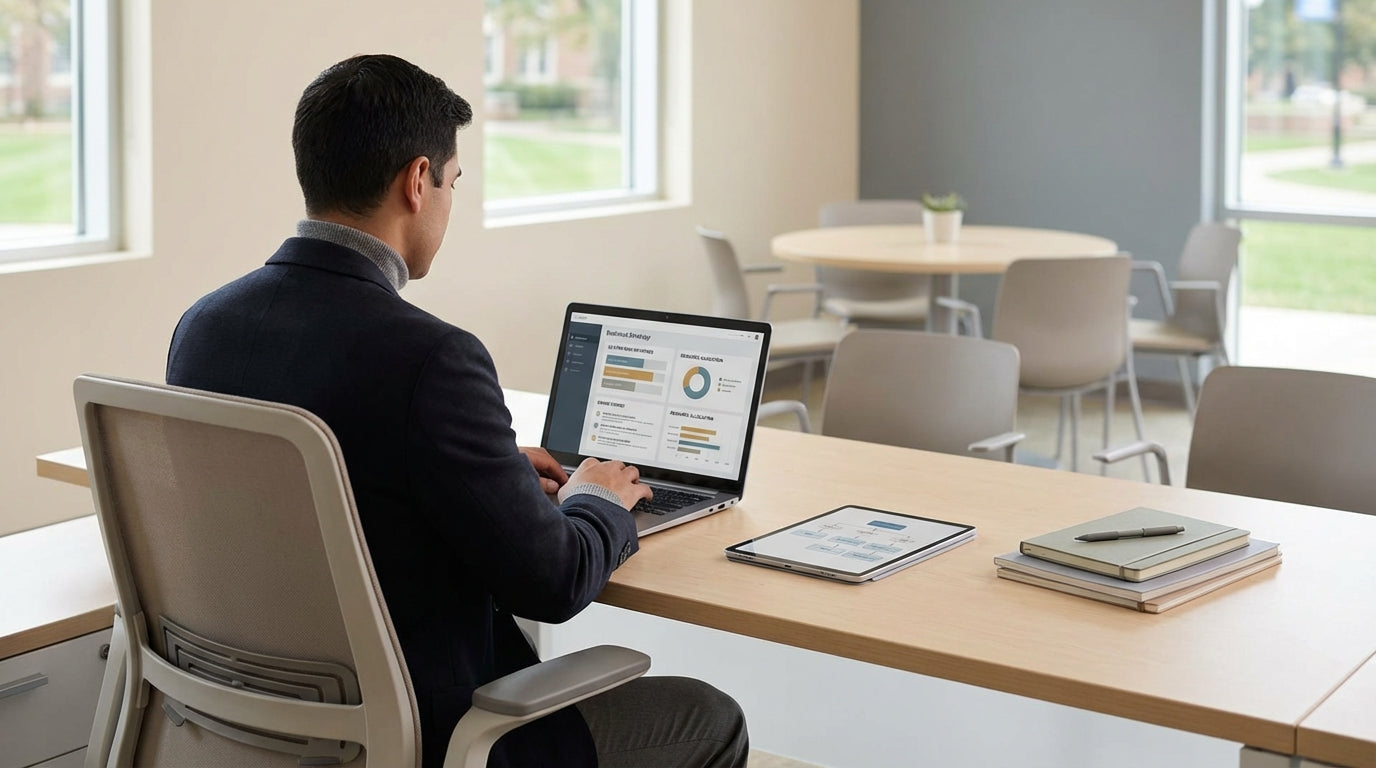
Ergonomic seating is essential for staff who spend long hours at their desks. Quality Task Chairs with adjustable seat height, lumbar support, and armrests reduce the risk of strain injuries and fatigue. Pair them with appropriate desks and storage so staff can maintain a neutral posture, with screens at eye level and frequently used items within easy reach.
Meeting areas within admin zones should be designed for quick stand-ups as well as formal discussions. Compact Meeting Tables create a dedicated spot for team updates, student consultations, and private conversations with academics. When space is limited, folding or mobile tables can double as project surfaces or overflow workstations.
Paperwork and records are still a reality in many faculties. Secure Office Cupboards provide lockable storage for files, exam papers, and personal data, helping to meet privacy and compliance requirements. Using vertical storage rather than extra desks keeps circulation paths clear for staff and visitors, improving safety and accessibility.
Planning for Growth, Durability, and Value
Universities must plan their furniture choices for long-term change, not just immediate needs. Scalable, durable solutions deliver better value over time.
Enrolment numbers, course offerings, and teaching styles evolve constantly. Selecting modular Training Tables, flexible Meeting Tables, and stackable Event & Conference Chairs means the same furniture can support new timetables, cross-disciplinary projects, or community events. This adaptability reduces the need for frequent refits when timetabling or space use changes.
Durability should be assessed in terms of both materials and construction. High-traffic lecture theatres, for instance, need sturdy Student Desks and resilient Training Chairs that can cope with daily movement and intensive use. In offices, solid Office Cupboards and robust Task Chairs reduce downtime and repair costs.
Finally, standardising on a considered range of Magnetic Whiteboards, Projection Boards & Presentation Accessories, and Lecterns across campuses simplifies training and support for academic staff. When people understand how to use the equipment in any room they walk into, classes start on time and tech issues are minimised. Over the life of the furniture, these efficiencies add up to significant savings and a smoother learning experience for students.


