

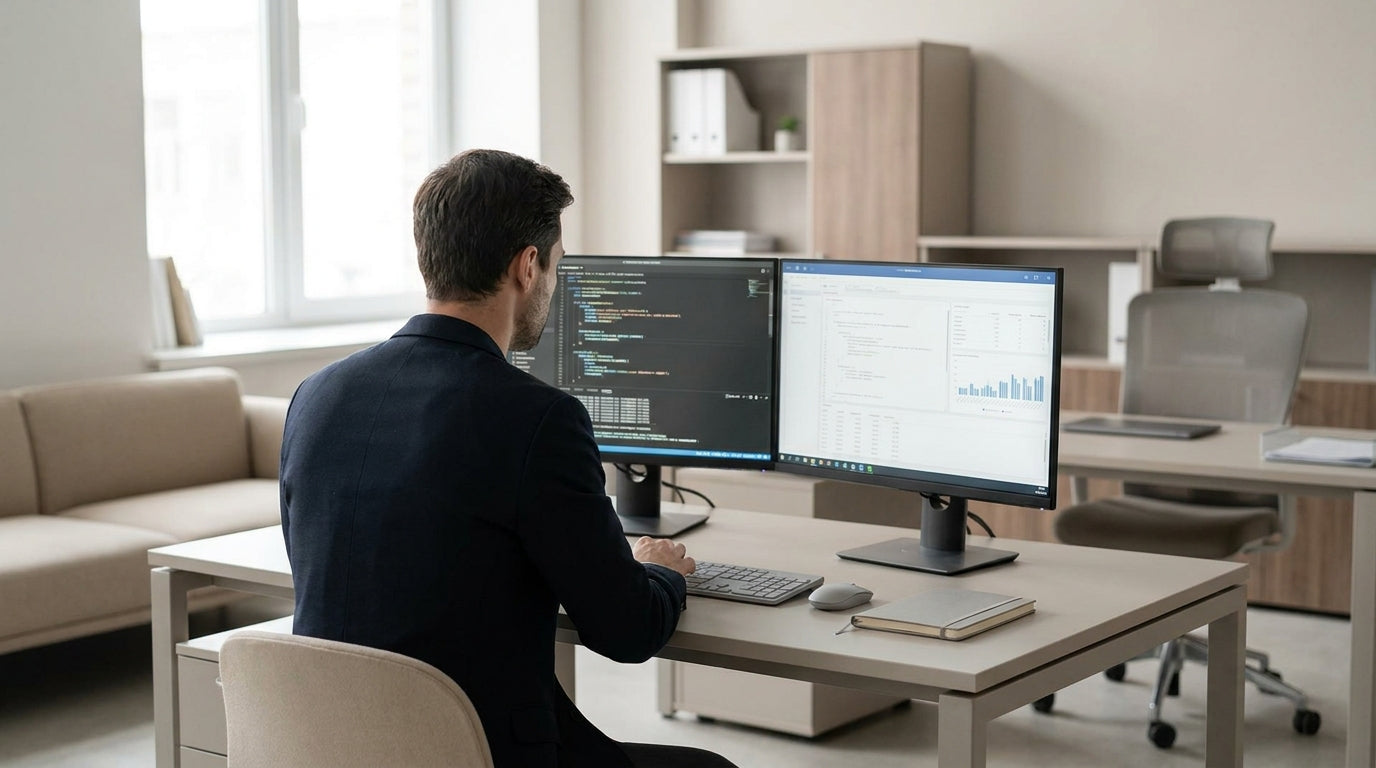
Designing an Efficient Admin Hub in a Weaving Studio
A weaving studio’s admin area needs to be as organised and thoughtful as the looms on the floor. Careful furniture choices support scheduling, stock control, and finances without crowding creative spaces.
Start by mapping how admin work actually happens: client bookings, online sales, supplier orders, and workshop management. Once you understand workflows, you can choose furniture that supports these tasks instead of fighting them. Simple, linear layouts using pieces like Straight Desks help keep paperwork, laptops, and label printers within comfortable reach, reducing clutter and wasted movement.
For studio owners or senior coordinators who juggle planning, budgeting, and staff meetings, a dedicated command centre makes a difference. Larger Manager Desks provide extra surface area for fabric samples, design folders, and dual monitors, while creating a clear, professional focal point for one‑on‑one discussions. Consider positioning this desk slightly away from noisy looms to maintain focus during budgeting or client conversations.
When floor space is tight, think vertically and in zones instead of spreading out. Narrow shelving, compact Pedestal Drawer Units, and wall‑mounted organisers keep stock lists and order forms close by without eating into weaving areas. This separation between admin and making zones helps your team switch headspace quickly between numbers and yarn.
Choosing the Right Desks for Admin and Production Planning
Desk configuration shapes how smoothly admin work connects to studio production. Different desk styles suit different roles and room layouts.
For straightforward tasks like bookings, invoicing, and email, streamlined Single Person Workstations work well. They offer a clear, dedicated spot for laptops, label printers, and diaries without dominating the room. Adding a compact Pedestal Drawer Unit under each workstation keeps essential stationery and order pads close at hand, reducing trips across the studio.
Studios that manage multiple product lines, dye batches, or complex production schedules often benefit from more surface area. Corner layouts such as L-Shaped Desks give admin staff room to spread out pattern catalogues, yarn cards, and open order folders while still keeping a clear space for the keyboard and mouse. This shape also makes it easier to keep digital tools on one side and physical samples or paperwork on the other, cutting down on mix‑ups.
If two people share responsibility for orders and customer service, consider paired setups like 2 Person Workstations. They allow collaboration on stock checks or workshop planning while still giving each person their own defined zone. In more private or leadership roles, sturdier Manager Desks offer space for meeting with suppliers or wholesale clients, supporting a more professional presentation when visitors step away from the main weaving area.
Ergonomic Seating for Long Admin Sessions
Admin work in a weaving studio often means long stretches at a screen after time on your feet near the looms. Supportive seating helps prevent fatigue and injury.
Look for adjustable options such as Task Chairs, which typically allow you to change seat height, back angle, and sometimes arm height. These adjustments help maintain a neutral posture, where your feet are flat on the floor, knees at roughly 90 degrees, and wrists in line with your forearms when typing. This setup reduces strain on your lower back and shoulders, particularly when you switch from physical weaving work to detailed admin tasks.
Studios in warmer Australian climates may prefer breathable Mesh Office Chairs. Mesh backs promote airflow, which matters when spinning, dyeing, and weaving equipment all add heat to the space. Good lumbar (lower‑back) support is essential; it keeps your spine’s natural curve, helping you stay comfortable during inventory updates, website changes, or grant applications that run longer than planned.
Where possible, pair quality seating with suitable desks like Straight Desks or Single Person Workstations set at the right height. This combination creates an ergonomic workstation, meaning the furniture fits the person instead of forcing the body to adapt to awkward angles. Even brief stretching breaks between admin tasks and loom work will further reduce stiffness and improve focus.
Smart Storage for Yarn Records, Samples, and Paperwork
Weaving studios generate a surprising amount of admin storage: yarn records, dye recipes, invoices, and workshop paperwork. Sensible storage keeps all of this findable and safe.
Lockable Office Cupboards are ideal for storing bulk paper files, sample books, and reference materials that don’t need to be on your desk every day. Adjustable shelves let you combine document boxes with small tubs of labelled yarn offcuts or fabric swatches, creating a tidy archive for design development and repeat orders. Keeping these items behind doors also protects them from studio dust and stray fibres.
For financial documents, contracts, and client forms, dedicated Filing Cabinets still do an excellent job. Use a simple labelling system by year and category—such as suppliers, workshops, retail orders, and wholesale clients—so new team members can locate past records quickly. Position filing units close to main admin stations like L-Shaped Desks or Manager Desks to avoid constant back‑and‑forth.
Daily‑use items such as pens, tags, shipping labels, and current project folders fit neatly into Pedestal Drawer Units that slide under work surfaces. Pair them with focussed setups like Straight Desks or 2 Person Workstations to keep benchtops clear for urgent tasks. This approach means you can move quickly from updating an online order to printing postage and packing labels, without hunting through piles of mixed paperwork.
Creating a Seamless Flow Between Admin and Creative Areas
Admin and creative work should support each other, not compete for space. Thoughtful layout and furniture choice help maintain that balance.
Place admin zones near, but not inside, the most active weaving and dyeing areas. Using compact Single Person Workstations or shared 2 Person Workstations along a wall keeps screens and papers protected from splashes, dust, and dye while still allowing quick checks on loom activity or stock levels. This arrangement lets admin staff respond promptly to production issues—such as yarn shortages or equipment downtime—without needing to cross the entire studio.
For studio owners who move between hands‑on weaving and meetings with clients or collaborators, a clearly defined office corner helps signal different types of work. A solid Manager Desk paired with ergonomic Task Chairs or breathable Mesh Office Chairs creates a calm space for design reviews, pricing discussions, and wholesale negotiations. Nearby Office Cupboards and Filing Cabinets keep contracts and sample folders handy for these conversations.
Finally, aim for visual continuity so the admin space still feels like part of the studio’s identity. Coordinate finishes on Straight Desks, L-Shaped Desks, and storage pieces with your yarn palettes or loom frames. When the furniture reflects the studio’s aesthetic, staff and visitors experience the admin hub as an integral, well‑considered part of the weaving environment rather than an afterthought tucked in the corner.


