

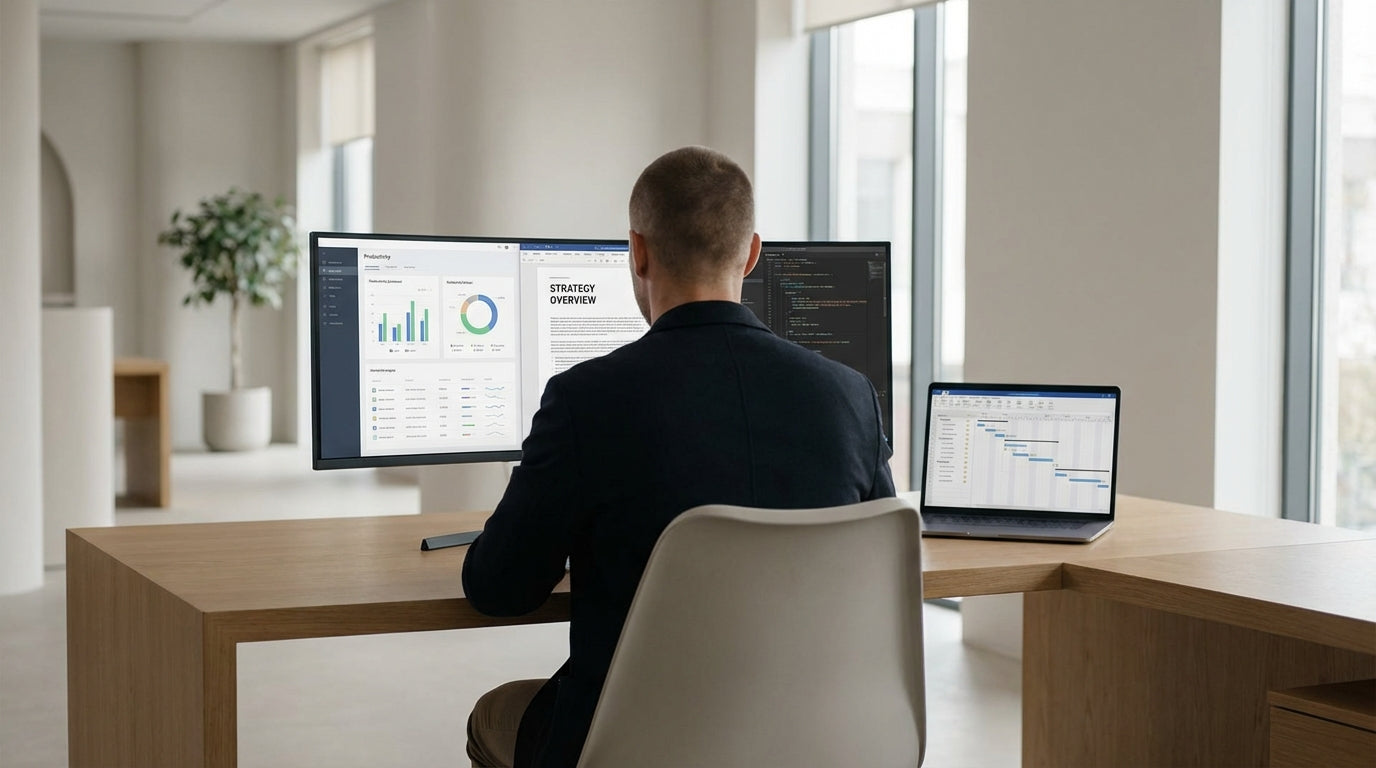
How Desk Shape Influences Productivity and Comfort
Selecting the right desk shape can make a real difference to your focus, comfort, and efficiency at work. The way your desk fits into your space and supports your posture has a direct impact on how long you can work without fatigue.
Productivity is not just about working harder; it’s about designing a workspace that works with you, not against you. A suitable desk shape supports good ergonomics (how your body interacts with your environment), helps you keep essentials within easy reach, and reduces clutter. For example, a compact workstation with clearly defined zones for your laptop, paperwork, and peripherals can reduce distractions and constant reaching.
It’s also important to consider your type of work. Creative professionals and designers may benefit from larger surfaces to spread out plans, while remote workers and students often prefer more compact home office desks or streamlined student desks. Matching the shape and size of your desk to your daily tasks helps prevent the “desk overflow” that leads to disorganisation and lost time.
Room layout plays a major role too. A desk that is ideal in a large corporate office may feel cramped in a spare bedroom or apartment study nook. Before choosing between options like single person workstations and larger shared setups, consider access to natural light, power points, and how you move around the room during your workday.
Straight Desks: Simple, Flexible and Space-Efficient
Straight desks are the classic choice for many offices and home workspaces. Their simple rectangular design makes them easy to place along a wall or in the middle of a room.
For most people, a straight desk offers more than enough space for a laptop, monitor, keyboard, and some paperwork. If you favour a clean, minimalist look, a streamlined straight desk helps reduce visual clutter and keeps your work area clearly defined. This can be especially helpful in open-plan offices or shared spare rooms where you need to visually separate “work” from “home”.
Straight desks are also highly flexible. You can easily pair them with mobile storage units, under-desk drawers, or extra office & meeting tables when you need temporary extra surface area. For growing businesses, lining up several single person workstations built from straight desks creates consistent, efficient rows that are simple to reconfigure as teams change.
From an ergonomic standpoint, a straight desk works well when your monitor is centred directly in front of you, with your keyboard close enough to keep elbows bent at about 90 degrees. Pairing a straight desk with height adjustable workstations or sit-stand frames lets you alternate between sitting and standing, which can reduce back strain and boost energy over long days.
Corner and L-Shaped Desks: Maximising Space and Workflow
Corner and L-shaped desks are ideal when you need more surface area without taking over the whole room. They fit snugly into corners and create a natural “command centre” layout.
By wrapping around you on two sides, an L-shaped setup keeps multiple work zones within an easy swivel. You might dedicate one side to computer work and the other to paperwork, sketching, or meetings. Purpose-built L-shaped desks are perfect for people who manage several tasks or screens at once, such as project managers, accountants, or content creators.
If you’re working with an awkward or compact room, corner office desks and corner workstations help you use every centimetre efficiently. Tucking the desk into a corner can free up floor space for storage, visitor chairs, or a small collaboration area with separate office & meeting tables. This layout also keeps your back away from busy traffic areas, which can reduce distractions and help you stay in the zone.
From a comfort perspective, the extra surface area lets you position monitors at the right distance while keeping documents and frequently used tools close at hand. However, it’s important to avoid overloading every section with clutter. A clear central area where you sit, combined with dedicated “zones” on each wing, supports smoother workflow and makes it easier to maintain good posture throughout the day.
Height-Adjustable and Ergonomic Options
Height-adjustable desks add flexibility to any desk shape. Being able to switch between sitting and standing can dramatically improve comfort and concentration.
Australian work health guidelines emphasise movement across the day rather than staying locked in one position. Incorporating height adjustable workstations into your setup allows you to change posture quickly, which may help reduce stiffness, neck strain, and afternoon energy slumps. Many people find that standing for focused tasks like reading, planning, or short bursts of deep work helps them stay more alert.
Ergonomics doesn’t need to be complicated. It simply means setting up your workspace so your body is supported in a natural, neutral position. Whether you choose a straight, corner, or L-shaped configuration, combining it with the right chair height, monitor position, and a height-adjustable frame can make just as much difference as the desk shape itself. For compact setups, pairing student desks or smaller home office desks with a sit-stand converter is often enough to gain the benefits.
In team environments, adjustable options give staff the freedom to tailor their workspace to personal preferences. Integrating sit-stand single person workstations with shared office & meeting tables for collaboration supports a more active, dynamic office culture and helps accommodate different working styles and body types.
Choosing the Right Desk Shape for Your Space and Work Style
The most effective desk layout depends on your tasks, available room, and how you like to work. A little planning upfront will help you avoid an uncomfortable or cramped setup.
Start by mapping out your daily activities. If you mainly use a laptop and a single monitor, a compact home office desk or simple straight desk may be ideal. If you deal with multiple screens, reference documents, or equipment, consider larger L-shaped desks or space-efficient corner workstations to keep everything within comfortable reach.
Next, measure your room carefully, including door swings and window positions. In smaller studies or bedrooms, tucking a desk into a corner using corner office desks can open up valuable floor area. In open offices, rows of single person workstations can create clear traffic paths and make it easier to plan storage and breakout zones with additional office & meeting tables.
Finally, think about the future. If you expect your role, technology, or team size to change, choose a configuration that can adapt, such as modular height adjustable workstations that work alongside standard desks and student desks in training areas. The “best” desk is the one that supports your body, fits your space, and makes it easier to focus on what matters most each day.


