

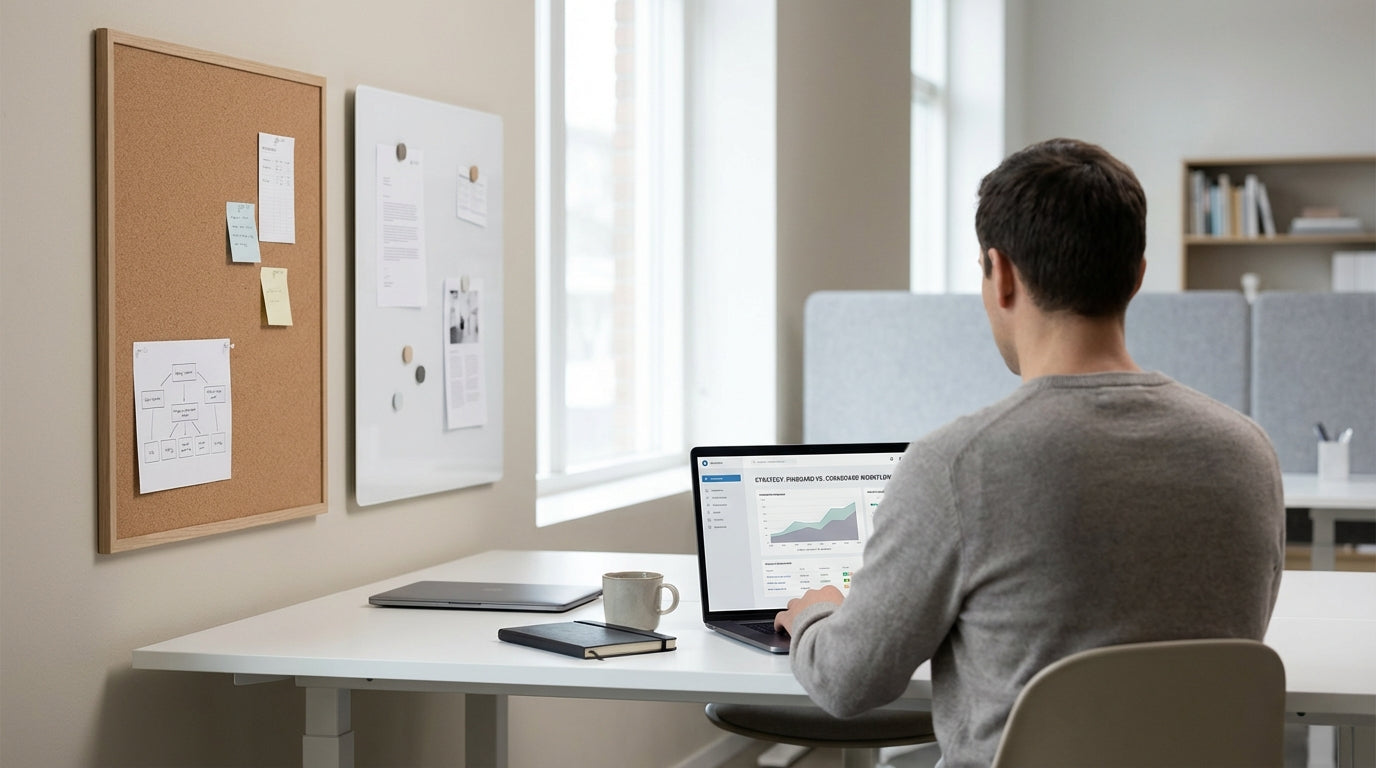
Understanding modern pinboard and corkboard materials
Pinboards and corkboards might look similar at first glance, but they’re often made from very different materials. Those materials affect how they perform, how long they last, and where they work best in an Australian home or office.
Traditional corkboards use a natural cork surface bonded to backing board. Cork is renewable and self-healing to an extent, meaning pinholes close up over time, but cheaper products can dry out, crumble, or discolour in bright sunlight or humid conditions. Modern pinboards, on the other hand, frequently use fabric, felt, or wrapped commercial upholstery over a soft substrate. This gives a smoother, more contemporary look that suits open-plan offices, reception areas, and classrooms.
If you’re comparing products on a site like the Pinboards & Corkboards collection, you’ll notice options such as velour, woven fabric, and eco-panel surfaces alongside classic cork. These fabric pinboards don’t show pin marks as readily, and the textile layer helps absorb sound, which is a bonus in busy workplaces. Corkboards remain popular in more casual spaces, staff rooms, and workshops, where practicality and a natural feel matter more than a sleek aesthetic.
Backing materials are just as important as the surface. Quality pinboards typically use pinnable substrates like compressed fibreboard or acoustic panels, while some economy corkboards may use thin cork laminated onto cardboard. A solid core prevents warping on larger boards, especially in Australia’s variable climate, and keeps pins from pushing through to the wall. When you’re shopping, check product descriptions for core thickness and construction, not just the surface finish.
How pinboards and corkboards are used day to day
Both board types are designed for quick, flexible display of information you want to see at a glance. The main differences show up in how they’re used in real workplaces, schools, and homes.
Fabric pinboards are the go-to choice in many offices for project planning, kanban workflows, brainstorming walls, and team communication hubs. The smooth fabric surface gives a neat background for printed documents, photos, and colour-coded notes. In agile environments they’re often paired with Planner & Specialty Whiteboards so teams can combine movable paper items with erasable timelines, rosters, and task lists.
Corkboards, by contrast, tend to be used where information is more casual or frequently changing. Staff notices in a warehouse, community flyers in a foyer, or quick reminders in a home study are classic corkboard jobs. In these settings, appearance is less critical than convenience, and people appreciate the tactile feel of cork when pinning and removing items all day. For larger shared spaces such as school corridors, corkboards are often teamed with secure Noticeboards & Display Cases to protect important documents while still keeping them visible.
In meeting and training rooms, pinboards usually form part of a broader presentation setup. A fabric board might sit beside Magnetic Whiteboards or Glass Whiteboards, giving presenters multiple ways to share content. You’ll also see pairing with portable tools such as Flipcharts and Projection Boards & Presentation Accessories, which are better for longer-form content, while pinboards capture snapshots, feedback cards, or group activities.
Design, aesthetics, and acoustic performance
Appearance counts when you’re fitting out a modern office or learning space. Both pinboards and corkboards now come in a wide variety of finishes, but they create very different visual and acoustic effects.
Fabric pinboards are highly customisable. You can choose from neutral greys and charcoals for corporate settings, or bright colours for classrooms and creative studios. Because the fabric wraps neatly around the frame, these boards look more like a deliberate design feature than a purely functional tool. This makes them easy to coordinate with other wall-mounted products such as sleek Porcelain Whiteboards and frameless Glass Whiteboards, creating a consistent, professional finish.
Corkboards have a more natural, informal feel, with the warm tan colour of cork instantly recognisable in classrooms and notice areas. In some interiors this organic look is exactly what’s needed, especially in creative agencies, studios, or relaxed breakout spaces. However, cork doesn’t offer the same colour flexibility, and can look mismatched in very contemporary fit-outs that favour minimal lines and monochrome palettes. A framed corkboard can still work well when contrasted with white walls and clean-lined furniture, particularly if you prefer the tactile character of natural materials.
From an acoustic perspective, fabric pinboards usually have the edge. Many are made with thicker, sound-absorbing cores that help reduce echo and background noise, which is a real benefit in open-plan offices and call centres. When combined with other soft finishes, they contribute to a quieter, more comfortable work environment. Cork does provide some sound absorption, but generally less than a deep fabric panel. If acoustics are high on your priority list, consider mixing fabric pinboards with other wall products and mobile solutions like Mobile Whiteboards, which can double as movable partitions.
Durability, maintenance, and lifespan
How long a board lasts comes down to surface quality, backing construction, and how heavily it’s used. Thinking about durability up front helps you avoid constant replacements.
High-quality fabric pinboards tend to hide wear very well. Because the fabric surface doesn’t chip or flake, repeated pinning leaves far fewer visible marks than you’d see on cheaper cork. The fabric also protects the underlying core from minor damage, so your board stays usable and presentable for years even in busy offices, training centres, or school environments. A quick vacuum or light brush is usually enough to keep dust and lint at bay.
Corkboards can be extremely durable when the cork layer is thick and properly bonded, but budget models often use a thin veneer that wears out faster. Over time, heavy pin use in the same spots can create permanent holes, and exposure to strong Australian sunlight may cause fading or drying. In coastal or very humid areas, boards with poor backing materials can warp. Buying through a specialist range such as Pinboards & Corkboards helps you compare product specifications and choose options that are designed for commercial use, rather than light domestic only.
For areas that need to display information but not be constantly pinned and re-pinned, it can be smarter to mix display surfaces. For example, use a pinboard for rotating notices and a nearby Noticeboard & Display Case for long-term documents that don’t need pinholes. In spaces where writing and frequent updates are more important than pinning, you might rely primarily on Magnetic Whiteboards or durable Porcelain Whiteboards, then add a smaller pinboard or corkboard purely for reference material.
Choosing the right board for your space
Selecting between pinboards and corkboards comes down to how you work, what you’re displaying, and the look you want. Thinking through these factors will help you specify the right mix for each room.
For offices, project rooms, and meeting spaces where appearance and flexibility matter, a fabric pinboard is usually the better option. It delivers a clean, modern finish and integrates easily with other visual tools like Glass Whiteboards, Magnetic Whiteboards, and Planner & Specialty Whiteboards. In training rooms or classrooms, combining pinboards with Mobile Whiteboards and Flipcharts gives teachers and facilitators several ways to present information and involve students.
Corkboards remain a smart, budget-friendly choice for more functional areas: staff kitchens, warehouse notice points, club rooms, or home studies. They’re easy for anyone to use and instantly understood as “the place where notices go”. When you need to display critical information like safety procedures, consider backing up corkboards with lockable Noticeboards & Display Cases so nothing can be removed or tampered with. For larger fit-outs, you can standardise on corkboards in back-of-house areas and fabric pinboards in front-of-house or client-facing zones.
Finally, think about future flexibility. If your organisation frequently rearranges rooms or runs pop-up events, investing in a blend of wall-mounted boards and portable solutions such as Mobile Whiteboards and presentation tools from the Projection Boards & Presentation Accessories range will make it easier to adapt. Whatever you choose, checking sizes, surface types, and mounting options in the dedicated Pinboards & Corkboards collection will help you match each board precisely to the room, the content, and the people using it every day.


