

Understanding standard file sizes in Australian offices
Before choosing any storage unit, it’s essential to know the actual size of the documents you’re storing. In Australia, most offices rely on A4 paperwork and lever arch files, along with suspension files for drawers and cupboards.
A4 paper measures 210mm x 297mm, but once you add manila folders, binders or plastic sleeves, the effective space needed grows. Lever arch files are typically around 75–80mm wide on the spine, while suspension files need extra room at the top for the metal rails and tabs. This means your storage solution must allow generous internal width and depth, not just match the bare A4 dimensions.
Many businesses also store legal documents, catalogues, and oversized reports, which can be slightly taller or thicker than everyday files. If you handle a mix of formats, it’s wise to plan for extra shelf height and adjustable shelves so you’re not locked into a single configuration. This flexibility is where quality office cupboards and metal storage systems really stand out.
Typical cupboard dimensions to fit suspension and lever arch files
Most cupboards designed for commercial use follow common internal measurements that work well with standard filing systems. Pay attention to internal, not just external, dimensions when comparing products.
For vertical A4 files on shelves, you usually need at least 330mm internal shelf depth, allowing folders and lever arch files to sit comfortably without overhanging. For side‑to‑side suspension filing, cupboards often include rails that fit standard A4 suspension files, needing roughly 390–410mm internal depth to clear the hanging hardware. Widths vary widely, but a 900mm wide unit will typically hold three rows of lever arch files per shelf or a substantial run of suspension files.
Height is where storage capacity really scales. Low units around 1016mm high provide two to three useable levels, while full‑height units of about 1980mm can offer four or five levels of filing, depending on shelf spacing. Products in ranges like GO Steel Storage and Premier Storage are usually engineered with these standard file dimensions in mind, ensuring your suspension files and binders sit neatly without wasted space.
If you prefer sliding access rather than doors that swing out, consider sliding door cabinets, which commonly share similar internal sizing but save corridor space. No matter the style, always look for clear specs that list internal width, depth, and maximum load per shelf to ensure your files remain supported and easy to reach.
Choosing the right height and configuration for your workspace
The best storage height depends on how often you access your files and the layout of your office. Think about ergonomics as much as raw capacity.
Low‑height cupboards are popular behind workstations and under windows, giving you storage plus usable surface for printers or office supplies. These units generally suit teams who access files every day and don’t want to stretch above shoulder height. They also help keep sightlines open in open‑plan offices, avoiding that boxed‑in feeling while still providing secure storage for important documents.
Full‑height units maximise vertical space and are ideal along walls or in dedicated file rooms. With multiple adjustable shelves, you can mix lever arch files, archive boxes, and stationery in the same cabinet. If you manage a lot of hard‑copy records, pairing tall cupboards with dedicated filing cabinets or high‑density systems like Compactus can significantly increase capacity without taking extra floor area.
For general storage that covers more than just documents, look at broader categories like stationery cupboards and office shelving. These options allow you to mix files with boxes, bulk paper, and equipment, keeping everything centralised rather than scattered across multiple small units. The key is to map out what you’re storing now and what you expect to store in the next few years, then choose heights and configurations that can adapt.
Comparing tambour units with other storage options
Different storage types suit different spaces, so it’s worth comparing alternatives before you commit. The main trade‑offs involve access, footprint, and security.
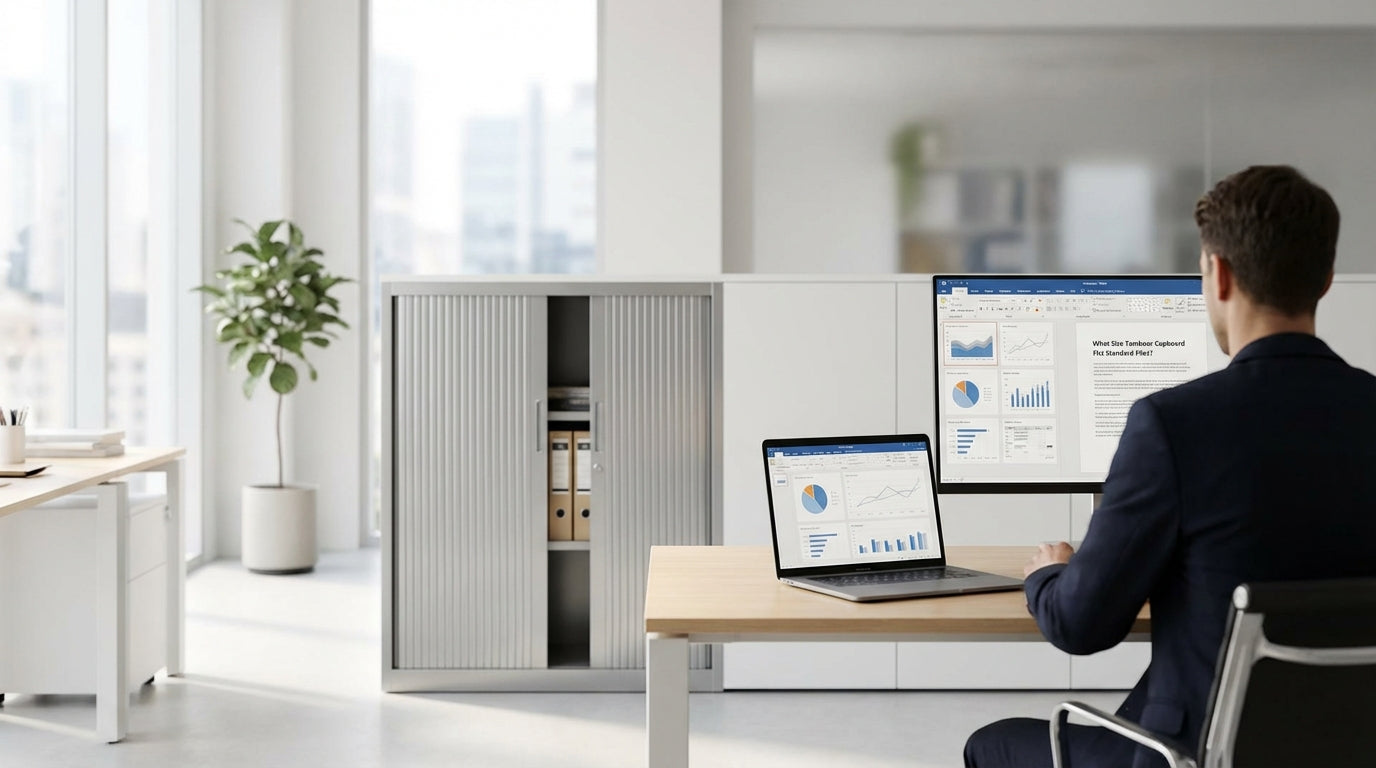
Cupboards with swinging doors need clearance in front, which can be tricky in narrow corridors or tight team areas. In these situations, space‑saving options like tambour cupboards or sliding door cabinets shine because their doors don’t project into walkways. Both are designed to work efficiently with standard A4 and suspension files, and many models include adjustable shelves or file frames to customise the interior layout.
Traditional filing cabinets still have a strong role for heavy‑use suspension files, especially when you need quick, labelled access and secure locking drawers. However, they can be less flexible for mixed storage like binders, stationery, and archive cartons. Broader storage systems such as office cupboards or multi‑purpose metal ranges like GO Steel Storage and Premier Storage are better suited for varied contents.
For very large record collections or shared archives, high‑density solutions like Compactus can dramatically increase the number of standard files stored per square metre. These mobile shelving units run on tracks so you only open the aisle you need, freeing up floor space for more desks or meeting areas. Many offices use a mix: mobile shelving for long‑term records, cupboards for everyday files, and smaller stationery units for consumables.
Measuring your files and planning ahead
A quick measure with a tape can save a lot of frustration later. Take stock of what you’re storing now and allow for growth.
Start by counting how many lever arch files, suspension files, and archive boxes you use in a typical year. Measure the total lineal metres of files (for example, one shelf of 900mm width equals 0.9 lineal metres) and compare that with the stated capacity of any cupboard or shelving system you’re considering. Many tambour cupboards and metal storage units will specify how many levels of A4 files they will hold, making it easier to translate your current volume into a suitable model.
Next, measure the available floor space, including door swings, walkways, and any power or data points. This step helps you decide whether compact options like sliding door cabinets or vertical systems like office shelving are more practical than deep, traditional cupboards. Remember to consider ceiling height and any obstructions like air‑conditioning units or windowsills that might limit tall storage.
Finally, think about how your storage needs will change over the next few years, especially if you’re moving towards more digital records. You might opt for a combination of flexible office cupboards, specialist stationery cupboards for consumables, and a compact high‑capacity system like Compactus for archived paper files. Planning with a little extra capacity now will help you avoid clutter and rushed storage purchases later on.


