

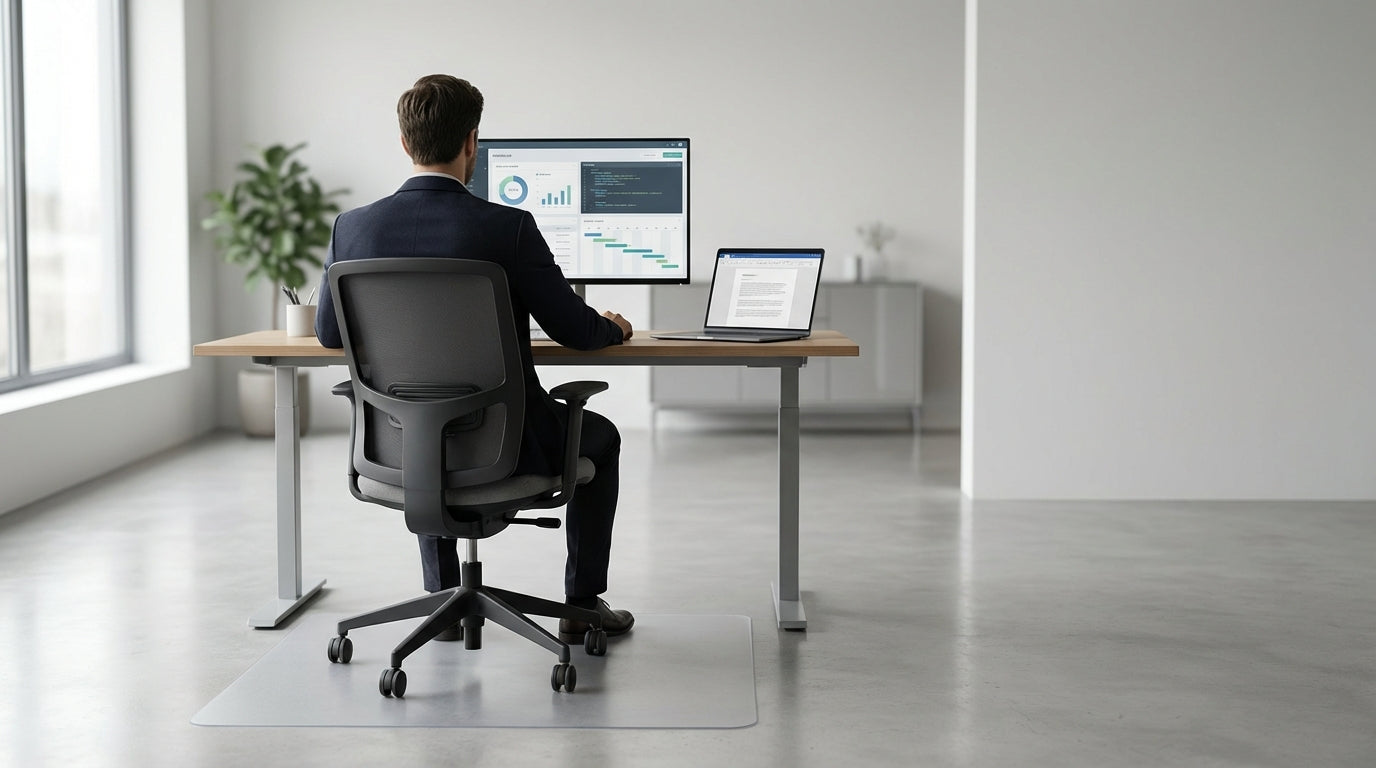
Understanding how desk chairs interact with your floor
Rolling office chairs can quietly ruin floors if you choose the wrong combination of surface and castors. Before you commit to new flooring, it pays to understand how chair movement, weight, and desk layout all work together.
Most modern task chairs use hard plastic castors, which are fine on low‑pile carpet but can scratch timber, vinyl, and laminate. Softer rubber or polyurethane wheels are better suited to harder surfaces because they grip slightly and distribute weight more evenly. The style of workstation you choose also matters: for example, larger setups like Corner Workstations or Height Adjustable Workstations usually create wider movement zones where chair wear is concentrated.
Think about who will be using the space and how intensely. In a corporate office with rows of Single Person Workstations, floor protection needs to focus on durability and ease of cleaning. In a home office, where you might combine a stylish rug with a compact Home Office Desk, you may be able to prioritise comfort and appearance as much as resilience.
Also consider future changes. If you might shift from a traditional fixed desk to a sit–stand unit, planning around the footprint of Corner Office Desks or L-Shaped Desks now can save you from mismatched cut carpet or patchy wear patterns later on.
Carpet options for comfort and noise control
Carpet remains popular in Australian offices because it absorbs sound and feels comfortable underfoot. The right type can also hold up surprisingly well under chair castors.
Commercial carpet tiles are usually the most practical option. Their dense, low pile handles rolling chair loads better than plush domestic carpet, and individual tiles can be replaced if a particular spot under a Manager Desk or shared workstation becomes worn. Chair-friendly tiles often come with a tough backing that resists delamination when chairs pivot repeatedly in the same place.
Loop pile carpet is generally more resilient than cut pile for high-traffic office areas, but very tight loops can snag on certain chair wheels. If you’re fitting out a space with long runs of Straight Desks or banks of Student Desks, ask your supplier about castor-rated products that are specifically tested for rolling resistance and wear. A firmer underlay also stops chairs from sinking in, which reduces strain on both the carpet and the person sitting.
Carpet does have some downsides around maintenance. It traps dust and crumbs around the bases of Corner Workstations and meeting tables, which means you’ll need regular vacuuming and occasional deep cleans. In spill-prone areas like project spaces or around Home Office Desks, consider using floor mats or transitioning to a hard surface just in the immediate chair zone.
Hard flooring: vinyl, laminate, and timber under task chairs
Hard surfaces are easy to clean and look sleek, but they need protection from chair castors. Different materials handle impact, moisture, and scratching in very different ways.
Vinyl planks and tiles are often the most forgiving choice for busy offices. They combine a resilient surface with good water resistance, so spills under coffee cups or water bottles near Single Person Workstations or Straight Desks are less of a drama. Look for commercial-grade wear layers and slip ratings suitable for your building code, especially in corridors where staff move between teams and shared Corner Workstations.
Laminate offers a similar look to timber at a lower cost, but cheaper products can chip or swell if moisture gets into the joins. Under rolling chairs, the surface layer can wear through over time, particularly where people pivot in and out of larger setups like L-Shaped Desks or Corner Office Desks. If you choose laminate, combine it with soft castor wheels and transparent chair mats in high-use areas for longer life.
Real timber floors look impressive in executive suites and home studies, especially when paired with premium Manager Desks or elegant Home Office Desks. However, they’re the most vulnerable to dents and scratches from chair legs and castors. Regularly check felt pads on fixed chairs, keep grit off the floor, and choose high-quality mats that don’t trap moisture or discolour the finish.
Chair mats, castors, and workstation layout
Protective accessories can dramatically extend the life of your floor. The key is matching mats and castors to the surface and to the way people actually work at their desks.
Chair mats act as a sacrificial layer between the castors and your floor. On carpet, studded mats stop movement and prevent rucking, which is ideal under concentrated seating zones like pods of Single Person Workstations or banks of Student Desks. On hard floors, smooth‑backed mats protect against scratches and help chairs glide more easily, reducing strain for staff who move frequently between paperwork and screens.
Upgrading castors is another simple win. Soft rubber or polyurethane wheels are designed for hard floors, while hard nylon castors roll more freely on carpet. When you introduce flexible layouts using Height Adjustable Workstations or large Corner Workstations, people tend to move more within their footprint, which makes the quality of castors even more important for both floor protection and user comfort.
Your workstation layout should limit unnecessary rolling. Position frequently used storage close to Straight Desks and L-Shaped Desks so staff swivel instead of scooting long distances. In home offices, scale furniture appropriately; a compact Home Office Desk in the right spot can avoid constant chair travel across polished boards or sensitive laminate.
Matching flooring to different office spaces
Different areas of your workplace place different demands on flooring. Thinking zone by zone helps you pick surfaces that cope with chair traffic while still looking cohesive.
Focus individual work areas first. In open-plan zones with rows of Single Person Workstations or aligned Straight Desks, low‑pile carpet tiles often balance acoustics, comfort, and durability well. For leadership suites with premium Manager Desks or corner configurations such as Corner Office Desks, timber or high-end vinyl can create a more refined look, supported by discreet chair mats where rolling is heaviest.
In collaborative corners and meeting spaces, people tend to move chairs more frequently and at greater angles. Here, durable hard flooring like commercial vinyl works well, especially if you’re using flexible Corner Workstations or Height Adjustable Workstations that get reconfigured over time. For training rooms fitted with rows of Student Desks, consider darker, patterned carpet tiles that disguise wear paths and minor spills while still allowing chairs to roll.
At home, you have more freedom to blend comfort and style. If your study doubles as a living space, pairing a resilient hard floor with a compact Home Office Desk and a clear chair mat can create a practical work zone without dominating the room. For corner nooks using small L-Shaped Desks, a carefully placed rug over vinyl or laminate can soften the look while still keeping the main chair path on a castor-friendly surface.


