

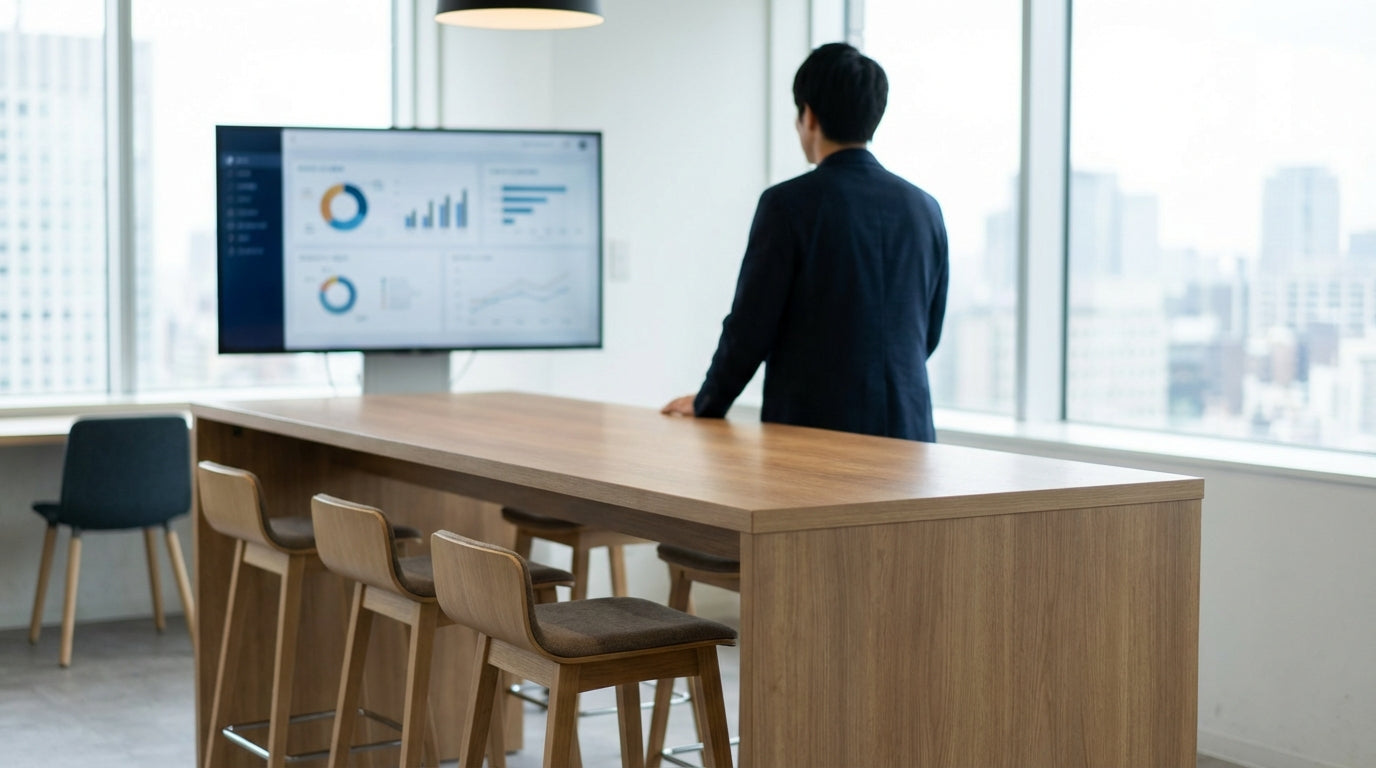
Why Standing Meetings Need Purpose-Built Bar Tables
Short, focused meetings work best when people are on their feet. The right bar-height table helps keep sessions brisk, comfortable, and collaborative.
Standing meetings are designed to reduce time-wasting and keep energy levels high. When you pair this approach with well-chosen high tables, you create a zone that encourages quick decision-making instead of drawn‑out discussions. Participants naturally stay more alert, move more, and engage better when they aren’t sunk into chairs for long periods.
In many Australian workplaces, tall meeting tables now sit alongside traditional meeting tables to give teams more choice in how they collaborate. Agile stand-ups, project huddles, and daily check‑ins all benefit from a surface that’s at the right height for laptops, notepads, and coffee cups. This keeps the meeting functional without encouraging people to settle in for an unnecessary hour‑long session.
Purpose-built bar tables also help you clearly zone your office layout. By combining them with mix‑and‑match bar stools or nearby breakout seating, you can create a “quick connect” space that’s visually distinct from formal boardrooms and hot-desking areas. That visual signal alone can gently nudge teams towards faster, more efficient meetings.
Key Features to Look For in High Tables for Meetings
The best tall tables balance durability, comfort, and flexibility. A simple checklist makes it easier to choose the right model for your space.
Height is the first thing to get right. For most adults, a surface around 1050mm–1100mm high works well for standing use, and it also suits perching on high stools. If the table will double as a café or touchdown zone, confirm that any matching bar stools align comfortably with the top so people can sit or lean without hunching.
Next, consider the top size and shape. Narrow rectangular designs are ideal for corridors and small collaboration spots, while larger models offer more room for laptops and documents. Round formats, similar to dedicated round tables, are great for inclusive conversations because everyone faces inward and can see each other clearly. For mixed uses like training or workshops, look for sturdy options that can support AV gear and power hubs.
Finally, pay attention to finishes and maintenance. Commercial-grade melamine, laminate, or solid timber-look surfaces are easier to clean and withstand daily use, especially in busy team hubs. If you’re aligning tall tables with existing office & meeting tables, sticking to a similar colour palette and leg style helps your workspace look intentional rather than thrown together.
Designing a Standing Meeting Zone That Actually Gets Used
A well-planned layout is just as important as the furniture itself. Smart placement can turn an unused corner into the busiest spot in your office.
Place high meeting tables in accessible, central locations so people naturally gravitate towards them for quick chats. Corridors near project teams, ends of open-plan rows, or spaces near the kitchen all work well. Unlike formal boardrooms stocked with large meeting tables, these spots should feel casual and easy to step into without a calendar invite.
If you run agile sprints, workshops, or training, think about how tall tables can complement your existing training tables and collaborative furniture. A mix of standing-height and seated zones lets facilitators shift the room between focused listening and quick stand-up activities. Adding a mobile whiteboard or screen creates a flexible hub for brainstorming, roadmaps, and progress updates.
Comfort matters too. Combine high surfaces with a handful of bar stools so people who need to rest can still participate fully. Soft furnishings from your breakout seating areas nearby can also help soften noise and make the space feel welcoming rather than purely functional. The goal is to keep meetings short, not uncomfortable.
Flexible Table Solutions for Hybrid and Multi-Use Spaces
Modern offices rarely use a space for just one purpose. Flexible tables make it easier to pivot between standing meetings, training, and project work.
Mobile furniture is particularly useful if you’re reconfiguring rooms for different teams. Products similar to dedicated mobile tables can be wheeled into an open area to create an instant stand-up zone, then moved away when you need the floor space for an event. Lockable castors keep everything stable during use, so people can lean on the surface without wobble.
Flip mechanisms are another smart feature. While typical flip top tables are often standard height, the same concept applies at bar height: fold the top vertically, nest tables together, and roll them into a storage area. This is ideal for offices that share a single room for training, workshops, and casual standing huddles across the week.
Where possible, align your high tables with the broader range of bar tables and office & meeting tables you already use. Consistent leg styles, finishes, and heights make it easier to mix different pieces without visual clutter. Over time, you can build a modular kit of parts that adapts as your team size and ways of working shift.
Choosing the Right Combination of Tables and Seating
A standing meeting area works best as part of a broader furniture mix. The aim is to support different tasks without overfurnishing your floorplan.
Start by mapping when you need people standing versus sitting. Quick daily check‑ins, project huddles, and post‑lunch catch‑ups are ideal for tall surfaces, while longer strategy sessions still benefit from traditional meeting tables. Balancing both stops your high tables becoming overloaded with tasks they’re not designed for, like half‑day workshops or detailed training sessions.
For collaborative training and workshops, pair stand-up zones with reconfigurable training tables and perhaps some compact round tables for small-group work. This enables facilitators to move people between listening, discussion, and quick action phases by simply shifting where they stand or sit. Bringing in complementary breakout seating gives teams a relaxed spot to debrief once the fast-paced standing session ends.
Finally, consider user comfort over the whole day. While standing boosts focus, staff still need options to lean or sit between sessions, so matching bar stools are worth the investment. When you layer high tables with the right mix of bar tables, classic office & meeting tables, and adaptable mobile tables, your workspace becomes both more efficient and more comfortable for everyday use.


