

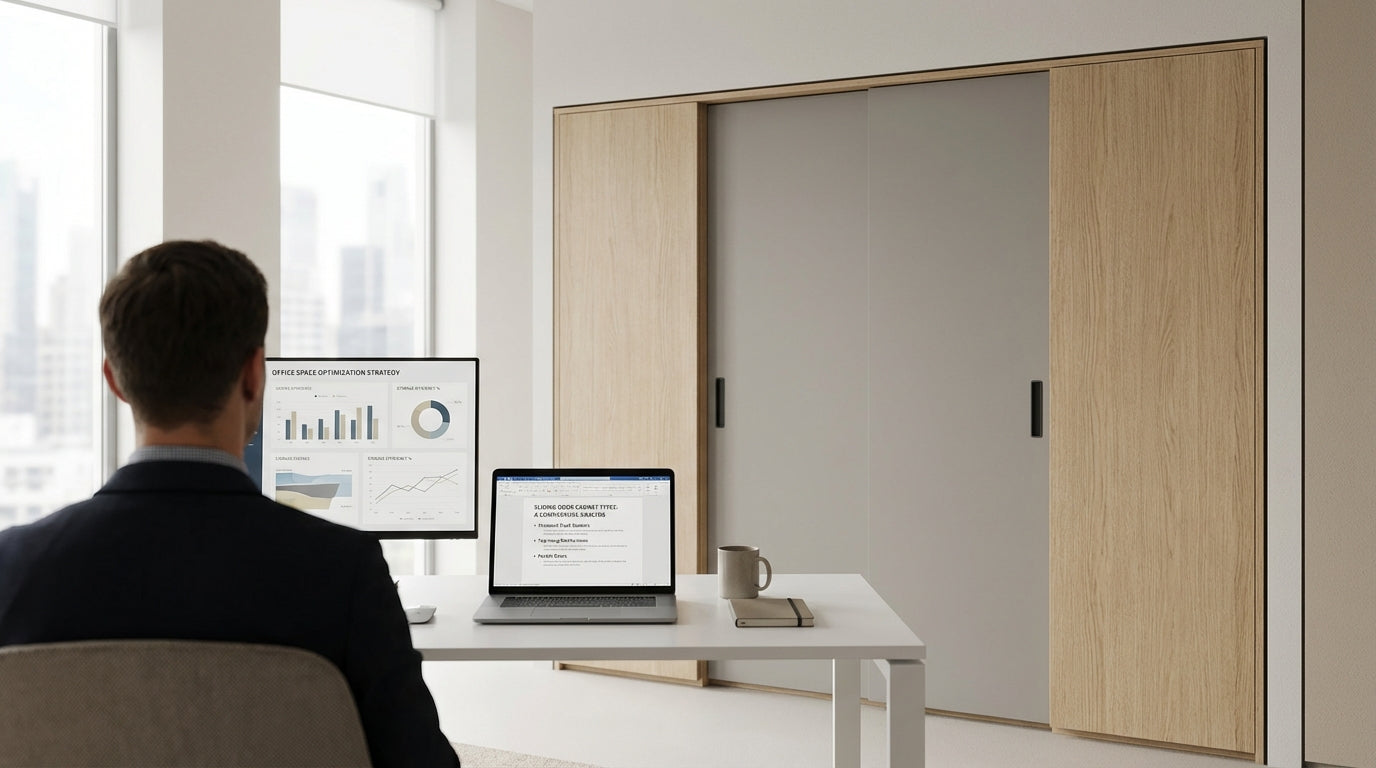
Understanding Space-Efficient Sliding Storage
In a busy Australian office, every square metre counts. Sliding storage is popular because doors don’t swing out and block walkways or bump into desks.
Unlike traditional hinged cupboards, sliding systems move side-to-side on tracks, keeping the door footprint flush with the cabinet. This makes them ideal for narrow corridors, behind workstations and shared spaces where clearance is tight. Many modern Sliding Door Cabinets also integrate adjustable shelves and lockable doors, combining compact design with secure storage. When you understand how each style works, it becomes easier to match a cabinet to your layout and storage volume.
Space efficiency isn’t just about fitting more furniture into a room; it’s also about improving access and workflow. If staff can quickly reach files or stationery without manoeuvring around open doors, you reduce bottlenecks and interruptions. That’s why smart offices often pair wall-mounted Office Shelving with low-profile sliding units, using vertical space effectively while keeping traffic areas clear.
Tambour vs Solid Sliding Doors: Which Saves More Space?
When floor space is limited, the type of sliding mechanism matters. Tambour doors and solid panel sliders each have their own advantages.
Tambour cupboards use a flexible slatted door that rolls into the cabinet body, usually vertically or horizontally. Because the door retracts completely into a side or top compartment, you gain full access to the opening without worrying about door projection. This makes Tambour Cupboards especially useful beside workstations, in compact print rooms or along busy corridors where people are constantly moving through.
Solid sliding doors, by contrast, glide across the front face of the unit on tracks. They are simple, robust and common in metal and melamine Office Cupboards. While one side is always covered when the other is open, the cabinet still requires no additional swing space, so it works neatly behind doors, beside meeting tables or underneath whiteboards. Many steel options, such as GO Steel Storage and Steelco Modular Cabinets, use this style for its durability and clean lines.
In tight rooms where cabinets sit close together, tambour units often offer the best access because they don’t overlap adjacent doors at all. However, if you need a very smooth, quiet slide and a more traditional look, solid panel Sliding Door Cabinets may be a better fit. For many offices, a mix of tambour for high-traffic areas and solid sliders for back-of-house storage delivers the most space-efficient balance.
Height, Width and Depth: Getting the Proportions Right
Cabinet dimensions can make or break a tight office layout. Choosing the right height and depth is just as important as the door style.
Tall storage maximises vertical space, allowing you to keep the footprint small while increasing capacity. Full-height Stationery Cupboards with sliding or tambour doors can hold bulk paper, files and office supplies without spreading along the wall. In open-plan environments, pairing tall cabinets against perimeter walls with low storage such as Credenzas / Buffets near desks helps preserve sightlines and natural light while still giving you plenty of storage volume.
Depth is another key factor in space efficiency. Shallow units are easier to place behind doors, in corridors or alongside workstations without encroaching on movement space. Many ranges, including Premier Storage and GO Steel Storage, offer compact depths designed for narrow areas. If you store primarily files, lever arch folders or small boxes, a shallower cabinet often uses space better than a deep one that ends up half-empty at the back.
Width determines how many cabinets will line a wall and how easily doors can slide without obstructing power points or windows. Longer runs of Office Shelving can be broken up with strategic banks of sliding units to keep heavily used items at arm’s reach. In many offices, two medium-width sliding cupboards provide more flexible configuration than one very wide unit, especially if you may need to move or reconfigure your furniture later.
Materials and Construction: Metal vs Melamine in Tight Spaces
Construction materials influence durability, noise and how well a cabinet copes with heavy, compact storage. Metal and melamine are the most common options in Australian workplaces.
Steel cabinets are highly resistant to dents, ideal for high-traffic areas or shared spaces where trolleys and chairs can knock furniture. Products like Steelco Modular Cabinets and GO Steel Storage excel in archive rooms, mailrooms and utility areas that demand strong shelves and secure locking. Metal doors also tend to run smoothly on tracks for longer, which is a benefit when cabinets are opened and closed dozens of times a day.
Melamine (a type of laminated board) offers a softer, furniture-style finish that suits executive offices and client-facing spaces. Many melamine Office Cupboards and Credenzas / Buffets integrate sliding doors to save space while matching desks and meeting tables. While melamine isn’t as tough as steel, it absorbs noise better, which can be a subtle advantage in quiet or acoustically sensitive areas.
In very confined zones, the way a cabinet is built also affects day-to-day usability. Recessed handles reduce snag points in aisles, while flush bases help cleaners reach underneath. Adjustable shelves in units such as Premier Storage and many Sliding Door Cabinets let you customise internal height, so you don’t waste vertical space on half-empty shelves. Choosing well-built cabinets means doors are less likely to warp or jam, which is especially important when you have limited room to manoeuvre around them.
Planning Your Layout for Maximum Office Floor Space
The most efficient cabinet is only truly space-saving when it’s positioned well. Thoughtful planning ties storage, movement and work zones together.
Start by mapping out high-traffic areas, such as paths to meeting rooms, kitchens and printers. Sliding units and Tambour Cupboards work best along these routes because they never swing into the walkway. Place deeper or less frequently used cupboards in low-traffic corners, and reserve prime locations for everyday items such as files, stationery and reference materials. Combining tall cabinets with open Office Shelving gives you a mix of concealed and visible storage without overcrowding walls.
Consider using low sliding cabinets and Credenzas / Buffets as space dividers in open-plan layouts. They separate teams or zones while still allowing light and visibility across the office, and their tops can double as printer stations or display areas. For shared resources, central banks of Stationery Cupboards make more sense than small cupboards at every desk, reducing duplication and keeping the floor plan cleaner.
If your needs change over time, modular systems like Steelco Modular Cabinets and flexible Premier Storage ranges help future-proof the layout. You can add or move units as teams grow without redesigning the entire office. By balancing cabinet type, size and position, you can create a workspace that feels open and uncluttered while still providing all the storage your team requires.


