

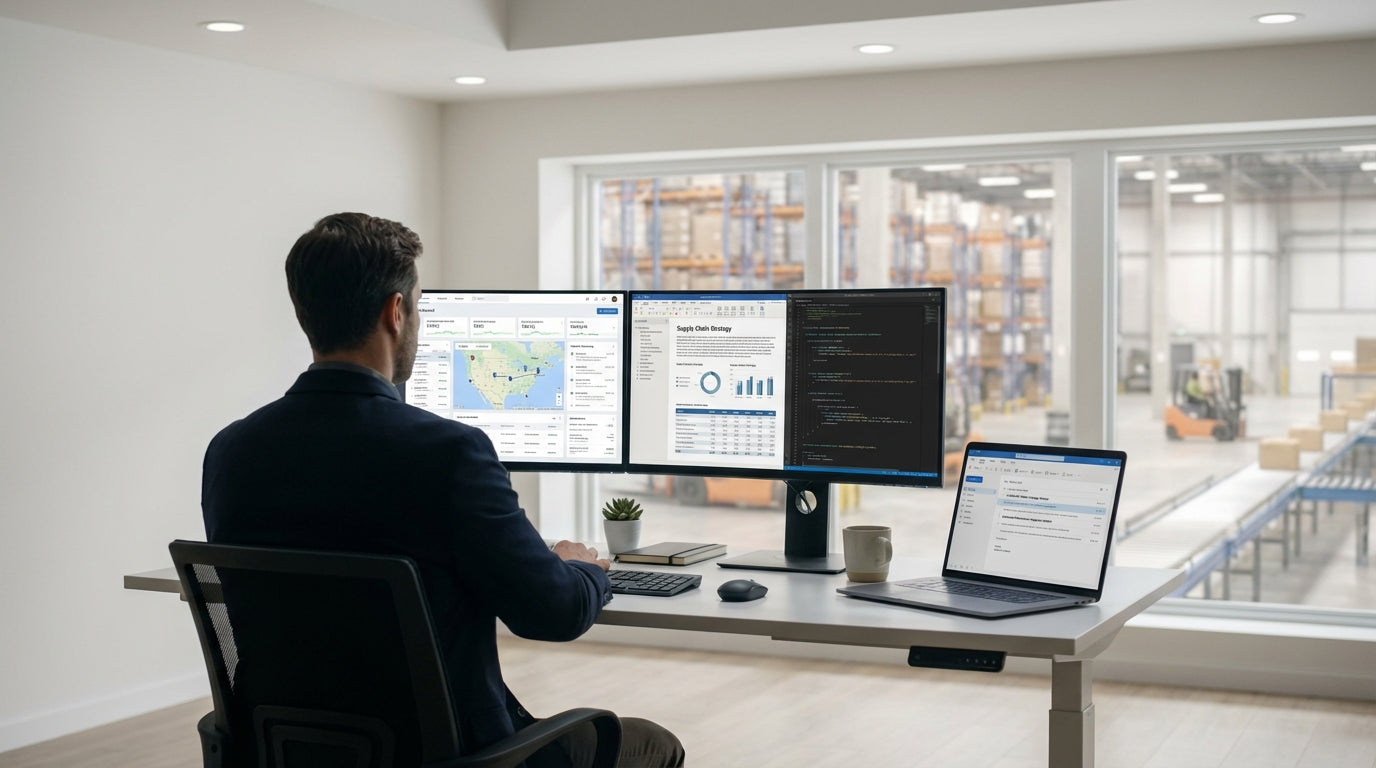
Designing Practical Office Spaces Inside Busy Warehouses
Warehouse-based teams need office areas that handle noise, dust, and constant movement. Smart layout choices help admin, dispatch, and supervisors work efficiently right beside operations.
Start by separating high-focus roles from high-traffic zones. Simple choices like positioning desks away from roller doors, loading docks and forklift paths immediately reduce distractions. Enclosed or semi-enclosed spaces, using screens or Partition Workstations, help cut noise while still keeping staff visually connected to the warehouse floor.
Choosing the right workstation style is just as important as the location. For compact control rooms or dispatch offices, flexible options like Single Person Workstations or space‑saving Corner Office Desks create clear individual zones without wasting floor area. For planning or routing teams who need to collaborate quickly, shared setups such as 2 Person Workstations support fast communication while keeping paperwork centralised.
Think about cable management and power access from the start. Logistics offices often rely on multiple screens, label printers, handheld device chargers and network hardware. Using sturdy Straight Desks or L-Shaped Desks with cable ports and room for under‑desk power rails keeps walkways clear and reduces trip hazards in already busy environments.
Ergonomic Furniture for Long Shifts and High Turnover
Logistics and transport operations often run early starts, late finishes, and rotating shifts. Supporting staff comfort reduces fatigue and helps minimise avoidable errors in time‑critical work.
Ergonomics is about fitting the job to the person, not the other way around. Adjustable Task Chairs allow each team member to set seat height, back support, and tilt for their body type. When operators sit for long periods doing tracking, booking or route planning, proper lumbar support and correct monitor height can significantly reduce back and neck strain.
In heavy-use environments like 24/7 distribution centres, standard seating often wears out quickly. That is where Heavy Duty Chairs are worth the investment. Built for higher weight ratings and constant use, they stand up to multiple users across shifts and help maintain consistent support over time. This reliability is especially useful in shared control rooms and transport desks with round‑the‑clock staffing.
The desk shape should also match the task. Team leaders and supervisors who are constantly switching between phone, radio, and computer benefit from wrap‑around layouts such as L-Shaped Desks or carefully positioned Corner Office Desks. These give immediate reach to paperwork, screens and ports without awkward twisting. For data entry or inventory control roles with a narrower scope, simple Straight Desks paired with supportive chairs keep the footprint small while maintaining comfort standards.
Workstations That Support Fast Communication and Clear Roles
In logistics, delays often come from miscommunication rather than lack of effort. Office layouts that make it easy to talk, check details, and share information quickly can significantly improve turnaround times.
Shared desks like 2 Person Workstations work well for dispatchers and transport coordinators who need to cross‑check bookings or run through run sheets together. These setups keep screen visibility controlled while still allowing side‑by‑side problem solving. For staff who handle sensitive data or quiet tasks such as invoicing and compliance, individual Single Person Workstations help protect focus and confidentiality.
In larger warehouses, zoning by function is crucial. You might group customer service, accounts, and inventory planning in one block using Partition Workstations to create semi‑private pods. Supervisors or operations managers can sit nearby on more spacious Manager Desks, giving them a dedicated place for meetings, performance discussions and supplier calls without needing a separate boardroom for every conversation.
Desk shape can reinforce workflow clarity. For example, routing coordinators using multiple monitors and mapping tools often prefer L-Shaped Desks, which keep screens and documents organised across two surfaces. Meanwhile, compact Straight Desks assist hot‑desk users, temporary staff, or seasonal support teams by providing simple, predictable setups that are easy to scale up or down as volumes change.
Storage, Security and Compliance in Operational Offices
Logistics businesses handle a mix of personal belongings, paperwork and high‑value items. Choosing the right storage reduces clutter and helps you stay compliant with safety and data rules.
Many warehouse offices double as sign‑in points, key collection areas and document hubs. Secure, durable Steel Lockers give staff and drivers a safe place to store bags, PPE, and personal items during shifts. This keeps aisles clear and avoids trip hazards caused by loose gear on the floor, which is especially important around fast‑moving pick‑and‑pack zones and dock doors.
Separating personal storage from operational files is also vital. Supervisors and managers often need lockable drawers or cabinets built into their Manager Desks for contracts, incident reports and HR documents. Pairing these with nearby Partition Workstations for admin staff creates a tidy hierarchy: key records close at hand for decision‑makers, day‑to‑day paperwork within reach of support staff, and personal gear safely stored away from work surfaces.
For teams handling manifests, shipping labels, and compliance paperwork, flatter work areas such as Straight Desks make sorting and signing documents easier. When combined with clearly labelled shelving and lockers, these setups help ensure the right paperwork travels with the right load. Consistent storage reduces time wasted hunting for files and lowers the risk of loads being held up due to missing documents.
Creating Professional Spaces for Supervisors and Clients
Even inside an industrial site, front‑facing areas need to look professional. Well-chosen furniture supports leadership roles and gives visitors confidence in your operation.
Team leaders, warehouse managers and transport supervisors often juggle staff briefings, performance reviews and supplier meetings. Dedicated work zones with quality Manager Desks help separate higher‑level planning from day‑to‑day admin. A spacious surface makes it easier to lay out reports, safety stats and rostering sheets during discussions without encroaching on shared workstations.
When office space is carved out of the warehouse footprint, the desk layout must work hard. Combining a Corner Office Desk or L-Shaped Desk with one or two visitor chairs creates a compact but functional manager’s office that still fits within existing walls or mezzanine spaces. This allows private conversations while keeping managers close to the floor for quick checks and toolbox talks.
Reception or sign‑in points should also reflect your brand and safety standards. Using simple, tidy Straight Desks with ergonomic Task Chairs gives admin staff a comfortable, approachable station for greeting drivers and visitors, issuing passes, and handling paperwork. Where visitors may leave valuables while on site, allocating nearby Steel Lockers shows you take both security and duty of care seriously.


