

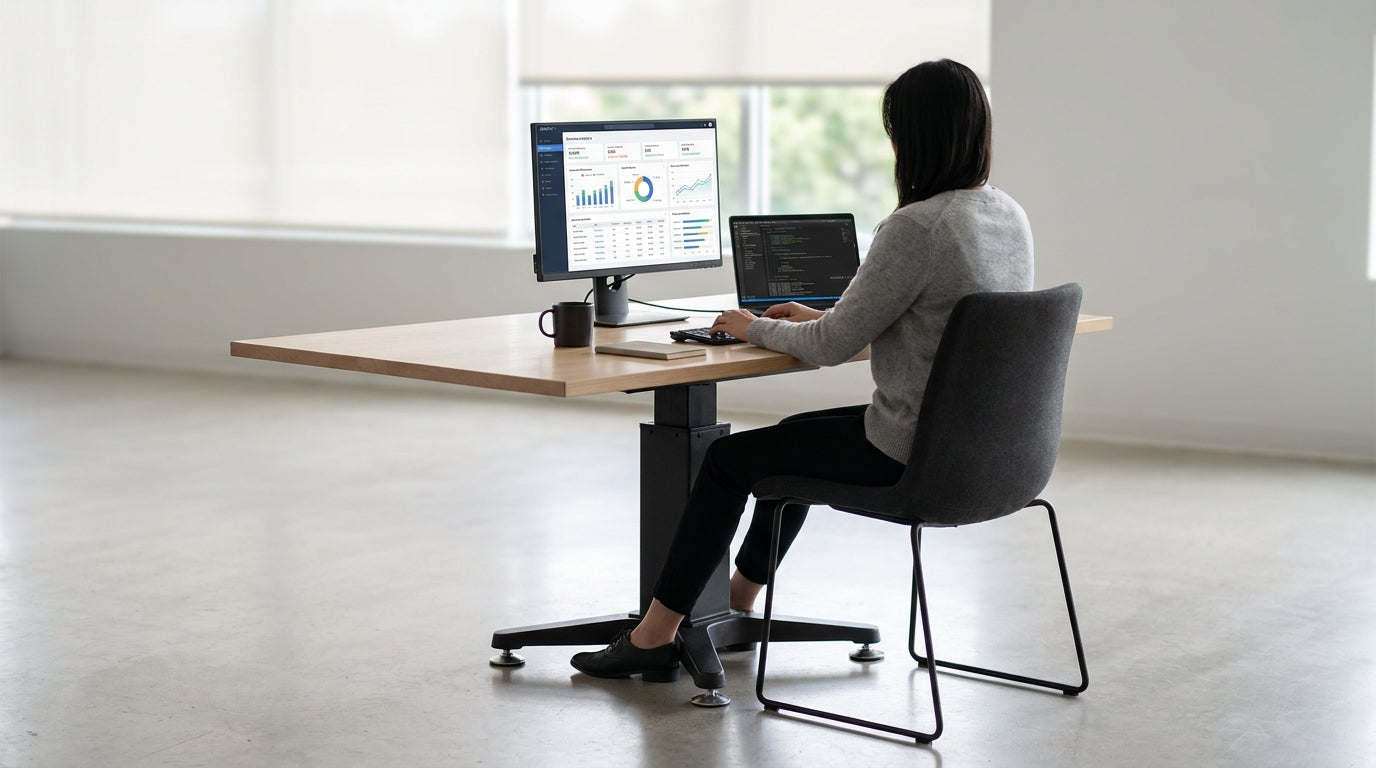
Why Stable Table Bases Matter in Everyday Use
A wobbly table is more than just annoying; it can disrupt meetings, damage equipment and create safety hazards. Choosing the right base is the fastest way to improve stability and extend the life of your table.
In offices, schools and hospitality venues across Australia, tables are constantly bumped, leaned on and moved. If the base isn’t designed for stability, even a solid top will shake every time someone shifts in their chair. For shared spaces such as office & meeting tables, people often rest laptops, coffee cups and documents on the edge, putting extra pressure on the frame. A well-engineered base spreads that weight evenly so the surface stays steady.
Stability becomes even more critical in collaborative environments where staff gather around boardroom tables for presentations, video calls and workshops. Wobble can cause cameras to shake, drinks to spill and participants to lose focus. By understanding how different table bases handle weight, movement and uneven floors, you can select furniture that supports productivity rather than distracting from it.
Key Design Features That Keep Tables Solid
Several simple design principles determine how firm a table will feel in use. Understanding these helps you compare bases beyond just looks.
First is footprint: the more contact a base has with the floor, the better it resists tipping and side-to-side sway. Wide-set legs, T-bases and cross-shaped feet provide a broad stance that supports larger meeting tables or shared desks. Materials matter too. Steel frames and quality aluminium bases generally provide better rigidity than thin tubular metal or soft timber, particularly for long spans found in training and seminar layouts.
Next is structure. A good base minimises flex with bracing, cross rails and strong fixings between the frame and top. You’ll often see this in training tables, where modesty panels or support beams double as structural reinforcement. Look for welded joints or robust bolts rather than light-duty screws that can loosen over time. Adjustable levelling feet are another critical feature: these screw-in caps at the bottom of each leg allow you to compensate for uneven floors, a common cause of rocking in offices and older buildings.
For mobile or reconfigurable spaces, locking castors and stabilising mechanisms play a key role. On mobile tables, high-quality castors with strong brakes prevent drift when people lean or write. On flip top tables and folding tables, secure locking systems in both the legs and top make the difference between a solid work surface and a shaky one. Always check how these parts feel to operate; if they feel flimsy in your hands, they’re likely to feel unstable in daily use.
Comparing Common Base Styles for Stability
Different base shapes suit different spaces and stability needs. The best choice depends on table size, how it’s used and how often it’s moved.
Four-leg bases are the most familiar and can be very stable when the legs are splayed wide and made from strong materials. They’re ideal for compact office & meeting tables or small outdoor tables. However, as table tops get longer, basic four-leg designs can start to flex in the middle, especially if the frame lacks cross-bracing. Central pedestal bases, often seen in café and compact meeting settings, free up leg room and allow chairs to slide easily around the perimeter. A heavy, weighted base plate and a wide diameter column are essential here; light pedestals with small feet are more prone to wobble if someone leans heavily on one side.
T-shaped and Y-shaped bases are popular for conference and training environments because they balance stability with generous knee space. The long feet run parallel to the floor, resisting tipping when people sit or stand at the table edge. When used on boardroom tables, these bases often come in pairs or triples along the length of the top, distributing weight and preventing sagging in the centre. For more flexible layouts, folding-leg trestles and flip mechanisms are common, particularly in trestle tables used for events.
Foldable bases require the most scrutiny because moving parts can introduce play over time. High-quality folding tables usually feature locking braces that snap solidly into place, so the legs function like fixed ones when set up. Likewise, sturdy flip top tables will use robust locking handles along the rail and deep, overlapping metal components to keep the surface firm when lowered. If you regularly rearrange rooms or run training sessions, it’s worth investing in these better mechanisms to avoid chronic wobble and ongoing maintenance.
Choosing the Right Base for Different Spaces
A stable table in a boardroom has different demands to one in an outdoor lunch area. Matching the base to the setting is key to long-term performance.
For formal collaboration spaces, such as executive boardroom tables, look for multi-leg frames or double pedestals that support the full length of the top. Integrated cable management and central beams can double as structural reinforcement, keeping long surfaces from bouncing when people type or move equipment. In smaller huddle rooms or casual breakout zones, compact pedestal or T-base designs under meeting tables provide enough stability while maximising leg room and seating flexibility.
Training rooms, seminar spaces and classrooms benefit from lightweight but rigid frames with locking wheels. Here, training tables and mobile tables that flip or nest are popular because they store efficiently. To avoid wobble during sessions, choose models with full-length rails under the top and dual-lock castors on at least two legs. For creative or technical environments, height-adjustable and specialist frames found in drafting tables must have strong locking levers and cross-bracing, so the surface stays firm even when angled or raised.
Outdoor areas introduce extra variables such as uneven paving and wind. A wide, weighted base under outdoor tables helps resist tipping, while corrosion-resistant materials prevent loosening over time. For multipurpose halls and event venues that regularly reset layouts, robust trestle tables with secure folding legs provide a practical balance of portability and stability. Choosing base designs suited to each environment reduces wobble from the outset and minimises the need for ad hoc fixes like shims and folded cardboard.
Practical Tips to Reduce Wobble and Extend Table Life
Even the best base needs a little care to stay rock solid. A few simple habits can dramatically cut wobble and prolong your table’s lifespan.
Start with installation. Make sure all bolts, screws and brackets are tightened firmly according to the manufacturer’s instructions, especially where the base meets the top. After the first few weeks of use, recheck fixings on frequently used pieces like meeting tables and training tables, as components can settle and loosen slightly. Adjust levelling feet so all contact points touch the floor evenly; if one foot is hanging in the air, the table will rock even on a flat surface.
For movable models, inspect castors and folding mechanisms regularly. On mobile tables, ensure wheel locks are engaging properly and free from debris, as dirt and carpet fibres can stop brakes from holding firmly. Folding and flip top tables should open and lock with a positive, secure feel; if there’s excessive play, it may be time to replace worn components. Avoid dragging heavy boardroom tables or large office & meeting tables across the floor, as this can twist legs and stress joints, leading to subtle but persistent wobble.
Finally, match usage to design. Don’t overload light-duty folding tables with heavy equipment, and reserve more robust bases for high-traffic or high-weight situations. For outdoor settings, check that glides or feet haven’t worn down on outdoor tables, which can introduce instability on pavers or decking. With the right base choice, proper setup and occasional maintenance, you can keep your tables steady, safe and comfortable to use across every space in your workplace.


