

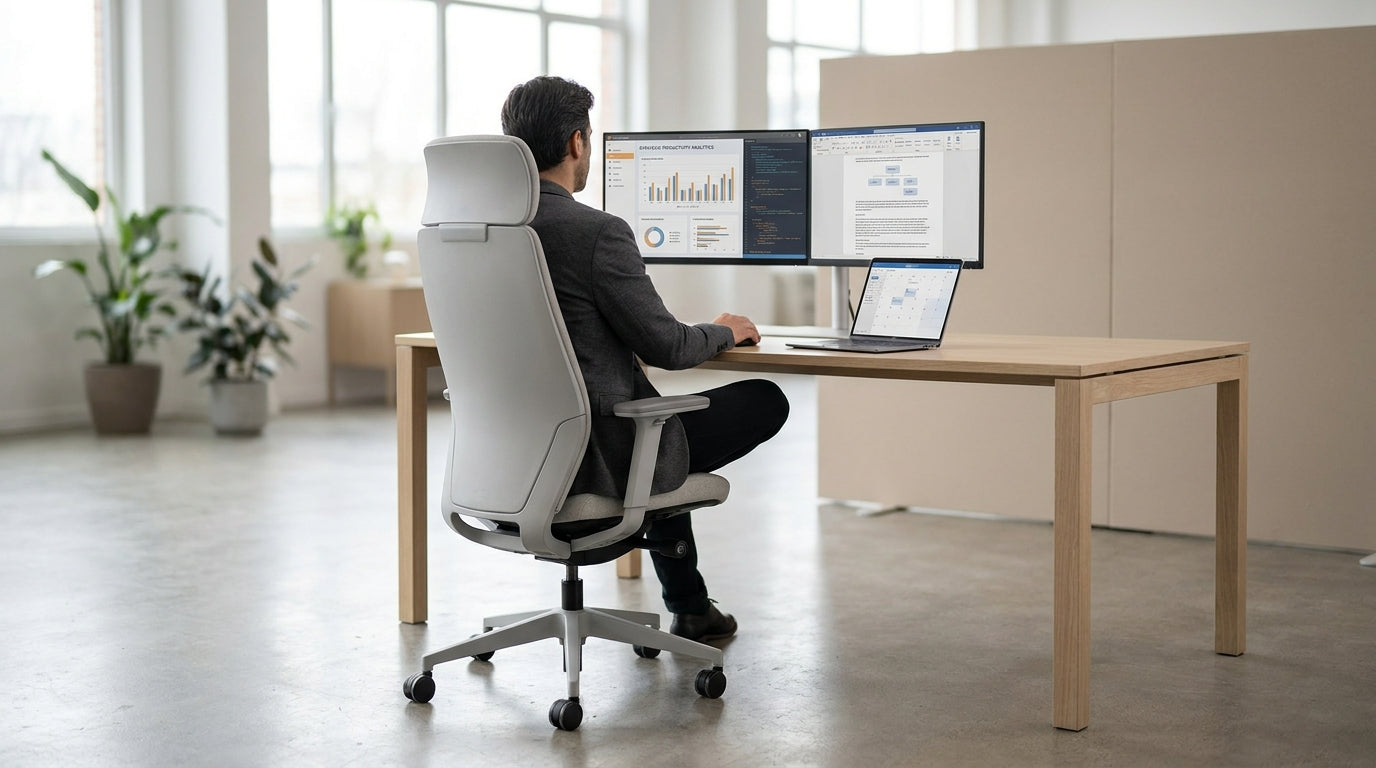
Why Sit Cross-Legged at Your Desk?
Many people naturally tuck one or both legs under themselves when they work. Done on the right chair, this can feel comfortable and even help you focus.
Sitting cross-legged can open your hips, change pressure points, and offer a break from the standard 90-degree sitting posture. However, on a poorly designed office chair, this habit can lead to numb legs, a rounded lower back, and sore hips. To stay comfortable and supported, you need a seat designed with enough width, cushioning, and stable support to handle these shifts in posture throughout the day.
Australian workers are also spending longer hours at the computer, so it’s crucial that your chair caters to real-world habits rather than forcing you into a rigid position. Ergonomic design isn’t just about lumbar support and armrests; it’s also about how easily you can move, perch, and reposition yourself without losing support. That’s where choosing the right style of chair makes all the difference.
Flexible seating options such as modern mesh office chairs and well-designed task chairs can make cross-legged sitting far more comfortable. These styles tend to offer generous seat pans, breathable materials, and a range of adjustments that let you customise your posture through the day.
Key Features to Look For
Not every office chair is suited to cross-legged sitting. A few core features will determine whether your position feels supported or strained.
Seat width is the first consideration. You’ll want a seat pan that’s wide and deep enough to accommodate your legs without digging into your ankles or thighs. Look for a waterfall front edge (a gentle curve instead of a sharp edge) to reduce pressure on the back of the legs. Firm, high-density foam or a supportive mesh seat will distribute weight more evenly when you shift into different postures.
Next, prioritise adjustability. A height range that allows you to sit slightly higher than usual makes it easier to fold one leg up without compressing your hip. Adjustable armrests that move up, down, or even out of the way provide extra clearance for your knees. This is where versatile models such as task chairs and adaptable mesh office chairs really shine, as they’re designed for frequent posture changes.
Lumbar support is also critical, especially when you’re not sitting perfectly square to your desk. A well-contoured lower-back support will help stop your spine from collapsing into a C-shape as you cross your legs. Some users also appreciate slightly higher backs, similar to those on quality leather chairs and executive seats, which provide upper-back support when you lean and twist.
Don’t overlook stability and base design. A sturdy five-star base and smooth-rolling casters reduce the risk of tipping when your weight shifts to one side. Heavier frames, like those used in many heavy duty chairs, can offer extra reassurance if you’re frequently changing positions, leaning, or perching cross-legged for longer stretches.
Best Chair Styles for Cross-Legged Comfort
Some chair styles are naturally better than others for people who like to curl up or sit cross-legged while working. The right category will depend on how you work and how formal your office is.
For most home offices and creative studios, supportive mesh office chairs are a strong choice. Their breathable backs stop you overheating when you tuck your legs up, and many models offer flexible frames that move with you. Look for designs with wide seats, multi-tilt mechanisms, and adjustable armrests so you can open up extra space for your knees when needed.
General-purpose task chairs are ideal for people who want ergonomic support but still like to shift between standard and cross-legged sitting. These chairs usually feature height and tilt adjustments plus user-friendly controls, making them suitable for shared workspaces where multiple people use the same seat. If you often need to perch higher at drafting tables or counters, consider pairing your workstation with specialised drafting chairs, which offer a raised seat and foot ring while still allowing a modified cross-legged posture.
If you’re after a more relaxed or lounge-style feel, especially in collaborative zones or home studies, look into breakout seating, tub chairs and modern armchairs. These seating options often have broader cushions and deeper seats that let you comfortably curl up with your laptop or tablet. While they may not have all the adjustments of a full ergonomic office chair, they’re excellent for shorter sessions, brainstorming, or reading, where a cross-legged posture can feel more natural.
For high-demand workplaces such as labs, clinics and technical environments, you might also look at lab chairs & stools and robust heavy duty chairs. These are engineered for long hours, higher weight ratings and constant movement. As long as the seat size and edge shape are appropriate, they can accommodate occasional cross-legged sitting without sacrificing durability or hygiene standards (particularly important in clinical and industrial settings).
Ergonomic Tips for Safer Cross-Legged Sitting
Even with a supportive chair, posture habits matter. A few small tweaks can help you enjoy sitting cross-legged without straining your body.
Try not to stay in the same position for hours. Alternate between standard sitting, one leg crossed, the other leg crossed, and both feet flat on the floor. Movement helps keep blood flowing and reduces pressure on your joints. If you’re using a higher workstation or creative bench and spend time perched up, pairing your seating with a suitable option like drafting chairs or adjustable task chairs allows you to transition between positions more comfortably.
When you bring a leg up onto the seat, check that your lower back is still supported. Your pelvis should stay neutral, not tucked under, which would flatten the natural curve in your lower spine. Adjust the backrest tilt and lumbar support on your mesh office chair or ergonomic seat so that your back remains in contact with the backrest even as you shift. If your chair has adjustable armrests, set them low enough that they don’t block your knees or force your shoulders to hunch.
It’s also worth considering how your alternative seating options affect posture during breaks. Relaxing for a few minutes on softer breakout seating or sitting sideways in cosy tub chairs and armchairs can help release hip tension built up at your main workstation. Just remember that, as with any posture, comfort doesn’t always equal long-term support; mixing positions and taking short walking breaks is still the best way to keep your body happy over a full workday.
Choosing the Right Chair for Your Workspace
Finding a chair that suits cross-legged sitting also means matching it to your space, tasks, and body type. A little planning before you buy can save you discomfort later.
Start by assessing how you actually work. If you’re at a computer all day and regularly shift positions, a fully adjustable ergonomic model from the task chairs or mesh office chairs ranges will likely suit you best. Check the seat dimensions against your height and hip width, and consider your desk height to ensure you can maintain a neutral wrist position at the keyboard even when one leg is folded up.
For shared offices or heavier users, pay close attention to weight ratings and build quality. Options in the heavy duty chairs category offer stronger frames and often upgraded mechanisms, which are valuable when the chair is subject to constant adjustment and dynamic sitting styles. In multi-purpose spaces such as studios, waiting areas or breakout zones, combining a primary ergonomic work chair with supportive breakout seating, tub chairs, or plush leather chairs gives people more freedom to choose how they sit.
Specialised environments require extra thought. Clinical, research and technical workplaces often lean on lab chairs & stools and height-adjustable drafting chairs, where cross-legged sitting might be occasional rather than constant. In these cases, prioritise cleanable materials, stable bases and appropriate seat size first, treating cross-legged comfort as a secondary benefit. Whatever your setting, taking the time to match chair style, ergonomics and your personal movement habits will help you enjoy the flexibility of cross-legged sitting without sacrificing support or productivity.


