

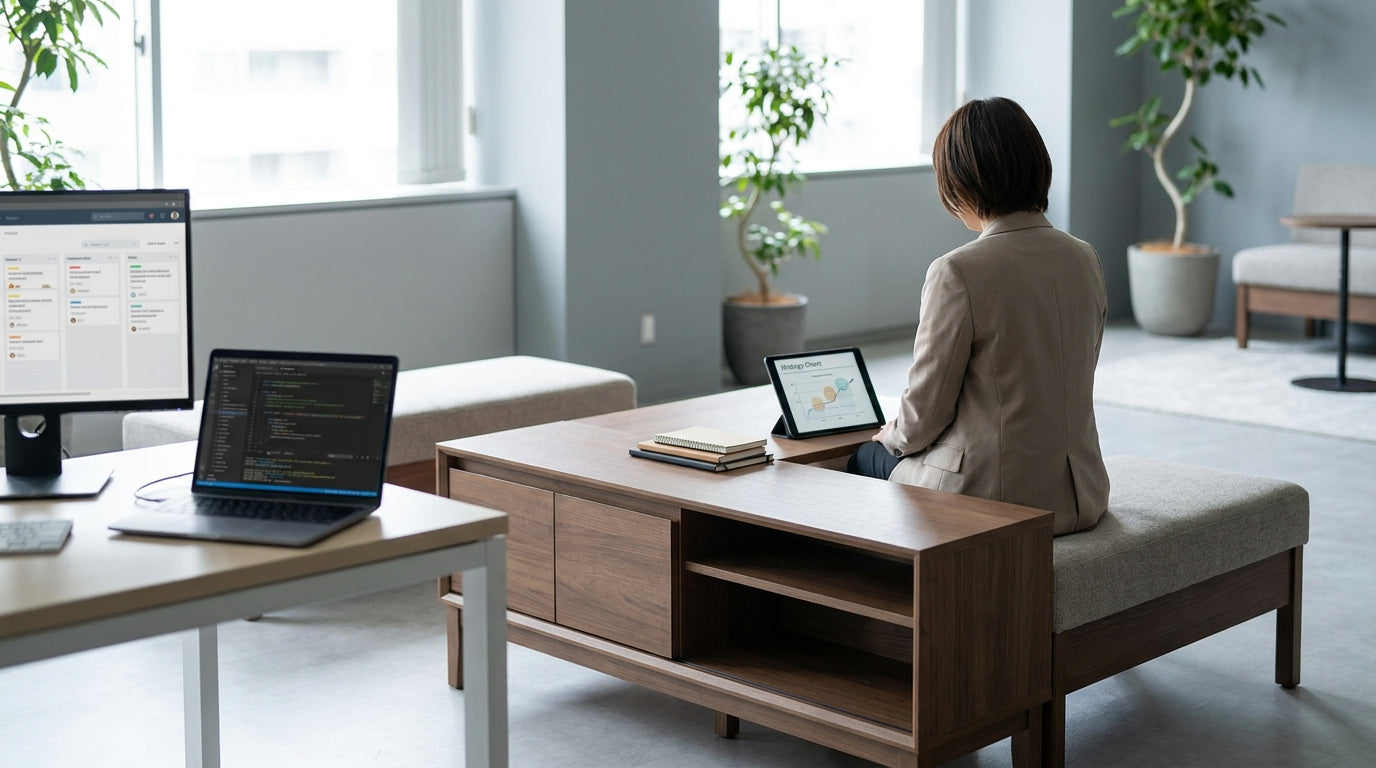
Why Storage Matters in Modern Breakout Spaces
Breakout areas work best when they feel relaxed but still organised. Tables with built-in storage help keep surfaces clear while everything you need is close at hand.
In busy Australian offices, shared zones can quickly become cluttered with coffee cups, devices, magazines and work-in-progress. Choosing a coffee table that hides or manages this everyday mess makes the space more inviting and easier to maintain. A clear surface encourages people to actually use the area for quick catch-ups, quiet focus or informal meetings, rather than treating it as a dumping ground.
Storage can take different forms: open shelves for quick access, drawers for personal items, or lift-up tops for larger items like keyboards and headsets. Pairing smart tables with the right soft seating, such as breakout seating, helps create zones that feel more like a lounge than a traditional office. The result is a more flexible, comfortable environment that still supports productivity.
Taking the time to plan how your team actually uses breakout spaces will guide what kind of storage you need. If people often work on laptops, look for designs that leave room for chargers and accessories. If the area is more for socialising, you might prioritise somewhere tidy to keep games, magazines or shared resources out of sight but easy to reach.
Key Features to Look For in a Functional Coffee Table
Not all tables with storage are created equal. The right features depend on your layout, the amount of traffic, and how people use the space day to day.
First, consider footprint and height. The table should sit comfortably in front of lounges or chairs without blocking movement through the room. In compact offices, a slim design or a round table can soften corners and improve circulation, while still offering shelves or compartments underneath. Durable surfaces that resist stains and are easy to wipe down are essential in shared areas where food and drinks are common.
Next, look at the type of storage. Open shelving works well in collaborative zones where people frequently grab and share resources, while enclosed storage is better when you want to maintain a clean, minimalist look. Drawers are ideal for smaller accessories, remote controls or stationery, and lift-top designs provide hidden space for less frequently used items. The goal is to balance accessibility with visual calm so the room never feels cluttered.
Think about how your coffee table will work with other essentials in the room. Smaller pieces like side tables can pick up overflow for laptops, phones and notepads during meetings, while nearby coffee tables act as the main hub. Matching or coordinating finishes with your existing office & meeting tables helps create a consistent feel across open-plan spaces and meeting zones.
Matching Tables with the Right Lounge and Seating
Coffee tables work best when they’re paired with suitable seating. The combination determines how people interact with the space.
Start with the primary seating type, then select a table that complements its height and scale. For example, generous 3 seater lounges pair well with broader tables that can handle multiple users at once, while compact single lounges are better matched with smaller, more agile designs. In team areas where staff rearrange furniture frequently, lighter tables with integrated shelves can be moved as needed without losing that all-important storage.
Consider also adding a mix of seating options around your storage table. A combination of 2 seater lounges, armchairs and ottomans helps people choose how they want to work or relax. Ottomans can slide under or beside a table with storage when not in use, keeping walkways clear while still adding extra seating for busier times.
If your breakout area doubles as an informal meeting space, think about sightlines and comfort for longer conversations. Tables that support laptops, water glasses and notepads without feeling cramped encourage staff to use the area as an alternative to formal meeting rooms. This also takes pressure off your dedicated office & meeting tables, giving teams more freedom to collaborate spontaneously.
Space-Saving Ideas for Compact Breakout Corners
Not every workplace has room for a large breakout zone. With the right furniture choices, even a small corner can feel generous and functional.
In tighter floorplans, choose coffee tables with a smaller footprint but smart internal storage. Designs with vertical shelving or compartments help you store more without taking over the room. Pair these with slimline 2 seater lounges or curated single lounges to avoid crowding the area. A round or soft-edged table also reduces the risk of bumped shins in high-traffic corridors.
A layered approach to surfaces can make compact spaces feel more flexible. Use a main coffee table for central storage and presentation, then add a few lightweight side tables that can move around as needed. Staff can pull a side table closer for a laptop or coffee, while the central table holds shared items like power boards, resources or décor that personalise the space.
If you’re working with a narrow nook, consider combining a modest coffee table with integrated storage and low-profile ottomans that tuck neatly out of the way. This lets you squeeze extra seating into awkward corners while still maintaining access to stored items. The aim is to keep the floor as open as possible so even a small breakout zone feels intentional and welcoming rather than cramped.
Styling Tips to Keep Breakout Tables Tidy and Inviting
Storage tables are most effective when they’re styled with restraint. A few smart choices will keep the surface usable and visually calm.
Start by assigning roles to each part of the table. The surface should stay mostly clear for drinks, devices and quick note-taking, while shelves and internal compartments hold cables, stationery, magazines and spare supplies. Use small trays or containers inside drawers so items don’t slide around and become messy. This simple structure makes it easy for staff to return things to the right place without thinking too hard about it.
Add a touch of personality without compromising function. A single plant, a low-profile decorative object, or a neatly stacked set of books is usually enough. In more relaxed breakout zones paired with generous 3 seater lounges or flexible breakout seating, you might include a few board games or reference books stored on lower shelves. The key is to keep anything purely decorative off the busiest parts of the surface so work and socialising remain the focus.
Finally, think about how your coffee tables link visually with surrounding pieces. Matching finishes with nearby coffee tables, coordinating tones with your office & meeting tables, and echoing shapes from your round tables creates a cohesive feel. When everything looks deliberate and organised, staff are more likely to respect the space, maintain order, and actually enjoy spending time in your breakout areas.


