

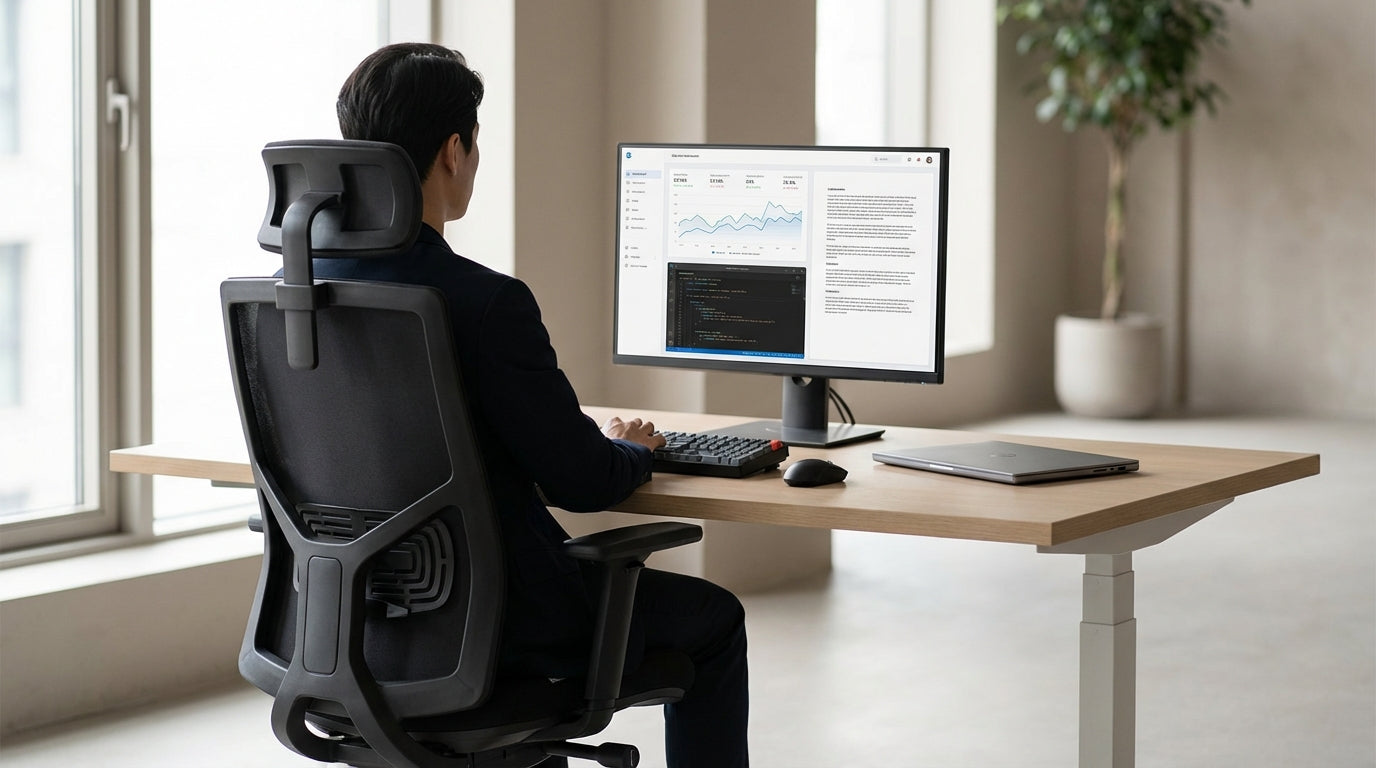
Why Tall Professionals Need Purpose-Built Seating
Being over six feet tall can make standard office furniture feel cramped and uncomfortable. Over a full workday, that extra height can turn minor niggles into serious aches.
Most mass-market task seats are designed around an “average” body that simply doesn’t reflect taller Australians. Too-short backrests, shallow seats, and low armrests force you to hunch or perch, which strains your neck, shoulders, and lower back. Over time, this can contribute to poor posture, fatigue, and even recurring injuries that affect your productivity.
Tall workers also tend to sit higher at the desk, which can throw out the ideal elbow and eye-line positions for typing and screen use. Combining a height-appropriate chair with adjustable monitor arms helps keep your screens at the right level, so you’re not craning your neck up or down all day. Getting this alignment right is just as important as selecting the chair itself.
For those spending long hours in front of multiple screens, proper support becomes a workplace safety issue, not just a comfort preference. Employers can reduce the risk of musculoskeletal issues by specifying seating lines that explicitly cater to users over 185 cm, pairing them with suitable desk heights and accessories.
Key Ergonomic Features Tall Users Should Look For
Height alone isn’t enough when choosing a chair; it’s the range of adjustments that matters. Look for models that can be fine-tuned to your body, not the other way around.
Seat depth is critical for long legs. A deeper base or sliding seat mechanism lets you sit back against the backrest while still leaving a small gap between the seat edge and the back of your knees. This reduces pressure on your thighs and keeps blood flowing. Extra-high gas lifts also help your knees sit at, or just below, hip height so your hips don’t tilt backwards awkwardly.
Backrest height and contouring are equally important. Tall users typically need a higher back with pronounced lumbar support that reaches the natural curve of the lower spine, not the mid-back. Many premium mesh office chairs include adjustable lumbar pads and headrests, making it easier to keep your posture neutral across the workday, even when you’re naturally broader and longer through the torso.
Don’t overlook armrests and tilt mechanisms. For comfort when typing, your forearms should rest lightly on the arm pads with shoulders relaxed, which means you need arms that adjust in height and, ideally, width for broader frames. A multi-function tilt with tension control lets heavier users recline smoothly without that “catapult” feeling, while still offering firm support when you return upright.
Chair Types That Suit Taller Office Workers
Different people work in different ways, so the right style of seating will depend on your tasks, setup, and body shape. Some chair families simply cater better to extended height ranges.
For focused computer-based work, a high-quality task chair is usually the best all-round option. Look for models in this category with tall backrests, seat sliders, and robust mechanisms rated for long daily use. Many feature breathable materials and dynamic tilt modes, so you can shift positions throughout the day without losing support. Pairing your chair with adjustable monitor arms makes it far easier to maintain an ergonomic setup as you move.
If you routinely work at standing-height benches, design studios, or drafting tables, consider specialised drafting chairs. These include extended gas lifts and foot-rings, allowing tall users to perch higher while still keeping knees and hips in a safe, open angle. For those in design, architecture, or lab environments, this can reduce the constant up-and-down between seated and standing positions and make long planning sessions more sustainable.
For boardrooms and collaboration spaces, ergonomics still matters for taller attendees. Selecting meeting and meeting chairs with generous seat dimensions and higher backs helps ensure comfort across a wide range of body types during longer presentations or workshops. When visitors or clients are involved, upgrading to well-padded visitor chairs sends a subtle message that you’ve considered their comfort as part of the overall workspace design.
Heavy-Duty Options for Bigger, Taller Bodies
Tall workers often carry more weight, which puts extra load on chair bases and mechanisms. Standard models aren’t always up to the job.
Specialised heavy duty chairs are engineered with reinforced frames, upgraded gas lifts, and higher weight ratings. These aren’t just about strength; they typically also offer wider seats, thicker cushioning, and sturdier armrests that resist wobble under load. The result is a chair that feels solid and secure when you sit, move, and lean, which is reassuring if you’ve had standard chairs fail in the past.
For users with limited mobility or those transitioning from sitting to standing frequently, powered assistance can make a significant difference. power lift chairs gently raise and tilt the seat to help you stand up with minimal strain on your knees and lower back. While more common in home and healthcare settings, they can be invaluable in workplace environments that support staff with injuries or age-related mobility issues.
Material choice can also influence comfort and durability. Premium leather chairs deliver a plush feel and a more executive look, which suits private offices and client-facing roles. For heavy-duty use in hotter climates or shared spaces, a robust mesh or fabric finish with easy cleaning may be preferable. If you want locally engineered reliability, exploring Australian made chairs can provide peace of mind on build quality and spare parts availability.
Setting Up Your Workspace for Long-Term Comfort
Choosing the right seat is only half the battle; setup and surrounding furniture make a big difference for tall bodies. A well-adjusted workstation reduces strain on joints and muscles.
Start by adjusting your chair so your feet sit flat on the floor, with knees at roughly a 90–100 degree angle and hips slightly higher than your knees. Then set the backrest to support the natural curve of your spine, using built-in lumbar adjustments if available. Once the chair feels stable, raise or lower your desk and screens so that your elbows are at keyboard height with relaxed shoulders, and your eye line is roughly the top third of your main monitor. If the desk is fixed, use height-adjustable monitor arms to bring screens to you rather than compromising your posture.
Common areas deserve the same consideration. In meeting rooms, prioritise meeting chairs with adequate legroom under the table and enough seat width for broader frames. In reception and breakout spaces, mixing supportive lounges with structured visitor chairs caters to different comfort preferences and mobility levels. This inclusive approach means taller guests and staff aren’t forced into perching on oversized sofas that offer no back or neck support.
Finally, consider your work style. If you regularly alternate between detailed desk work and collaborative sessions, you might combine a supportive task chair at your main workstation with more relaxed options in shared areas. By matching specific seating types—such as mesh office chairs for hot desks or Australian made chairs in permanent offices—to the way you and your team actually work, you create a flexible environment that supports taller users across every part of the workday.


