

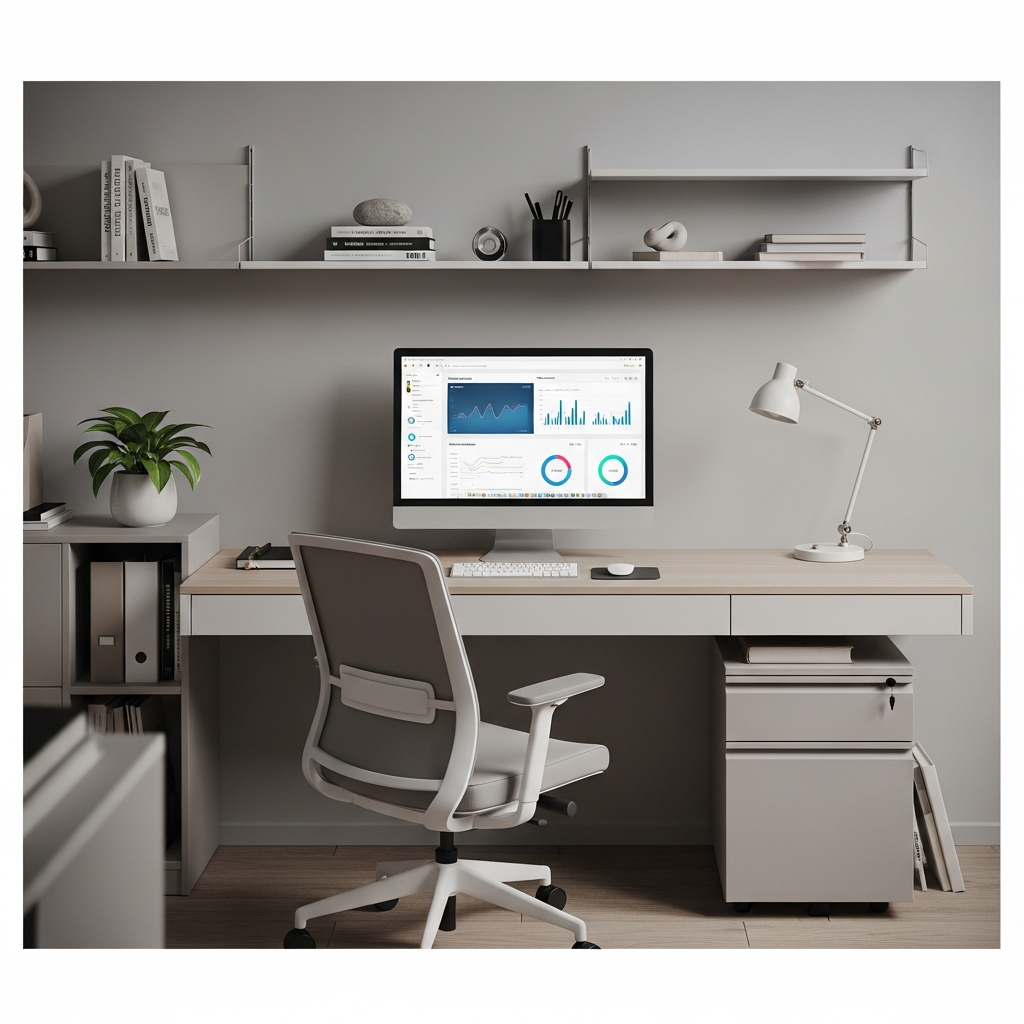
Start with a Simple Layout that Fits Your Space
Before buying any furniture, measure your room and decide where your desk and chair will go. A clear layout helps you avoid clutter and makes the most of every centimetre.
Begin by identifying the main wall or corner that gets the best light and least foot traffic. In small apartments or spare bedrooms, this is often beside a window or against a longer wall. Consider whether you prefer facing the wall for focus or facing into the room to keep an eye on kids or pets. This choice will influence whether a straight, corner, or L-shaped configuration works best.
If your room is long and narrow, a streamlined desk that runs along the wall will usually feel less cramped than a bulky workstation. Compact home office desks or minimalist student desks are ideal for this type of layout. For boxier rooms, placing the desk in a corner can free up the centre of the room and make it feel more open.
Think about power points and internet connection too. Positioning your workstation close to outlets reduces cable mess and the need for extension leads snaking across the floor. A little planning here makes it easier to keep your set‑up neat and safe long term.
Choose the Right Desk Shape for a Compact Room
Your desk is the anchor of your office, so its shape and size matter. The aim is to gain surface space without overwhelming the room.
For very tight areas, a slim, rectangular option is usually best. Modern straight desks deliver enough room for a laptop, monitor, and notepad while hugging the wall to keep the floor space clear. Many also come in smaller widths, which is handy for fitting between doors, wardrobes, or windows.
If you’re working in a corner of the lounge or bedroom, consider a dedicated corner solution. Compact corner office desks and larger corner workstations use space that might otherwise be dead, giving you extra room for paperwork or a second screen. They also create a subtle visual “zone” that separates work from the rest of your living area, which is useful when you’re trying to mentally switch off at the end of the day.
When you need more surface but can’t spread out lengthways, an L-shaped desk can be a smart compromise. It effectively doubles your usable space for printers, trays, or reference material without needing a long wall. Solo workers who require a more professional set‑up might also look at single person workstations, which bundle desk, modesty panels, and cable management into one tidy unit.
Make Height and Ergonomics Work for You
Comfort is crucial in a small office, especially when you’re working from home all day. Getting desk height and chair support right reduces strain and makes the area feel more spacious.
Standard desks suit many people, but if you’re shorter or taller than average, you may find your shoulders hunching or your legs cramped. This is where height adjustable workstations come into their own. You can raise or lower the surface so your elbows sit at roughly 90 degrees and your feet rest flat on the floor or a footrest. Being able to change posture through the day can also ease back and neck tension.
Mixing seated and standing work doesn’t have to take up extra room. Many sit‑stand systems are designed with slim frames and clean lines so they suit compact homes. Pair your desk with a supportive task chair that fits neatly under the surface when not in use. Look for a model with adjustable back support and seat height so you can tailor it to your body, even if the rest of your furniture is quite minimal.
Ergonomics can also influence where you put your monitor and keyboard. Aim to position your screen at eye level and about an arm’s length away. In smaller spaces, monitor arms or risers can free up desk area and keep cables tidy, which makes the whole set‑up feel less crowded and easier to keep organised.
Use Smart Storage to Keep Surfaces Clear
Clutter builds up fast in small rooms. Smart storage keeps your desk clear and helps the whole office feel calmer.
Instead of bulky filing cabinets, mobile pedestal drawer units can slide under many home office desks, using space that would otherwise sit empty. They’re ideal for documents, stationery, and tech gear you want close but out of sight. Choose lockable drawers if you share the room or need to secure confidential work papers.
On the desktop, use small storage & organisers to corral loose items like pens, chargers, and sticky notes. Vertical solutions such as desktop shelves, file holders, and wall‑mounted rails lift items off the main work surface without eating into floor space. This helps you keep just your current task in front of you, reducing visual noise and distractions.
If you’re using a larger corner or L-shaped desk, designate one side as your “active” workspace and the other as storage or equipment space. This might be where you keep your printer, reference books, or in‑trays. Separating these zones makes it easier to stay organised and prevents work-in-progress from spreading across every available surface.
Create a Flexible Setup that Can Evolve
A small home office often has to serve more than one purpose. Designing for flexibility lets your space adapt as your work and household needs change.
Consider modular furniture that can be rearranged or added to over time. For example, combining a compact straight desk with a later upgrade to a matching corner workstation can give you extra room if your role expands or you start a home business. If your children also study in the same area, adding separate student desks helps keep work and school materials clearly divided.
When your office shares space with a guest room or living area, aim for pieces that tuck away neatly or have a slim profile. A tidy single person workstation paired with mobile pedestal drawer units can be pushed aside or re‑oriented when you have visitors. Keeping cables under control and paperwork stored in dedicated small storage & organisers makes it quicker to “reset” the room from work mode to home mode.
Finally, leave a little breathing room in your layout. Resist the temptation to fill every gap with furniture; empty space makes the room feel larger and gives you flexibility for future changes. Whether you lean towards corner office solutions or streamlined home office desks, planning for growth now will help your compact office stay comfortable and efficient for years.


