

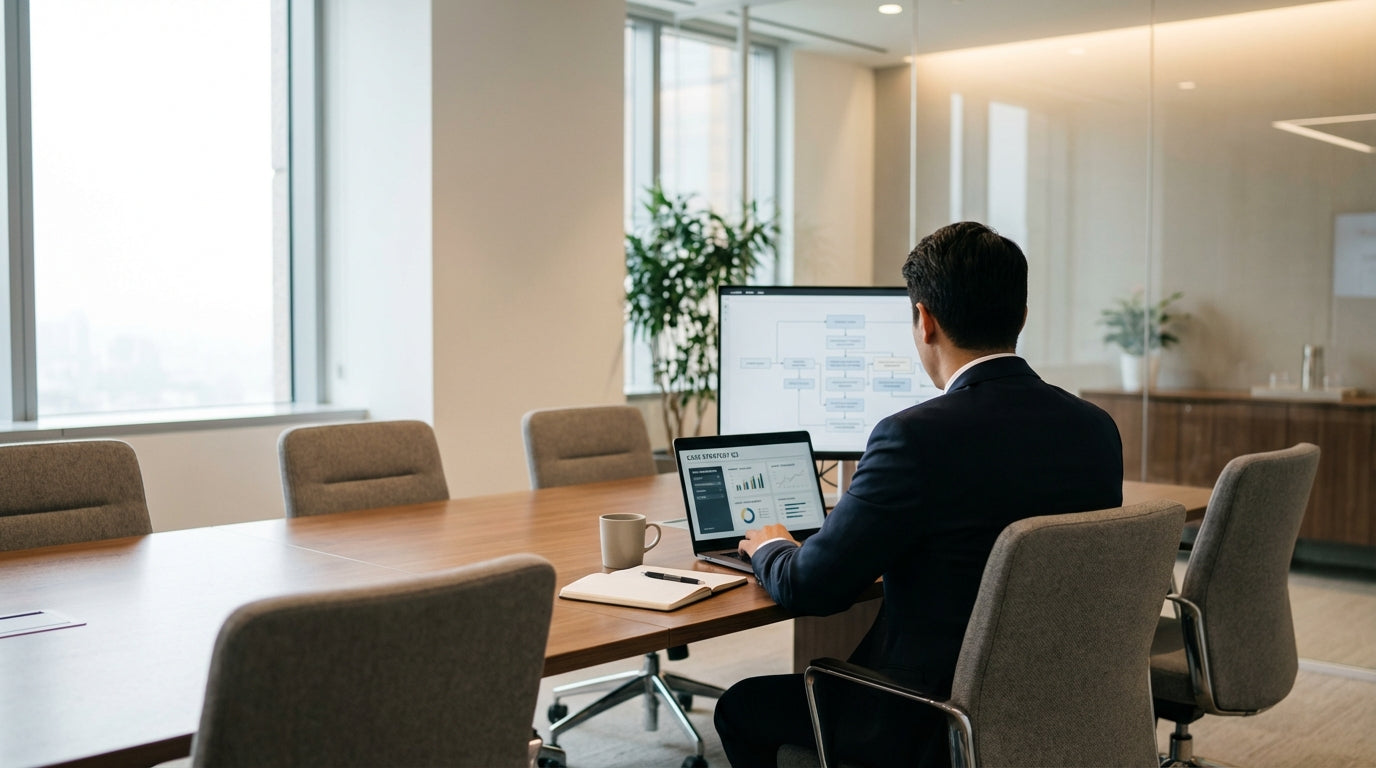
Design principles for a professional legal conference room
A solicitor’s conference room has to balance professionalism, privacy, and comfort. The layout and furnishings should support focused discussions, client confidence, and strict confidentiality.
Start with a clear understanding of who uses the space most: partners and clients, internal teams, or external stakeholders. This will guide the size of your boardroom tables, the number of chairs, and the technology you need. For client-heavy practices, it’s worth prioritising an impressive central table, quality seating and tidy cable management over squeezing in extra storage.
Visual impression matters in legal practice. Clients often make subconscious judgements about your firm’s capability and attention to detail based on your conference room. Choose a neutral, calm palette and combine it with a strong focal point – often a statement table or a well-styled wall with art, shelves or acoustic paneling.
Function should still lead form. Aim for clear sightlines so everyone can see each other and any presentation surface. Integrate practical pieces such as understated credenzas / buffets for storing briefs, stationery and refreshments, keeping the table itself clean and uncluttered.
Choosing the right table shape, size and finish
The table is the anchor of any legal meeting space. It needs to be the right shape, dimension and finish for your room and style of practice.
For formal client conferences, larger boardroom tables in rectangular or boat-shaped designs create a sense of structure and hierarchy that many traditional firms prefer. Boutique and collaborative practices may lean towards round or barrel-shaped meeting tables to encourage more open discussion and reduce the “us versus them” feel across the table. In tight spaces, oval or rounded corners are useful to maintain circulation and avoid sharp edges near walkways.
Size is a practical and safety consideration as much as an aesthetic one. Allow at least 900 mm around the perimeter for people to move comfortably behind seated guests, and around 600–700 mm of table width per person. Where your rooms are used flexibly – for mediations, training or video conferences – consider modular office & meeting tables that can be reconfigured without professional installers.
Surface finish should support both appearance and daily use. Timber-look laminates offer the gravitas of wood without the maintenance of solid timber, while darker tops hide marks but can make small rooms feel cramped. Light, matte surfaces reduce glare on screens and documents. If you regularly use projectors or video displays, look for integrated cable ports and power boxes so laptops and devices can connect without trailing leads snaking across the floor.
Seating that supports long negotiations and client comfort
Meetings in legal practice can run for hours, so seating must offer genuine ergonomic support. Uncomfortable chairs can distract clients and staff at crucial moments.
Start with task-focused meeting chairs that provide lumbar support, adjustable height and a stable base. Look for features such as tilt and breathable fabrics if your team spends long stretches in the room. For high-end client spaces, consider pairing practical mechanisms with premium finishes, including selected leather chairs that convey status without sacrificing comfort.
Client experience doesn’t stop at the main table. Provide a small waiting or observation area with comfortable visitor chairs, especially for family members, support persons or parties in mediation. These should be easy to move, stable on different floor types, and upholstered in durable, easy-clean fabrics suited to a professional setting.
Seat arms, back height and visual style should all align with the tone of your practice. Higher backs tend to feel more executive and private, while lower profiles can keep smaller rooms from feeling crowded. Aim for a coherent look: mixing and matching is fine, but keep a consistent colour palette and frame finish across your seating to reinforce a polished, organised image.
Technology, writing surfaces and acoustic control
Modern legal meetings rely heavily on technology and clear communication. Plan for screens, shared writing surfaces and sound control from the outset.
For planning sessions, strategy meetings and mediations, a wall-mounted magnetic whiteboards offers a simple, low-tech way to capture timelines, party positions and action lists. Being magnetic means you can also display court orders, plans and diagrams securely without resorting to messy tape. Complement this with digital tools such as video conferencing, but ensure that cameras, microphones and displays are placed so all attendees are clearly seen and heard.
Formal presentations to corporate clients, experts or barristers may benefit from dedicated projection boards & presentation accessories. Portable projection screens, lecterns and cable management solutions let you transform the room into a presentation space without permanently dominating the decor. When specifying, consider the throw distance of your projector, ambient light control and reflective surfaces that could cause glare.
Confidentiality is non-negotiable. Acoustic control is not just about comfort; it also reduces the risk of conversations travelling beyond the room. Installing acoustic wall tiles can help absorb sound, reduce echo and improve speech clarity, which is particularly useful during lengthy negotiations or multi-party disputes. Combine soft finishes such as carpet, fabric chairs and acoustic panels with solid doors and quality seals to create a genuinely private environment.
Storage, layout and practical details that matter
Small practical decisions can make or break how well your conference room works day-to-day. Consider where documents, catering and personal items will live during a busy meeting.
Dedicated storage in the form of credenzas / buffets keeps sensitive files, stationery and AV accessories close at hand but out of sight. Use internal shelving to separate personal belongings from active matter folders, and keep the top surface reserved for water, tea, coffee and any light catering. This avoids cluttering the main table with plates and cups, and makes it easier to clear between back-to-back meetings.
Layout should support both privacy and access. Avoid placing chairs directly against glass if your room has a glazed wall; instead, use the table to create a buffer and, if necessary, film or blinds for additional discretion. In multi-room practices, keeping a consistent approach to chairs and office & meeting tables across spaces simplifies scheduling, because any meeting can move rooms without needing special equipment or furniture.
Finally, think through the everyday experience: where people plug in their laptops, where confidential bundles are placed when not in use, and how easily the space can be reset after a long mediation. Mobile meeting tables, stackable meeting chairs and well-positioned magnetic whiteboards all contribute to a flexible, efficient conference room that supports your solicitors’ work instead of slowing it down.


