

Understanding Sound Insulation in Modern Workspaces
Good sound insulation is essential in open offices, schools and healthcare environments. Before investing in any movable screens, it helps to understand how they actually block and absorb noise.
In simple terms, sound insulation is the ability of a barrier to stop noise passing through it, while sound absorption is how well a surface soaks up echo inside a room. Effective mobile screens usually combine both, using dense cores to block sound and soft finishes to reduce reverberation. When comparing products, look for clear acoustic performance data rather than vague claims like “soundproof”.
It also pays to think about the type of noise you need to control. Low-frequency sounds such as air conditioning rumbles travel differently to higher-frequency speech, and not every partition system handles both equally well. Combining movable panels with other acoustic elements such as Acoustic Wall Tiles or overhead Acoustic Ceiling Traps can create a more balanced result across the full sound spectrum.
Sound insulation should support how your team works, rather than isolating people completely. In collaborative Australian offices, the goal is usually to reduce distractions and protect confidentiality in certain zones while keeping circulation and visibility open. That’s where flexible options like Mobile Partitions and complementary Floor Partitions are especially useful.
Key Features to Look for in Mobile Acoustic Screens
Not all movable room dividers offer the same level of sound control. Focusing on a few core features will help you choose panels that genuinely improve acoustic comfort.
Start with the construction of the panel itself. Partitions with a solid, dense internal core will usually block noise more effectively than lightweight hollow designs. A fabric or acoustic foam finish on the surface helps absorb sound waves and reduce echo, particularly in spaces with hard floors and minimal soft furnishings. Check whether the manufacturer provides an acoustic rating or test data, as this gives you a more objective basis for comparison.
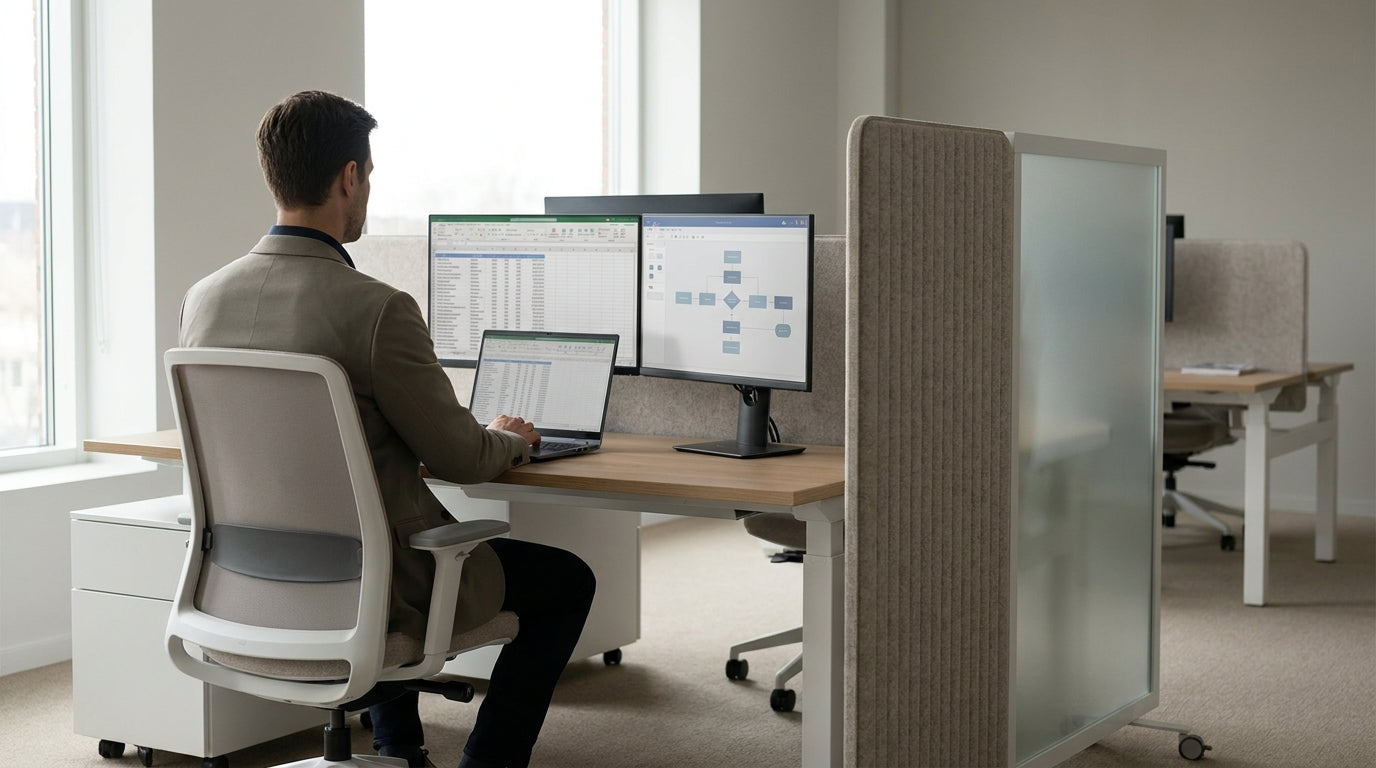
Height and width also have a big impact. Taller panels create a more substantial sound barrier around workstations, meeting points or breakout zones. For desks and call centres, combining mobile screens with Desk Mounted Partitions can close the gap between the desktop and the top of the screen, reducing sound leakage. In larger shared areas, pairing mobiles with fixed Floor Partitions can help you shape more complete acoustic zones.
Don’t overlook hardware details. Quality castors make it easy to reconfigure layouts without damaging floors, and locking wheels keep panels safely in place. Accessories such as linking components, stabilising feet, and organisational Screen Accessories allow you to connect multiple panels, increase stability and integrate whiteboards, tool rails or shelving into the screen system. These small upgrades can significantly improve both performance and usability.
Matching Partitions to Different Australian Work Environments
The right acoustic solution depends on how and where you work. Different sectors and layouts call for slightly different combinations of mobile and fixed screens.
In corporate offices, mobile acoustic panels are ideal for creating temporary meeting zones, hot-desking areas and private focus spaces. You can wheel screens into position to support workshops or video calls, then open the space back up again afterwards. For teams that need a higher level of privacy, adding enclosed Office Pods or more specialised Acoustic Pods can give staff a quiet place for confidential conversations, interviews or concentrated work.
Education and training spaces often need to manage several groups in one room. In these environments, durable mobile panels can separate small group discussions, presentations and quiet study zones. Wall-mounted options such as Acoustic Wall Art and Acoustic Wall Tiles add extra absorption without taking up floor space, and can be used to reduce noise transfer through corridors and shared teaching areas.
Healthcare, government and community facilities have their own challenges, from protecting patient privacy to managing noisy waiting rooms. Here, a mix of floor-standing screens and mobile units allows staff to adapt as numbers fluctuate throughout the day. When combined with ceiling-based solutions like Acoustic Ceiling Traps, this layered approach can bring overall noise levels down to a more comfortable, calming level for visitors and staff alike.
Combining Mobile Screens with Other Acoustic Solutions
The most effective noise control plans use more than one product type. Treating just the floor level often leaves echoes and reflected sound untouched.
Think of your space in layers: floor, desk height, walls and ceiling. Movable panels deal with sound travelling horizontally at conversation level, but hard ceilings and walls can still bounce noise around. Adding Acoustic Ceiling Traps above busy zones and decorative Acoustic Wall Art along reflective corridors or meeting rooms will help soak up these reflections. This “whole room” strategy produces a more even, natural quiet rather than a dull or boxed-in feel.
For open-plan offices, combining Mobile Partitions with fixed Floor Partitions lets you define long-term neighbourhoods and short-term project hubs. Desk clusters benefit from a mix of mobile panels and Desk Mounted Partitions to cut line-of-sight and reduce direct sound paths between co-workers on calls. If you regularly need near-complete isolation for video conferencing or sensitive discussions, integrating a few Acoustic Pods or Office Pods gives staff a reliable quiet destination.
Accessories also play a supporting role in performance. Purpose-designed Screen Accessories help you mount tools, pinboards and cable management to your panels without compromising their acoustic surface. This allows screens to act as both a sound buffer and a functional workspace element, keeping desks clear and encouraging people to actually use the acoustic zones you create.
Practical Buying Tips and Implementation Advice
A bit of planning before you order will save time and money later. Map out how your team will actually use the screens day to day.
Walk through your office and identify the noisiest paths, such as routes to kitchens, printers and entrances. Note where phone calls cluster and which areas need privacy, like HR or finance. This will guide how many movable screens you need and where they should live when not in use. It also helps you decide whether to supplement them with permanent Floor Partitions or targeted wall and ceiling treatments.
When comparing brands, consider durability, cleaning and warranty as well as acoustic claims. Australian workplaces often deal with high traffic, frequent reconfigurations and regular cleaning schedules, so robust frames and quality fabrics matter. If you expect to reposition screens daily, prioritise smooth-rolling castors and secure linking systems. For desking areas, confirm that your chosen Desk Mounted Partitions and mobile panels are compatible in height and finish so the space feels cohesive.
Finally, think beyond the initial fitout. As your team grows or shifts to more hybrid working, you may want to add extra Mobile Partitions, upgrade certain zones with Acoustic Wall Tiles, or introduce one or two Acoustic Pods for deep-focus work. Choosing a system that integrates with other solutions from the same range, including Acoustic Ceiling Traps and coordinating Acoustic Wall Art, gives you room to improve acoustics over time without starting from scratch.


