

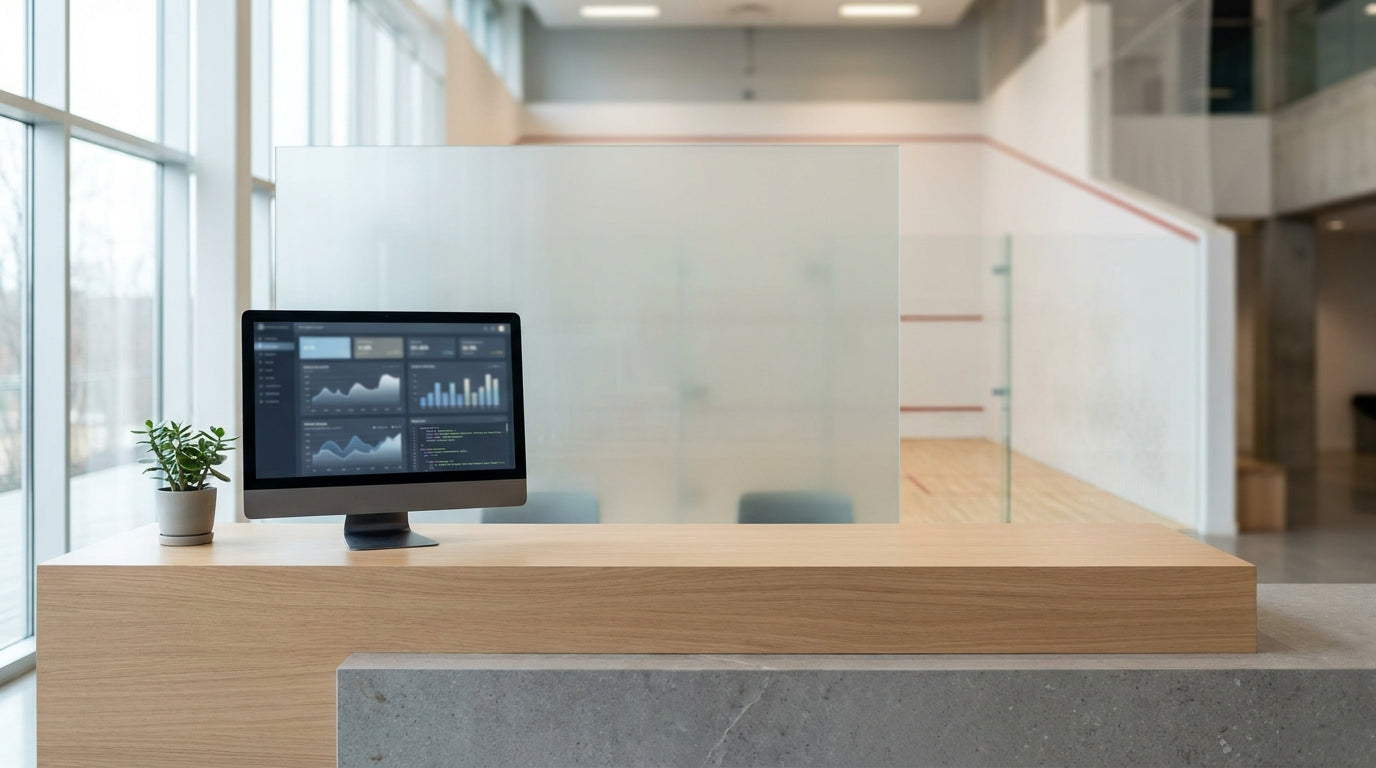
Why Your Squash Centre Reception Area Matters
The front desk is usually the first thing members and visitors see when they walk into a squash club. It shapes how professional, welcoming, and well-run your centre feels from the very first moment.
In a busy sporting environment, the reception zone has to juggle a lot: greeting players, managing bookings, answering questions, selling accessories, and sometimes even serving as a mini admin hub. A well-planned desk set-up helps staff handle these tasks quickly while still making time for friendly interaction. By choosing the right layout, finishes, and supporting furniture, you can create a space that feels organised rather than chaotic, even during peak evening sessions.
Unlike a standard office, a squash facility has constant movement, wet gear, and heavy foot traffic. This means durable materials, easy-to-clean surfaces, and smart storage are crucial. The right counter and support pieces will not only stand up to daily wear and tear but also reflect your brand, whether you’re a community club or a premium racquet and fitness venue.
Choosing the Right Counter Shape and Layout
The layout of your front desk should match how people move through your centre and how your staff work behind the scenes. Getting this right keeps queues shorter and service smoother.
Centres with higher traffic or multiple service points often benefit from an L-shaped reception counter. This style gives staff more bench space and clear separation between tasks like POS (point of sale), bookings, and membership enquiries. The L-shape also helps guide players naturally towards the check-in area, reducing congestion at entry doors or near court corridors.
Smaller venues, pro shops, or studios attached to just a few courts might find a streamlined straight reception counter more suitable. A simple straight design is easy to position along a wall and leaves more open space for people to move comfortably, especially where floor area is tight. If you’re still weighing up options, browsing a wider range of reception counters can help you compare dimensions, cable management, and storage layouts to suit your specific floor plan.
Think about visibility as well. Staff should be able to see courts, entry doors, and key walkways from behind the counter so they can respond quickly to arrivals or issues. Matching the height of your counter to your service style (seated, standing, or a mix of both) will also impact comfort for staff and approachability for members.
Comfortable Waiting Zones for Players and Visitors
A well-furnished waiting area makes it easier to manage early arrivals, late-running matches, and spectators. It should feel relaxed, tidy, and clearly connected to the service desk.
Start by selecting sturdy, easy-to-clean reception seating that can handle sports gear, sweat towels, and regular use. Benches or modular lounges work well in clubs that host junior programs or team competitions, where groups need to sit together. For centres that attract corporate players or social members, adding more supportive visitor chairs can create a more polished, businesslike feel without sacrificing durability.
Low-profile coffee tables are handy for holding water bottles, phones, or promotional material, but they also help break up large open spaces and guide traffic flow. Consider leaving enough clearance so players can move past with racquet bags without bumping into furniture. Positioning seating with a clear line of sight to court windows or scoreboards can also keep waiting guests engaged while they’re off-court.
Finally, ensure your seating layout supports accessibility. Leave space for wheelchairs or prams and keep clear paths to amenities like change rooms and exits. A thoughtfully arranged waiting zone can reduce noise spill into the service counter and make the whole club feel calmer, even during busy competition nights.
Smart Storage and Organisation Behind the Desk
Behind the scenes, good storage is what keeps your reception from looking cluttered and unprofessional. The aim is to have everything staff need close at hand but out of sight.
Lockable office cupboards are ideal for holding spare balls, racquets for hire, first-aid kits, uniforms, and cleaning supplies. Having designated spaces reduces the time staff spend searching for gear when courts turn over quickly. For items that need to look presentable but stay accessible—like trophies, membership forms, or merchandise—low-line credenzas / buffets can double as display and storage, while keeping the main counter free for direct member interaction.
Visibility of information is just as important as physical storage. Using noticeboards & display cases helps centralise key details like ladder results, coaching timetables, tournament draws, and club policies. This reduces the number of questions at the desk and encourages members to self-serve for simple information. Wall-mounted displays also free up surface space and help keep the area around the counter looking clear and professional.
Plan cable management and technology placement early. EFTPOS machines, booking systems, and phones all need power and data access, and loose cords can quickly turn a smart front area into a trip hazard. Integrating storage with your counter design makes it easier to hide cabling, keep valuables secure, and maintain an uncluttered, efficient workspace.
Design, Durability, and Brand Experience
The look and feel of your reception area should match your club’s identity and withstand daily use. Balancing style with toughness is key for a sporting venue.
Think about your brand colours, logo, and the type of members you attract. A high-performance training centre might lean towards clean lines, neutral tones, and minimal decoration, while a family-focused club could incorporate warmer finishes and softer seating shapes. Using consistent materials and colours across your counter, reception seating, and storage units helps the whole space feel intentional rather than pieced together over time.
Durability should guide your final selections. Countertops that resist scratches and moisture, fabrics that handle sweat and frequent cleaning, and hardware designed for commercial use will all pay off over years of heavy traffic. When browsing reception counters, check specifications for commercial ratings and consider how surfaces will look after constant contact from bags, keys, and equipment.
Lastly, consider how your reception supports member experience beyond first impressions. Clear signage on noticeboards & display cases, comfortable visitor chairs for parents or spectators, and practical coffee tables for post-match catch-ups all contribute to a space where people want to spend time. A reception area that works hard, looks professional, and reflects your brand can help turn casual players into long-term members.


