

Why Desk Edge Shape Matters for Kids’ Safety
When setting up a study space for children, the shape and finish of the desk edge are just as important as the size and height. Sharp corners or hard edges can quickly turn minor bumps into painful injuries.
Children often lean, swivel and fidget at their desks, so their bodies come into frequent contact with the front and side edges. A safer edge profile can reduce the risk of cuts, bruises and head knocks, especially in smaller rooms where kids move around quickly. Choosing the right design also supports better posture, helping young learners stay comfortable during homework or online classes. Whether you’re kitting out a bedroom, learning nook or classroom, it’s worth paying close attention to the edge profile before you buy.
Modern study spaces, such as those using dedicated Student Desks or compact Home Office Desks, often feature refined edge options that look good and improve safety. Understanding what to look for helps you balance durability, appearance and protection for curious little hands.
Comparing Common Desk Edge Profiles
Not all edges are created equal, and some are clearly better suited to environments with children. Knowing the differences makes it easier to choose a family-friendly design.
The most basic option is the square or straight edge. While it can look sleek and professional, it usually has more defined corners and a sharper feel. Rounded or “bullnose” edges, by contrast, have a smooth, curved finish along the top and bottom of the desktop, greatly reducing impact points. A bevelled edge, which is cut on an angle, softens the look but may still leave a relatively firm line where a child’s forearm or head could make contact.
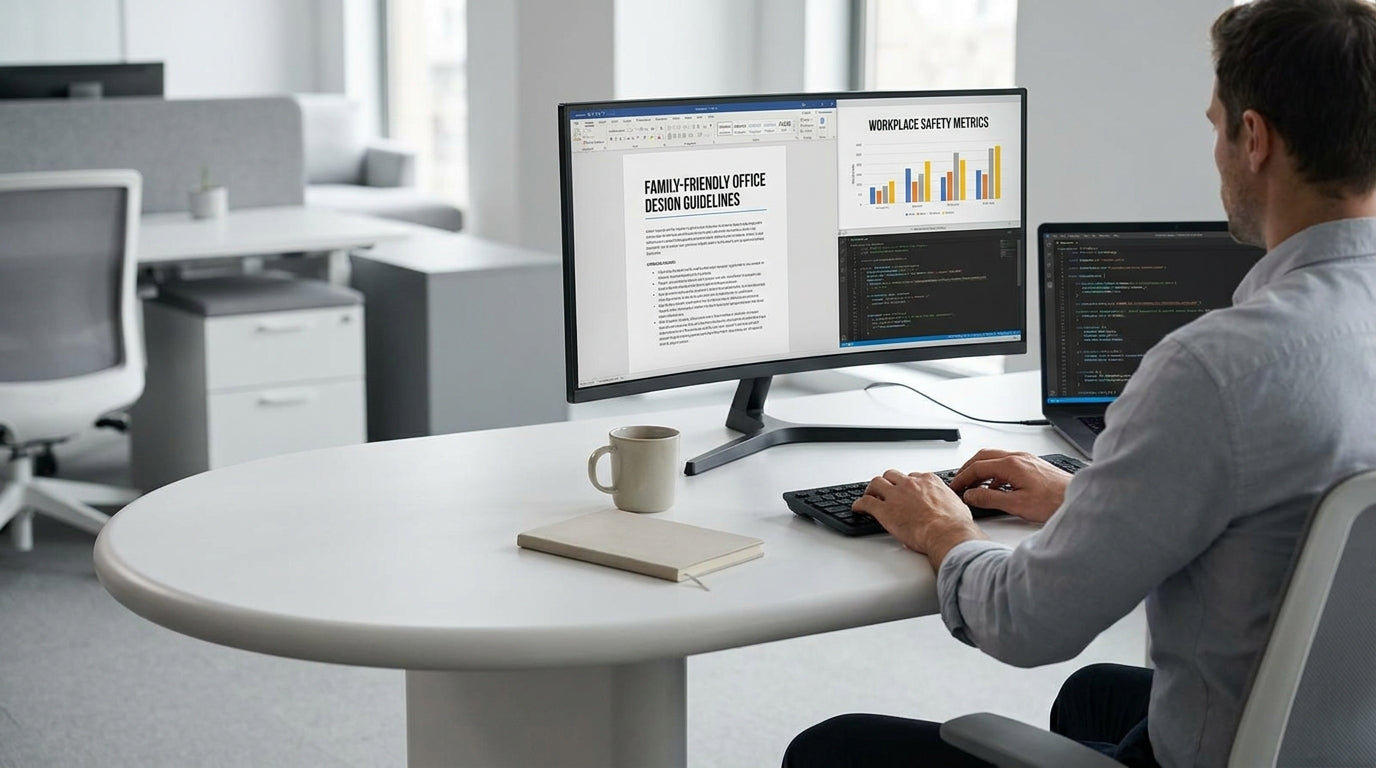
Ergonomic edges, sometimes called “scalloped” or “contoured” fronts, include a gentle curve or cut-out where the user sits. This design not only reduces pressure on wrists and forearms but also eliminates hard corners directly in front of the body. You’ll often find these safer profiles on quality Single Person Workstations and compact Corner Workstations designed for intensive computer use. For kids who spend long hours on school laptops or tablets, this type of edge can make a noticeable difference in comfort and safety.
In shared areas or siblings’ rooms, desks with smoother edges around the entire perimeter work best. Options like collaborative 2 Person Workstations and 3 Person Workstations often feature rounded corners and safer edging to prevent bumps during group work, making them suitable for older children and teens who need more surface space.
The Safest Edge Styles for Children’s Study Spaces
For most homes, the safest choice is a fully rounded or bullnose edge with softened corners. This reduces sharp contact points while still giving a stable writing surface.
Bullnose edges are curved on both the top and bottom, so there’s no harsh line where a child might bump their head or shoulder when standing up quickly. This style is especially useful in smaller bedrooms and playrooms where furniture is close together and kids tend to move fast. Lightly radiused corners (where the square corner is rounded off) add an extra level of protection without making the desk look overly “babyish”, so it continues to work as children grow.
Ergonomic or contoured fronts are another strong option for primary and high school students, particularly on computer-focused setups. Many Height Adjustable Workstations use these profiles to encourage good arm positioning and reduce strain on the neck and shoulders. When combined with a child-appropriate height and a stable chair, these edges can support healthier posture during long homework sessions.
For larger family areas or multi-use rooms, consider pairing safer edge profiles with more flexible furniture. Robust Office & Meeting Tables and adaptable Training Tables often come with rounded corners and durable finishes, making them suitable as shared study zones where different age groups can work together without the hazards of sharp edges.
Materials, Finishes and Other Safety Considerations
Edge shape is only part of the safety story; the materials and finishes used around the edge also matter. Smooth, well-sealed surfaces are easier to keep clean and gentler on skin.
Laminate tops with edge banding are common in both home and school environments. Edge banding is a protective strip applied around the sides of the desktop; when it’s thick, well-glued and slightly rounded, it helps prevent chipping and splintering. This is crucial in busy study areas where children might knock toys, books or devices against the edge. High-pressure laminates found on quality Student Desks and compact Home Office Desks typically offer a good balance of toughness and cleanability.
Timber and timber-look desks can also be safe for children, provided the edges are rounded and properly sealed. Avoid desks with rough, sharp or unfinished corners, as these can snag clothing and scratch skin. Powder-coated metal frames, commonly used on Single Person Workstations and Corner Workstations, should have smoothed edges and capped ends to keep the structure child-friendly. Non-toxic finishes and low-VOC coatings are an added bonus for indoor air quality.
Also consider stability and cable safety alongside edge design. Heavy, balanced bases and lockable castors help prevent tipping when children lean on the desk. On setups like 2 Person Workstations and 3 Person Workstations, look for integrated cable management so cords don’t dangle where children can trip or pull equipment down onto themselves.
Practical Tips for Choosing and Setting Up a Child-Safe Desk
Translating edge safety into real-world choices comes down to measuring, trialling and planning your space carefully. A few simple checks can make a big difference.
Start by matching desk height to your child. Their elbows should sit roughly at right angles when their hands rest on the desktop, whether they’re using a fixed student desk or a more flexible Height Adjustable Workstation. This positioning keeps their arms away from any lower edges that could dig into forearms. If multiple children will share the same setup, you may find that adjustable options are worth the investment, allowing you to fine-tune height as they grow.
Next, assess the room layout and traffic flow. Desks placed in corners or against walls reduce the number of exposed corners that children can bump into, which is why many families lean towards Corner Workstations for shared bedrooms. In open-plan living areas, group-friendly desks such as Office & Meeting Tables or sturdy Training Tables can be set up with the sharpest edges facing the wall, leaving the softer, rounded sides where kids walk and play.
Finally, think about how your child actually uses their study space. If they swap between writing, reading and computer work, look for surfaces with a generous, smooth front edge to support their wrists and forearms comfortably. For older students who share desks similar to Single Person Workstations or compact 2 Person Workstations, ensure there’s enough room for chairs to slide in and out without children brushing hard corners. Regularly check the edges for chips or loose banding and repair issues early, so the study space stays safe, comfortable and ready for learning.


